TICKETS£7.50
Prices and route information checked on the official visitor page; confirm current conditions before travel.
 Beta
Beta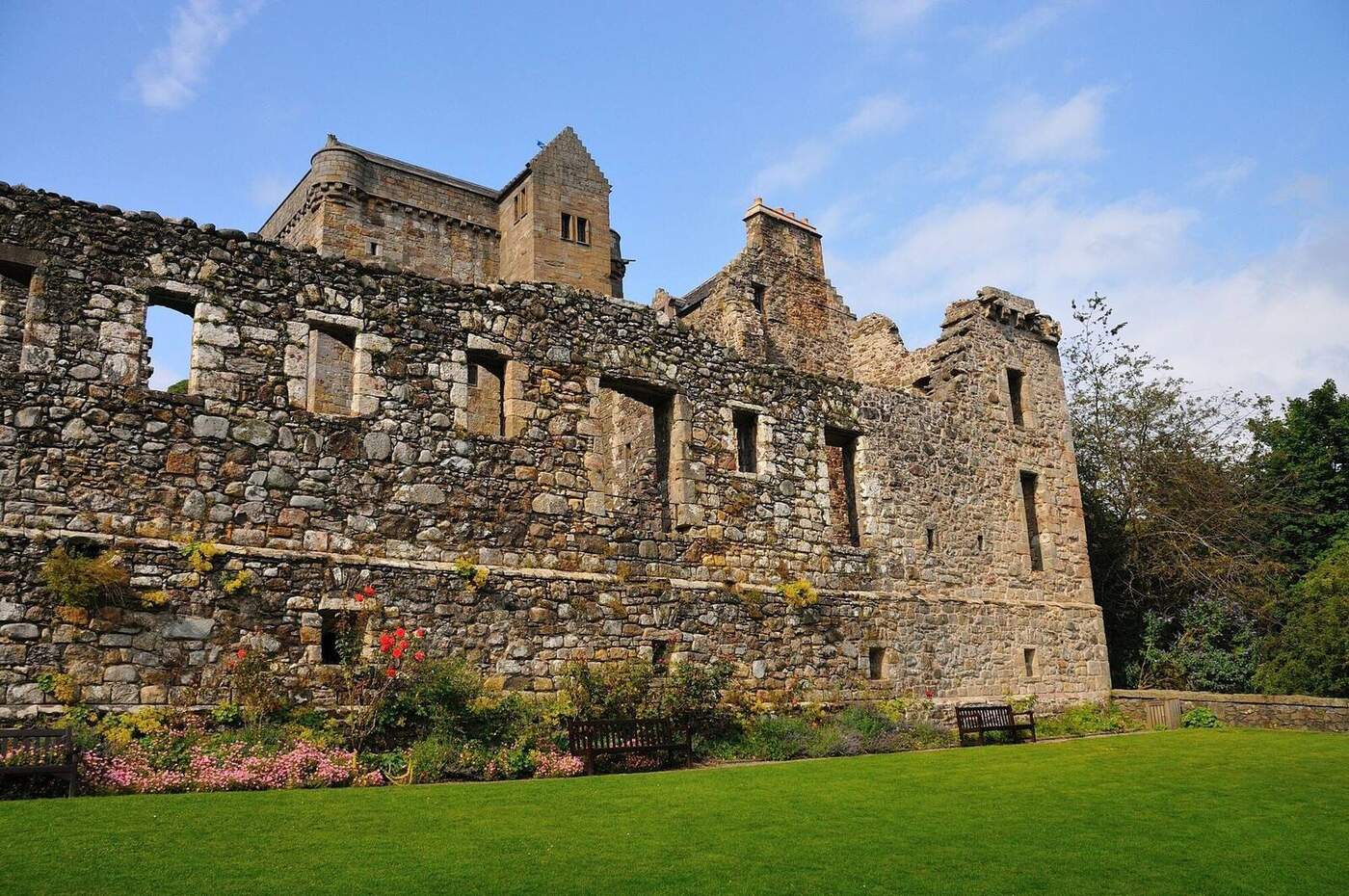
Scotland/Loch Lomond, Stirling & Forth/Castle Campbell
GLEN FORTRESS · DOLLAR
A noble stronghold. Hidden between two burns.
PLAN YOUR VISIT
Castle Campbell, Dollar, Clackmannanshire, FK14 7PP
VISIT TIME: 1.5–2 hoursPrices and route information checked on the official visitor page; confirm current conditions before travel.
Historic Environment Scotland lists daily April–September opening. Address: Castle Campbell, Dollar, FK14 7PP.
Use the address and map link above for Castle Campbell. Allow time for the final rural approach and check parking guidance before setting out.
Visitor parking is about 500 metres up a steep road. Expect cobbles, bumpy surfaces and historic steps; the glen paths require sensible footwear.
WHAT TO EXPECT
01 / THE STORY
Castle Campbell sits between two steep ravines above Dollar, reached through a glen that feels made for a story. The streams are called the Burns of Care and Sorrow; the castle itself was once known as Gloom.
Those names supply atmosphere, while the architecture supplies the substance: an early tower transformed into a courtly Campbell residence close to royal Stirling.
The approach through Dollar Glen explains the defences better than a diagram. Deep watercourses protect the rocky spur and frame the castle from both sides.
Allow time for the route and views as well as the rooms. Here, landscape is part of the structure, not scenery added after the story.
The tower probably began with the Stewarts of Lorn in the early fifteenth century. Colin Campbell acquired the property through marriage and inheritance connections by 1466.
In 1489 James IV authorised the new name. Branding a residence with the family name was a direct statement of ownership and growing power.
John Knox stayed at the castle in 1556. Mary, Queen of Scots visited in 1563 for a Campbell family wedding.
A rock associated with Knox's preaching belongs to tradition rather than independently proven geography. The visits themselves show the house working as a political and social stage.
02 / VISUAL JOURNAL
Every photograph on this page was made by CastleScotland during personal field visits.
10 of 14 photographs
01 / THE STORY CONTINUES
The tower remained the secure core, but a hall range, later apartments and an arcaded loggia created room for hospitality and display.
Stand in the court and compare the parts. Campbell status was expressed through generous reception space as much as through hard-to-reach walls.
Montrose's supporters ravaged Campbell lands in 1645, but the castle resisted capture. An English garrison occupied it in 1653; Royalists burned it in 1654.
Older summaries sometimes give the destruction to Cromwell's men. Keeping occupation and burning separate produces the less familiar—and better supported—story.
03 / MOMENTS IN STONE
The tower is probably built for the Stewarts of Lorn; its precise founder is uncertain. A royal name change announced a powerful new owner.
Colin Campbell acquires the property through the Stewart marriage and inheritance connection. The two burns turn landscape into practical defence.
James IV authorises the name Castle Campbell. Near Stirling, the Campbells’ residence connected local power with national politics.
Royalists burn the castle, following its occupation by an English garrison.
04 / FIND THE CASTLE
56.174865,-3.674536
Castle Campbell is at Castle Campbell, Dollar, Clackmannanshire, FK14 7PP. Check current access arrangements before travelling.
Open mapHistoric Environment Scotland lists daily April–September opening. Address: Castle Campbell, Dollar, FK14 7PP.
Use the address and map link above for Castle Campbell. Allow time for the final rural approach and check parking guidance before setting out.
Use the gorge and burn as foregrounds from the approach, then frame the upper ranges from the garden side for a calmer architectural view.
History and visitor advice: CastleScotland fieldwork and official operator sources.
The Campbell connection developed through Colin Campbell, first earl of Argyll, and his marriage to Isabel Stewart, John's daughter. The family had acquired the property by 1466. Describing this simply as a purchase in 1465 overlooks the inheritance context and gives the transaction unwarranted precision. In 1489 James IV authorised the name Castle Campbell, making the family's identity explicit in the residence itself.
The tower remained the core of a much larger home. A hall range added around 1500 provided more generous accommodation and space for formal hospitality. Later courtyard buildings further changed the balance between defence and display. A visitor comparing the compact tower with the open court can see how a secure residence became a setting for the social obligations of a powerful family.
Castle Campbell also brought the earls of Argyll within reach of the royal court at Stirling. Mary, Queen of Scots visited in 1563 for a family wedding, a documented episode that belongs to the castle's life as a place of celebration. John Knox had stayed in 1556. The rock traditionally called his pulpit should nevertheless be treated as a traditional association, rather than an independently proven location for a particular sermon.
Late-sixteenth-century alterations included an arcaded gallery, or loggia, facing the courtyard. An inventory of 1595 helps establish that these arrangements already existed by then. Such evidence offers a firmer guide than the temptation to date every decorative feature to a famous royal visit. Gardens and reception spaces were part of a residence designed to impress as well as to shelter its household.
The civil-war history needs a careful distinction. Montrose's supporters devastated Campbell lands in 1645, but HES's detailed assessment says the castle resisted capture. An English garrison occupied it in 1653; Royalists burned it in 1654. Some older summaries confuse these episodes or blame Cromwell's soldiers for the destruction. Charred material found during archaeological work supports a major fire, although it cannot identify every participant by itself.
The family did not restore the castle as its principal Lowland residence. Argyll's Lodging in Stirling offered a different future, while Castle Campbell became increasingly valued as a dramatic ruin. Nineteenth-century landscape improvements also shaped how visitors approached and experienced the glen. Today's picturesque setting therefore combines natural terrain with later choices about paths, views and the presentation of the past.
The property passed to the National Trust for Scotland in 1948 and entered state guardianship in 1950. Conservation includes the tower roof installed in 1956, which should not be mistaken for untouched medieval fabric. The castle is protected as scheduled monument SM13611. Begin with the glen, then compare the tower, hall and courtyard details wherever access allows. The strongest impression is of a residence whose architecture translated family ambition into an unusually memorable landscape.
08 / EXPLORE NEXT
Find Scottish castles by region, landscape or the stories that bring them to life.
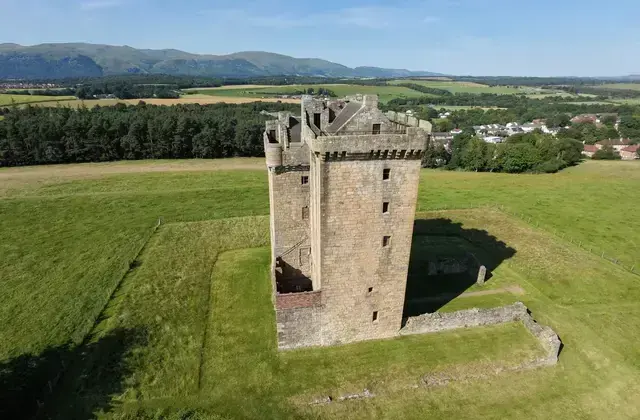 Loch Lomond, Stirling & ForthClackmannan Tower
 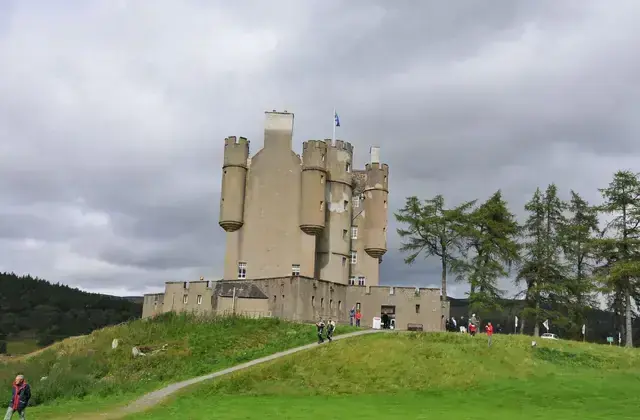 AberdeenshireBraemar Castle
 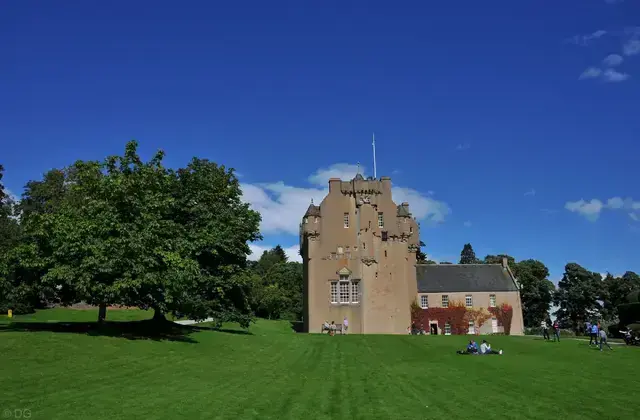 AberdeenshireCrathes Castle