TICKETSBoat operator fares and landing arrangements vary; check the current ferry operator and official island notice before booking.
Visitor conditions are stated conservatively from current official or local guidance; always confirm before travel.
 Beta
Beta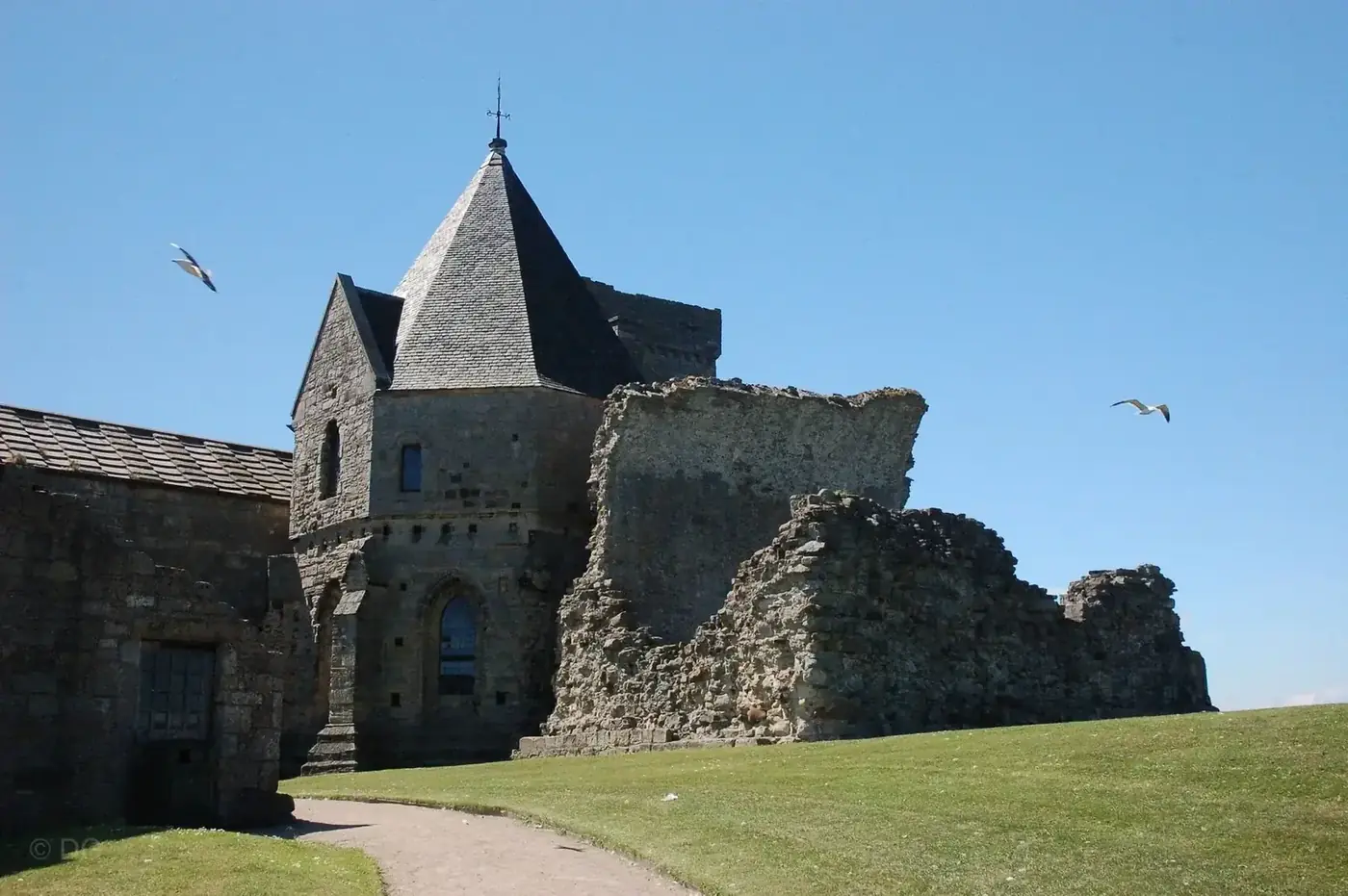
Scotland/The Kingdom of Fife/Inchcolm Abbey
FIELD GUIDE · THE KINGDOM OF FIFE
A Scottish castle story. Read through its landscape.
PLAN YOUR VISIT
Inchcolm Island, Firth of Forth
VISIT TIME: 2–3 hoursVisitor conditions are stated conservatively from current official or local guidance; always confirm before travel.
Boat operator fares and landing arrangements vary; check the current ferry operator and official island notice before booking.
Use the address and map link above for Inchcolm Abbey. Allow time for the final rural approach and check parking guidance before setting out.
The visit involves a boat landing, island paths and historic steps; weather can alter sailings.
WHAT TO EXPECT
01 / THE STORY
The journey to Inchcolm begins before you reach the ruins. A boat crosses the Firth of Forth to an island where medieval cloisters, seabirds and twentieth-century defences share the same narrow strip of land.
Despite the name used in this guide, the centrepiece is an Augustinian abbey, not a medieval castle. Its stories move from a king caught in a storm to one of medieval Scotland's most important chroniclers.
Few Scottish historic sites make the approach such a large part of the experience. The crossing gives views of the Forth bridges, the island and—often—seals and seabirds before the abbey comes into focus.
Landing depends on the boat operator, weather and sea conditions. Check the current sailing and island arrangements before building a day around the trip.
According to the abbey's traditional origin story, Alexander I was driven ashore by a storm in 1123 and sheltered on Inchcolm. The tale helped explain why a religious community was later established here.
Historic Environment Scotland presents the storm as tradition. It should not be used to identify a surviving room as the king's untouched shelter or to turn a colourful beginning into a complete building record.
In the fifteenth century Abbot Walter Bower compiled the Scotichronicon on Inchcolm. It became one of the major narrative sources for medieval Scottish history.
That makes the island a place where history was written as well as lived. Bower's chronicle preserved invaluable material, while also carrying the beliefs and storytelling habits of its own age.
02 / VISUAL JOURNAL
Every photograph on this page was made by CastleScotland during personal field visits.
01 / THE STORY CONTINUES
Its position in the Forth brought exposure as well as seclusion. English raids disrupted the community during the later Middle Ages, and the Reformation changed the abbey's religious life.
The substantial cloister buildings survived those changes unusually well. Walk the relationships between church, chapter house and shared rooms rather than treating the tower as the whole monument.
The island was fortified again during the two world wars to help defend the Forth. Gun positions and military structures belong to that much later strategic landscape.
Keep the periods separate: these are modern defences beside a medieval abbey, not additions to an imaginary island castle. Their contrast is one of Inchcolm's best surprises.
03 / MOMENTS IN STONE
An Augustinian community is founded; the 1123 storm belongs to the foundation tradition. The island setting connects the abbey with the Firth of Forth.
Inchcolm becomes an abbey. An Augustinian community is founded; the 1123 storm belongs to the foundation tradition.
Abbot Walter Bower compiles the Scotichronicon. Current access is part of the guide: check the official or local notice before making the final approach.
04 / FIND THE CASTLE
56.029979,-3.301922
Inchcolm Abbey is at Inchcolm Island, Firth of Forth. Check current access arrangements before travelling.
Open mapBoat operator fares and landing arrangements vary; check the current ferry operator and official island notice before booking.
Use the address and map link above for Inchcolm Abbey. Allow time for the final rural approach and check parking guidance before setting out.
Photograph Inchcolm Abbey as part of its setting. A wide view is often more truthful than a close crop, and all original masonry should be observed without climbing or crossing boundaries.
History and visitor advice: CastleScotland fieldwork and official operator sources.
The island’s name invokes Columba, but the dedication is not evidence that the saint personally visited. This is a useful distinction between religious association and documented biography. A name can carry a powerful memory without proving a journey. Inchcolm became an abbey in 1235, and its church was enlarged during the medieval period. The surviving complex therefore developed over time, rather than appearing fully formed at the moment suggested by the foundation story.
The cloister and associated buildings make the organisation of a religious household unusually tangible. Think about movement between worship, shared rooms and the enclosed space at the centre. A photograph of the tower alone misses much of that interest. Where access allows, look at how one part connects with another. The value of the remains is not simply that they are old, but that their relationships help a visitor understand a community’s setting without inventing the routine of a particular day.
In the fifteenth century the abbot Walter Bower compiled the Scotichronicon, a major narrative of Scottish history. His association makes Inchcolm a place connected with the writing of history as well as the events later historians study. A medieval chronicle is an important source, but not an automatic guarantee that every story it preserves is contemporary or independently confirmed. The abbey’s own traditions deserve the same careful reading as the wider national narratives associated with its learned community.
The island was vulnerable during warfare across the Forth, and English attacks interrupted the community’s life in the later medieval period. The Reformation of 1560 marks another fundamental change in its religious history. These developments should not be reduced to a claim that one event destroyed every surviving building. The unusually substantial remains demonstrate a more complicated afterlife. Religious use, abandonment, adaptation and preservation are separate questions, and the present condition of a wall does not answer all of them at once.
Much later, the island acquired military defences during the world wars. These structures explain another strategic role for the same stretch of water, but they are not medieval additions to an abbey-castle. Compare the forms and purposes of the remains rather than forcing them into a continuous defensive story. Inchcolm is scheduled monument SM90166, with archaeological interest extending beyond the most photogenic elevations. Respect barriers and wildlife guidance, and follow the operator’s current arrangements for landing and return travel.
A rewarding visit leaves time for both close observation and the wider island setting. The abbey’s passages and stone details invite intimate views; the shore explains its separation and exposure. Keep the foundation tradition, the documented monastic community and the later military landscape distinct. Together they make a richer account than a generic ruin description. Inchcolm’s appeal lies in the survival of several kinds of history beside one another, with the water providing their shared setting rather than a single explanation for everything.
08 / EXPLORE NEXT
Find Scottish castles by region, landscape or the stories that bring them to life.
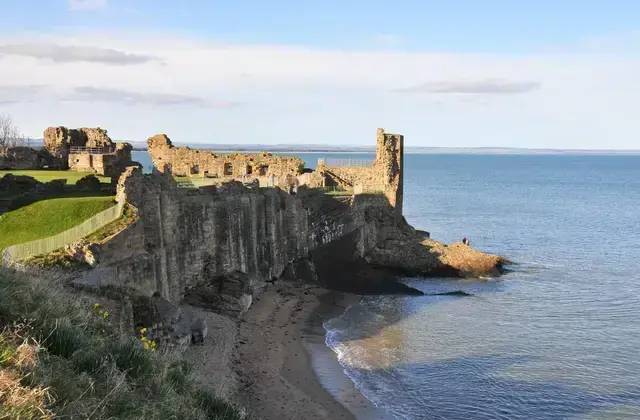 The Kingdom of FifeSt Andrews Castle
 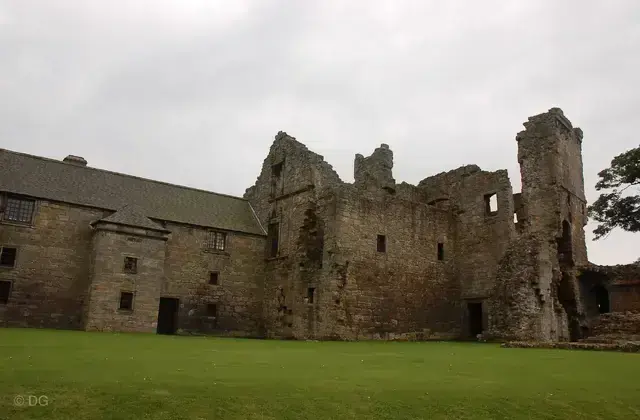 The Kingdom of FifeAberdour Castle and Gardens
 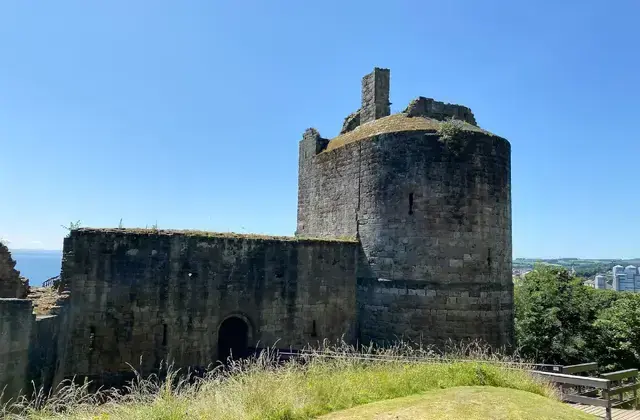 The Kingdom of FifeRavenscraig Castle