TICKETSFree exterior viewing; check current access notice.
Visitor conditions are stated conservatively from current official or local guidance; always confirm before travel.
 Beta
Beta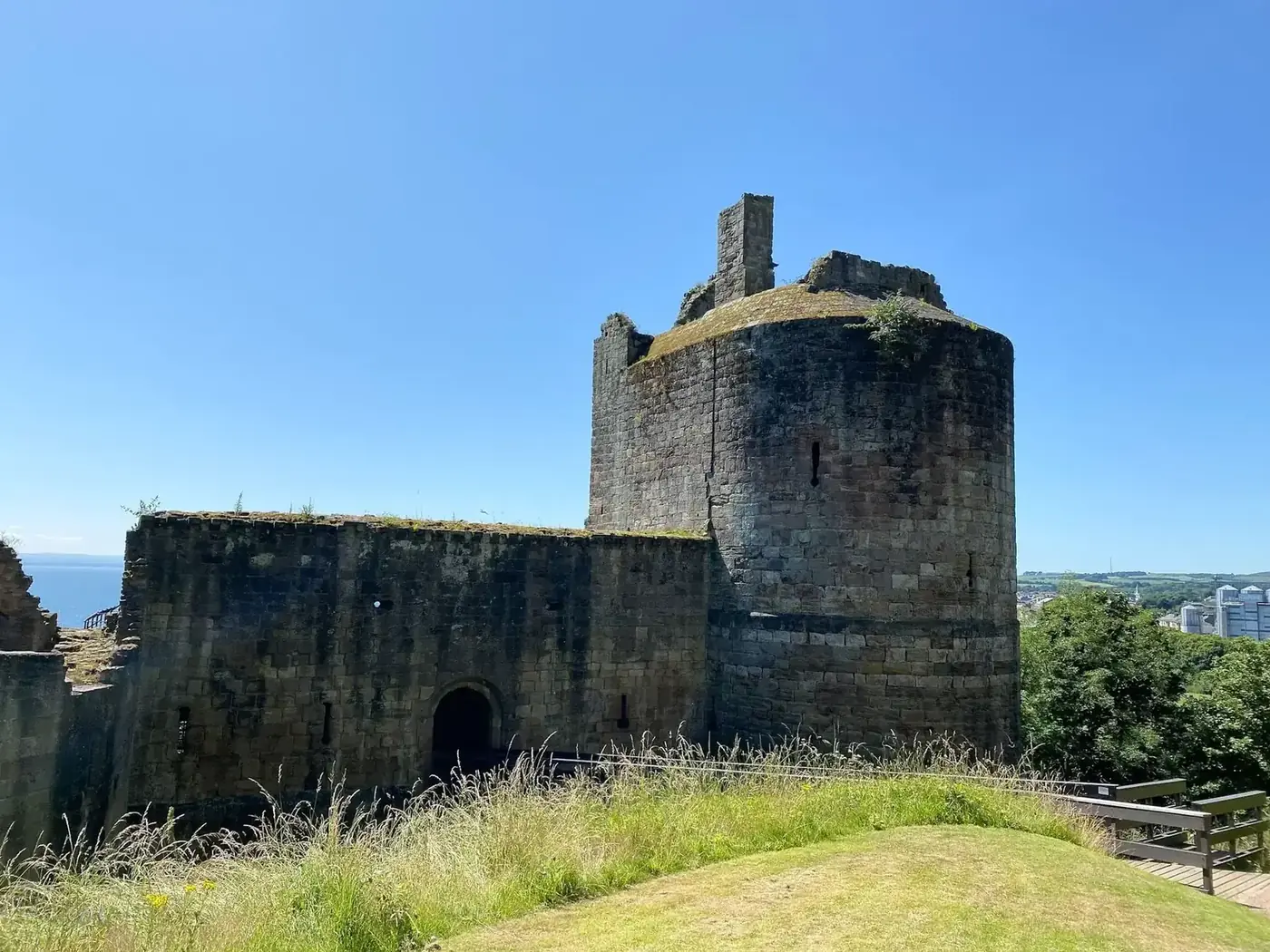
Scotland/The Kingdom of Fife/Ravenscraig Castle
FIELD GUIDE · THE KINGDOM OF FIFE
A Scottish castle story. Read through its landscape.
PLAN YOUR VISIT
Ravenscraig Park, Kirkcaldy, KY1 2QG
VISIT TIME: 20–40 minutesVisitor conditions are stated conservatively from current official or local guidance; always confirm before travel.
Free exterior viewing; check current access notice.
Use the address and map link above for Ravenscraig Castle. Allow time for the final rural approach and check parking guidance before setting out.
The ruin can have conservation restrictions and uneven coastal ground.
WHAT TO EXPECT
01 / THE STORY
Ravenscraig stands above the Fife coast at Kirkcaldy with two massive round towers facing the land. Its walls belong to an age when cannon was changing what a castle needed to survive.
The royal project began under James II and continued under his widow, Mary of Guelders. Telling that order correctly gives both patrons their place in one unusually early artillery castle.
The sea, park and heavy stone front create a strong exterior visit. The contrast between open coastal views and the defensive landward face explains the plan at a glance.
Interior access can be restricted, so check current notices. The public park still offers useful viewpoints when parts of the ruin are closed.
James II acquired the site and construction began in 1460, before his death later that year. His fascination with artillery gives the new defences a fitting context.
He was killed when a cannon exploded during the siege of Roxburgh. The weapon that helped reshape castles also ended the king’s life.
The widowed queen continued the project after James’s death. Ravenscraig was a royal residence as well as a defensive experiment.
Mary’s role should not be erased, but neither should it be turned into an entirely separate foundation. She inherited a building campaign already underway.
02 / VISUAL JOURNAL
Every photograph on this page was made by CastleScotland during personal field visits.
10 of 18 photographs
01 / THE STORY CONTINUES
Thick walls and rounded towers were better suited to absorbing and returning artillery fire than the thin, high forms of many older strongholds.
Look at the landward face from a little distance. Its mass is the message: an attacker approaching from the easier side would meet stone designed for a new kind of warfare.
James III granted Ravenscraig to William Sinclair in 1470. The transfer moved the castle from direct royal use into another powerful family story.
Its later ruin does not undo the experimental importance of the first design. Ravenscraig is best read as a building caught at a turning point in military architecture.
03 / MOMENTS IN STONE
Construction begins under James II before his death. Fife coast at Kirkcaldy is essential to the way this castle is understood.
Mary of Guelders dies after continuing the project. Construction begins under James II before his death.
James III grants Ravenscraig to William Sinclair. Current access is part of the guide: check the official or local notice before making the final approach.
04 / FIND THE CASTLE
56.119899,-3.142319
Ravenscraig Castle is at Ravenscraig Park, Kirkcaldy, KY1 2QG. Check current access arrangements before travelling.
Open mapFree exterior viewing; check current access notice.
Use the address and map link above for Ravenscraig Castle. Allow time for the final rural approach and check parking guidance before setting out.
Photograph Ravenscraig Castle as part of its setting. A wide view is often more truthful than a close crop, and all original masonry should be observed without climbing or crossing boundaries.
History and visitor advice: CastleScotland fieldwork and official operator sources.
Mary continued the work until her death in 1463. HES cautions that it is uncertain whether she actually stayed at Ravenscraig. It is tempting to turn a queen’s building project into a detailed picture of her daily life there, but patronage is not the same as documented residence. The distinction does not diminish her role. It prevents an attractive assumption from becoming a supposed fact and keeps the account aligned with the surviving evidence.
The thick masonry, rounded tower forms and gun openings show why the castle is discussed in the history of artillery fortification. ‘One of the earliest’ is more defensible than an unqualified claim that it was Britain’s first. Defensive architecture changed through experimentation, and a building can be important without winning an absolute chronological contest. Look at the relation between its solid frontage and the ground outside. The form conveys a deliberate response to threats while also enclosing a royal domestic project.
In 1470 James III granted Ravenscraig to William Sinclair as part of the settlement associated with his interests in Orkney and Shetland. The castle’s subsequent development therefore belongs to a Sinclair as well as a royal history. It should not be imagined as a completed monument frozen at Mary’s death. Changing patrons could continue, adapt or reinterpret an inherited scheme. The surviving structure is the result of that longer process, not simply an illustration of one moment in 1460.
The coast gives the ruin a different character from an inland tower. Take time to read its position as well as the walls. A broad view places the masonry beside the water; closer observation brings the openings and curved forms into focus. Neither view alone explains everything. The landscape offers context, but it does not prove a particular battle or line of fire. Avoid converting a striking photograph into a precise military reconstruction without the supporting survey or documentary record.
Ravenscraig is especially rewarding when compared with a narrower tower house. Its mass and frontage suggest different architectural priorities, yet the domestic purpose should not disappear beneath the language of cannon and fortification. The castle belonged to people and households as well as to a history of weapons. That balance makes it more interesting than a simple technological milestone. There is room to appreciate the solidity of the design while recognising the unfinished and evolving nature of a long building history.
Before visiting, check current arrangements for access and any restrictions around the remains. From permitted viewpoints, begin with the full shape, then choose details that explain rather than merely decorate the story. Keep the chronology clear: James II’s initial project, Mary’s continuation and the later Sinclair phase. Ravenscraig’s importance survives that careful wording. It is a place where royal ambition and changing defensive ideas meet on the coast, without requiring an invented royal stay or an unsupported claim to be the first of its kind.
08 / EXPLORE NEXT
Find Scottish castles by region, landscape or the stories that bring them to life.
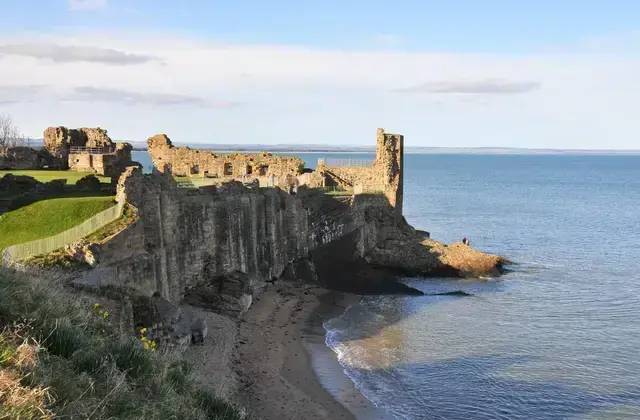 The Kingdom of FifeSt Andrews Castle
 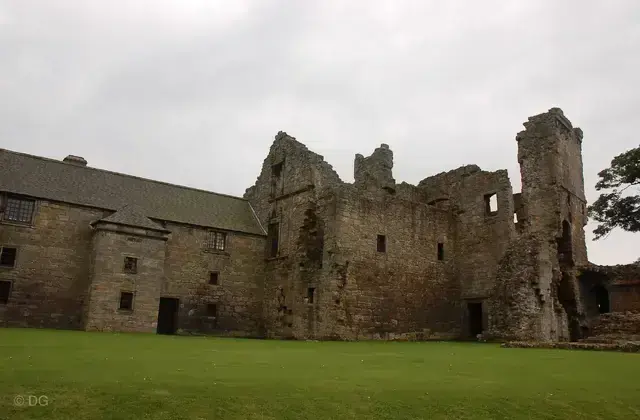 The Kingdom of FifeAberdour Castle and Gardens
 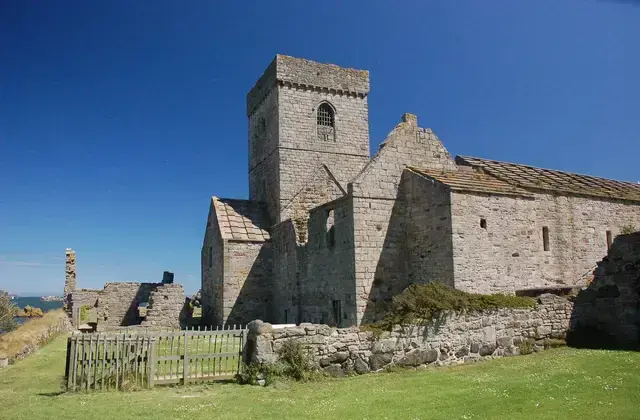 The Kingdom of FifeInchcolm Abbey