TICKETSNo routine public interior ticket; occasional events or tours are announced by the estate.
Visitor conditions are stated conservatively from current official or local guidance; always confirm before travel.
 Beta
Beta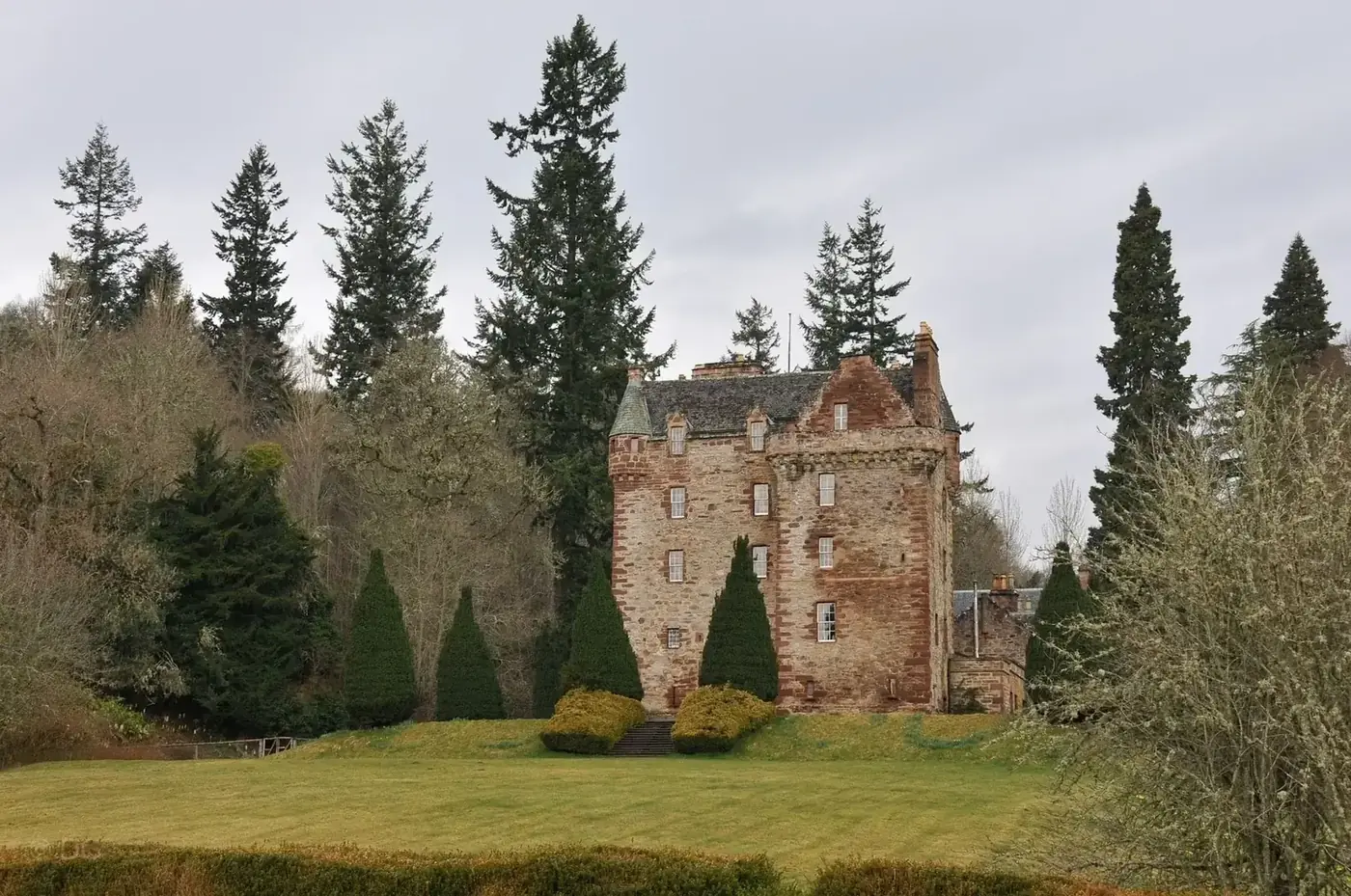
Scotland/The Highlands/Castle Leod
FIELD GUIDE · THE HIGHLANDS
A Scottish castle story. Read through its landscape.
PLAN YOUR VISIT
Strathpeffer, Ross-shire, IV14 9AA
VISIT TIME: 20–45 minutesVisitor conditions are stated conservatively from current official or local guidance; always confirm before travel.
Advertised opening days and guided visits are listed on the official Castle Leod website; check arrangements before travelling.
Use the address and map link above for Castle Leod. Allow time for the final rural approach and check parking guidance before setting out.
Respect private estate boundaries and event-specific access rules.
WHAT TO EXPECT
01 / THE STORY
Castle Leod is not waiting to be rescued from ruin. The red-sandstone tower near Strathpeffer remains a Mackenzie family home, with ancient-looking defences, lived-in rooms and later wings tucked behind it.
Outlander fans know another reason to pause here. Castle Leod inspired the fictional Castle Leoch, although the television production used Doune Castle for the screen version.
A guided opening offers something a roofless ruin cannot: old stonework, family portraits and rooms still understood as part of a home. Thick walls and iron window grilles sit beside evidence of later comfort.
Public access is limited to advertised days and events. Check the official calendar rather than assuming the gates will be open when you reach Strathpeffer.
Historic Environment Scotland records do not give one simple answer. The designed-landscape account suggests about 1480, while the listed-building description places the principal tower around 1600 with additions dated 1616.
The safe conclusion is an older tower substantially reshaped in the early seventeenth century. A single confident foundation year would disguise the surviving uncertainty.
The castle's own account notes that the ground level was raised, probably burying a lower storey. Openings that once sat well above approaching attackers are consequently much closer to today's lawn.
The result is an unexpectedly comic detail: some gun loops now look best placed to fire at ankles. It is a small clue to a major change in how the building meets the ground.
02 / VISUAL JOURNAL
Every photograph on this page was made by CastleScotland during personal field visits.
01 / THE STORY CONTINUES
The family describes a reputed concealed stair descending beneath the front lawn. It is exactly the sort of feature visitors hope to find in an old Highland house.
Its complete route has not been established, so it belongs among the castle's intriguing traditions. The visible mismatch between rooms and small windows adds to the mystery without proving a tunnel.
Diana Gabaldon's Castle Leoch was inspired by the real Mackenzie seat, and she suggested Castle Leod as a possible filming location. The television series ultimately used Doune Castle.
That distinction makes the connection more interesting. Leod belongs to the imagination behind the story; Doune supplied the images viewers saw on screen.
03 / MOMENTS IN STONE
HES records differ: around 1480 in the landscape account, around 1600 in the building description. Castle Leod remains a family home, not a fragmentary ruin.
Roderick Mackenzie receives the lands; additions dated 1616 reshape the L-plan tower. The additions dated 1616 altered the earlier L-shaped arrangement.
Later accommodation, changes to the grounds and conservation form part of the house’s continuing history. The castle’s own account describes a reputed hidden stair; its full route is not established here.
04 / FIND THE CASTLE
57.598496,-4.534941
Castle Leod is at Strathpeffer, Ross-shire, IV14 9AA. Check current access arrangements before travelling.
Open mapAdvertised opening days and guided visits are listed on the official Castle Leod website; check arrangements before travelling.
Use the address and map link above for Castle Leod. Allow time for the final rural approach and check parking guidance before setting out.
Photograph Castle Leod as part of its setting. A wide view is often more truthful than a close crop, and all original masonry should be observed without climbing or crossing boundaries.
History and visitor advice: CastleScotland fieldwork and official operator sources.
The dating of the oldest fabric is not settled uniformly in the published records. Historic Environment Scotland’s listed-building description gives around 1600, with additions dated 1616. Its designed-landscape account assigns the tower an earlier date, around 1480. These are genuinely different descriptions. The safest introduction is therefore an earlier tower substantially reshaped in the early seventeenth century, with its precise origin left open.
Sir Roderick Mackenzie, known as the Tutor of Kintail, is central to that rebuilding story. The land grant to him dates to 1608, while the architectural changes associated with 1616 modified the earlier L-shaped arrangement. Filling the inner angle created a more regular frontage and additional accommodation. The result is a building that combines the compact presence of a tower house with an increasingly comfortable residence.
Look at the relationship between the entrance, the stair and the upper windows. Changes intended to make a house more convenient can alter its appearance as decisively as military damage. Later wings extend the accommodation behind the old tower. The silhouette is therefore not a single untouched medieval design, even though older architectural features remain unusually prominent in the whole.
The family’s fortunes were not an uninterrupted progression. The published landscape history records periods of poor condition and only occasional occupation, followed by further investment and changes to the grounds. This helps explain why continuity should mean a lasting connection, not an assertion that the house was always prosperous, fully occupied or physically unchanged. The survival of a residence can include substantial episodes of repair.
Nineteenth-century improvements also altered the setting. Parkland, woodland and approaches formed part of how the castle was seen and used. A visitor looking only at the tower misses that wider composition. The grounds are included in Scotland’s Inventory of Gardens and Designed Landscapes, while the house is separately listed at Category A. These designations recognise different, complementary aspects of the estate.
Traditions connect the site with a much earlier Pictish or Norse stronghold. They should remain traditions unless supported by secure evidence for particular structures. The official castle account also describes a reputed hidden stair or escape route. Such a story can be retained as part of local memory without presenting an unverified underground passage as an established feature available to explore.
The family continues to undertake conservation, and the official visitor website gives arrangements for advertised openings and guided visits. A living home requires a different approach from an open ruin: check what is available, follow the agreed route and allow the building’s domestic character to shape the experience. From outside, compare the older tower with the later accommodation and the surrounding trees. Castle Leod is most rewarding when understood as a house that has changed while retaining a strong identity, rather than as a perfectly preserved moment or an invented relic of a remote heroic age.
08 / EXPLORE NEXT
Find Scottish castles by region, landscape or the stories that bring them to life.
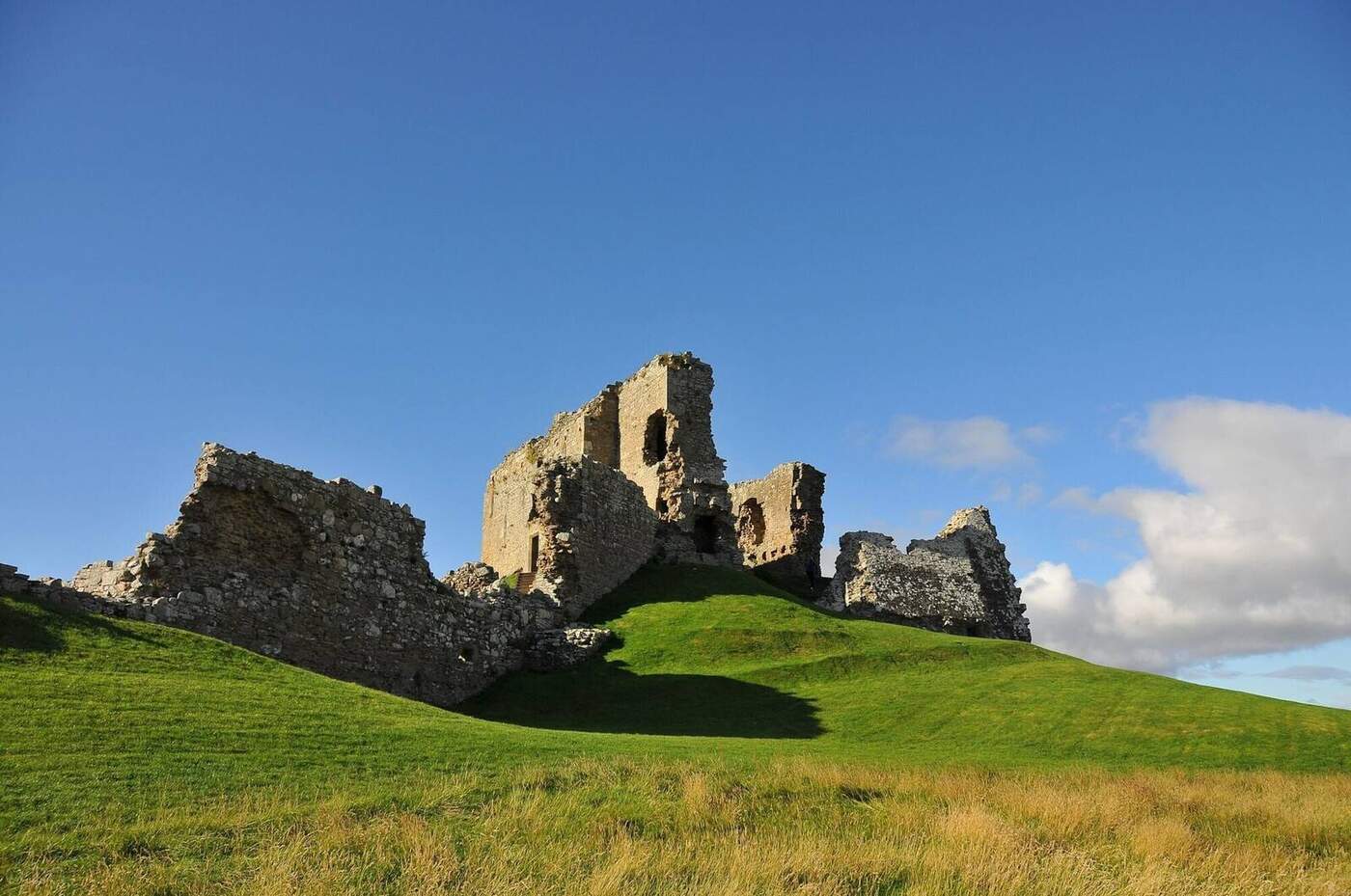 The HighlandsDuffus Castle
 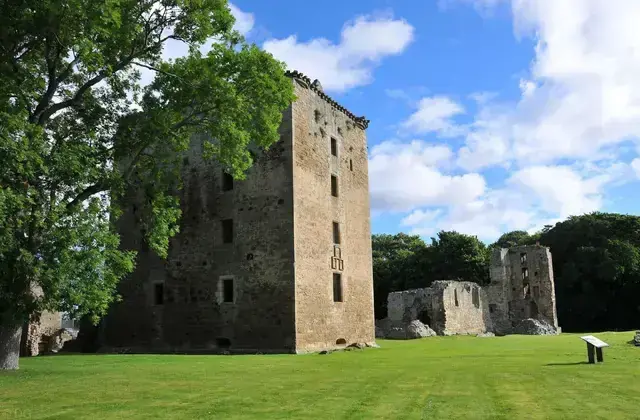 The HighlandsSpynie Palace
 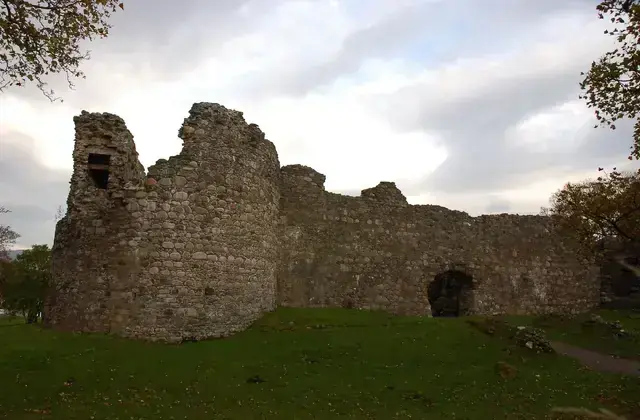 The HighlandsOld Inverlochy Castle