TICKETS£10.00
Some headline areas are currently restricted; confirm the live visitor notice before booking.
 Beta
Beta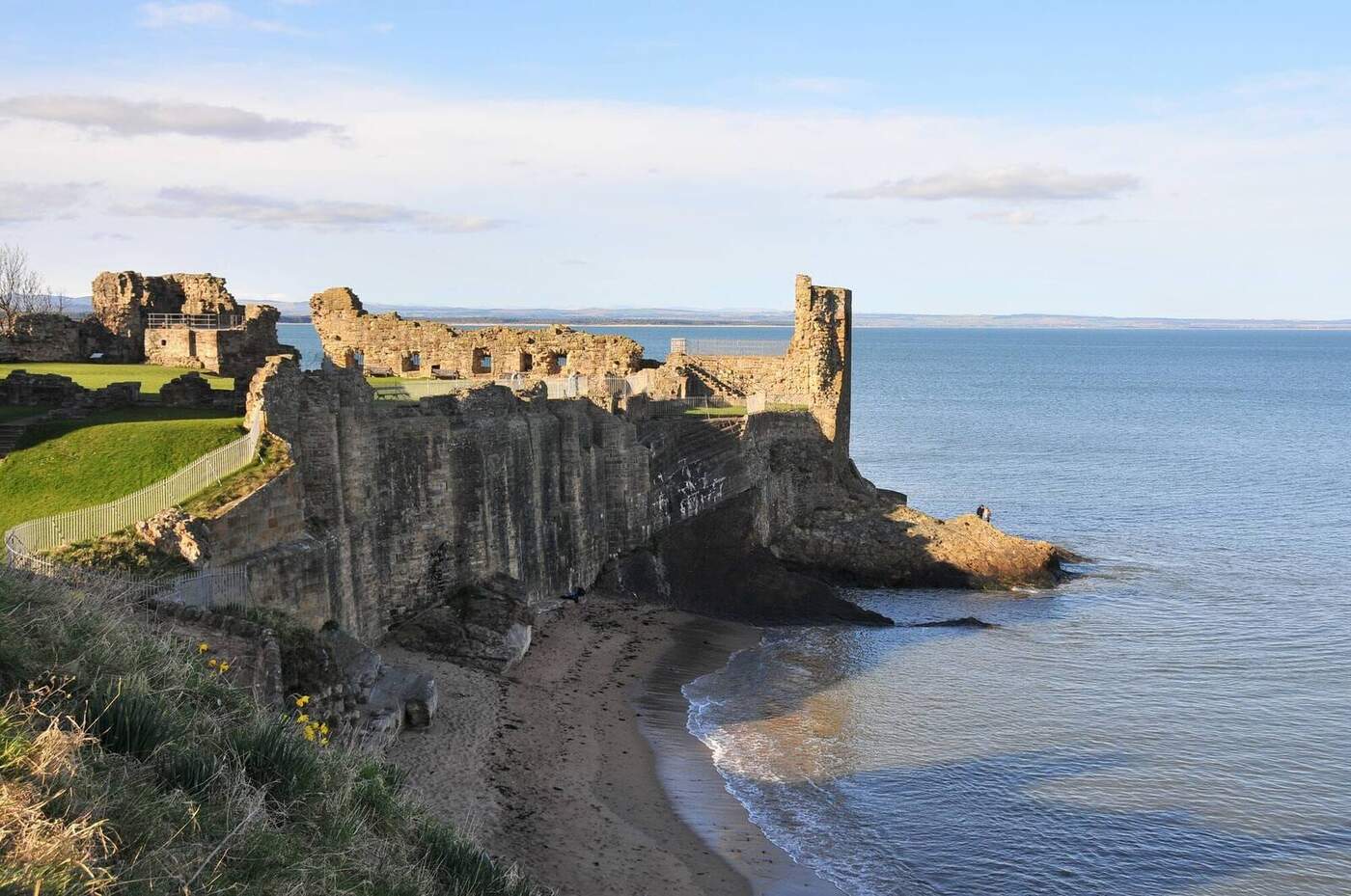
Scotland/The Kingdom of Fife/St Andrews Castle
BISHOPS & REFORMATION · FIFE
A sea cliff residence. A siege beneath the city.
PLAN YOUR VISIT
The Scores, St Andrews, Fife, KY16 9AR
VISIT TIME: 1–1.5 hoursSome headline areas are currently restricted; confirm the live visitor notice before booking.
The castle is open daily but some areas, including the mine, countermine and Bishop’s Apartments, can be restricted.
Use the address and map link above for St Andrews Castle. Allow time for the final rural approach and check parking guidance before setting out.
There are grass routes, uneven historic surfaces and steps. One accessible parking bay is outside the castle; check current restrictions before setting out.
WHAT TO EXPECT
01 / THE STORY
St Andrews Castle looks out to sea from the edge of a town famous for golf and a university. Its own story is much darker: bishoply power, a public execution, murder and an underground race between attackers and defenders.
The mine and countermine are the headline experience. The bottle dungeon proves the castle had other ways of keeping people below ground.
The ruins are compact, but the story is unusually concentrated. You can move from a bishop’s residence to a siege tunnel and a rock-cut prison without leaving the site.
Pair it with the cathedral, but do not treat it as an afterthought. The sea views and underground passages give the castle a character entirely its own.
The first castle developed around 1200. Later rebuilding created a fortified residence for bishops and archbishops whose office carried political as well as religious power.
This was no quiet rectory. The walls remind us that church leaders in medieval Scotland could be great landholders, diplomats and political opponents.
Protestant preacher George Wishart was executed outside the castle in March 1546. In May, opponents of Cardinal David Beaton entered the stronghold and murdered him.
The attackers then held the castle. That sequence matters: John Knox later joined the garrison, but he was not one of the men who carried out Beaton’s murder.
02 / VISUAL JOURNAL
Every photograph on this page was made by CastleScotland during personal field visits.
01 / THE STORY CONTINUES
Regent Arran’s besiegers dug a mine towards the walls. The defenders heard the work and dug a countermine to intercept them.
The rough passages survive as an unusually physical record of siege warfare. The attackers searched for a way in; the defenders searched underground for the attackers. You can feel the urgency in the cramped stone.
The bottle dungeon is a prison cut deep into the rock beneath the Sea Tower. Its narrow neck and wider chamber gave it the shape behind the modern name.
It was built to confine, not to defend the landward entrance. Looking down into it gives the castle’s political power a very human—and uncomfortable—scale.
Parts of the eastern side have been lost to coastal erosion. The open view is beautiful, but the cliff has also removed pieces of the building’s plan.
Check current access before visiting, especially for the underground passages. Historic stairs and confined spaces may not suit every visitor.
03 / MOMENTS IN STONE
An episcopal castle is founded around 1200; Walter Traill rebuilds much of the courtyard castle around 1400. Mine and countermine make Reformation conflict physically visible.
Beaton is murdered; Arran’s besiegers dig a mine and the defenders a countermine. French intervention ends the siege. The castle shows how church office could command political and military power.
Archbishop John Hamilton rebuilds the entrance range before the Reformation of 1560. The unusual prison gives a human scale to the building’s harder history.
04 / FIND THE CASTLE
56.342152,-2.790476
St Andrews Castle is at The Scores, St Andrews, Fife, KY16 9AR. Check current access arrangements before travelling.
Open mapThe castle is open daily but some areas, including the mine, countermine and Bishop’s Apartments, can be restricted.
Use the address and map link above for St Andrews Castle. Allow time for the final rural approach and check parking guidance before setting out.
The sea-facing cliff line gives the strongest atmosphere; use the towers as a foreground rather than photographing only the central courtyard.
History and visitor advice: CastleScotland fieldwork and official operator sources.
The first castle developed around 1200. Much of the visible courtyard arrangement, however, belongs to rebuilding under Bishop Walter Traill around 1400, after destruction during the Wars of Independence. These dates describe different stages. Treating every standing wall as part of the first foundation would flatten a complicated building history into a single, misleading moment.
The most dramatic crisis began in 1546. The Protestant preacher George Wishart was executed outside the castle in March; in May, opponents of Cardinal David Beaton entered the stronghold and murdered him. The violence involved both religious conflict and personal hostility. The murderers and their supporters then occupied the castle, creating a stronghold that the Scottish government sought to recover.
Regent Arran’s besieging troops dug the mine towards the castle. The Protestant defenders dug the countermine to intercept it. That distinction is essential: the attackers wanted to undermine or penetrate the defences, while the men inside were trying to prevent their success. The surviving passages offer an unusually direct encounter with the physical work of a siege, rather than simply a story of cannon and surrender.
The siege ended in 1547 after French intervention and bombardment. John Knox, who had joined the garrison, was among those taken into French galley service. His presence connects this small coastal stronghold with the wider history of the Reformation, but he should not be confused with the men who murdered Beaton the previous year.
Archbishop John Hamilton subsequently repaired the castle and created its Renaissance entrance range in the 1550s. The building therefore continued to change after the siege. The Reformation of 1560 transformed its circumstances, but did not instantly turn the whole residence into an abandoned ruin. Its decline was a longer process; later removal of stone and losses at the sea cliff also shaped what survives.
The bottle dungeon belongs to the Sea Tower. It is a prison cut into the rock, not a device organising the landward defences. Separating these functions makes the plan easier to understand: rooms and towers could accommodate a household, enforce authority or defend an approach without all serving exactly the same purpose. Some of the eastern range has been lost over the cliff.
Today the castle is a scheduled monument in Historic Environment Scotland’s care. Begin with the courtyard and the changing masonry, then consider where the siege passages lie in relation to the walls. Access to particular areas can change, so consult the official visitor information before travelling. Even when an interior route is unavailable, the contrast between the open sea and the enclosed residence remains powerful. Allow the story to unfold in stages: an episcopal home, a contested stronghold, an attempted renewal and finally the ruin facing the bay.
08 / EXPLORE NEXT
Find Scottish castles by region, landscape or the stories that bring them to life.
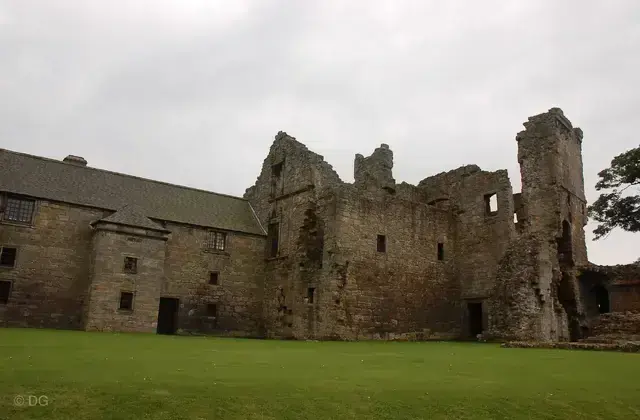 The Kingdom of FifeAberdour Castle and Gardens
 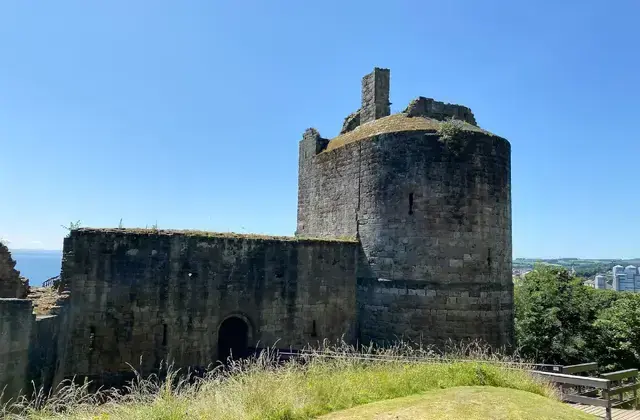 The Kingdom of FifeRavenscraig Castle
 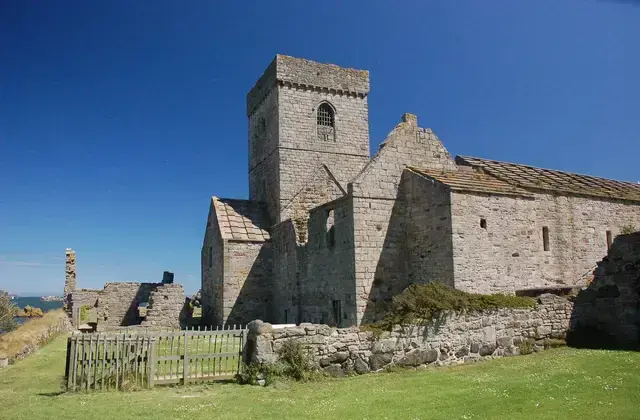 The Kingdom of FifeInchcolm Abbey