TICKETSFree
No admission charge for the exterior; check the official page for current closure information.
 Beta
Beta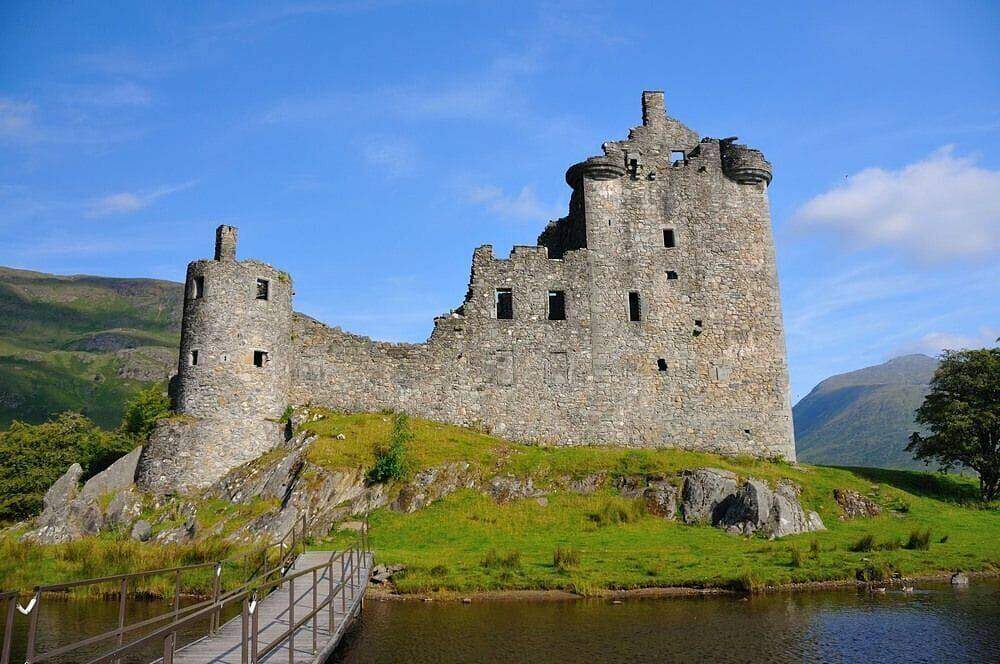
Scotland/Argyll & The Isles/Kilchurn Castle
LOCH AWE · CAMPBELL POWER
A tower by the water. A barracks above the loch.
PLAN YOUR VISIT
Lochawe, Dalmally
VISIT TIME: 45–90 minutesNo admission charge for the exterior; check the official page for current closure information.
Kilchurn is currently closed internally for vital conservation work, but the exterior can be reached free of charge. There is no vehicle access or parking at the castle; the loch-side route crosses agricultural land that can flood.
Use the address and map link above for Kilchurn Castle. Allow time for the final rural approach and check parking guidance before setting out.
The approach is unsurfaced, rural and can be wet or flooded. Strong footwear is essential and the closed structure must not be entered.
WHAT TO EXPECT
01 / THE STORY
Kilchurn sits at the head of Loch Awe like a castle designed for the weather. Mountains rise behind it, water shifts around the shore, and the ruin can look completely different between two passing clouds.
The famous outline combines a Campbell tower house with later military barracks. It is both a clan residence and an early example of accommodation built for a large government garrison.
The landscape is half the experience. A wide view explains why photographers return in mist, rain and clear evening light.
The approach can be wet and uneven, so check current access and conditions before setting out. This free site is an outdoor visit with no visitor centre to absorb a sudden change in weather.
Sir Colin Campbell, the first Campbell laird of Glenorchy, is the probable builder of the original mid-fifteenth-century tower. A charter records a castle here in 1449.
Later generations added halls, rooms and corner turrets. The lonely tower in the modern photograph was once the centre of a working household.
In the 1690s, the Earl of Breadalbane added a long barracks range. Purpose-built rooms, fireplaces and latrines provided accommodation on a scale very different from the earlier family house.
Government forces used Kilchurn during the Jacobite risings. HES records 200 militiamen here in 1745, but that was a particular garrison—not the castle’s permanent population across every century.
02 / VISUAL JOURNAL
Every photograph on this page was made by CastleScotland during personal field visits.
10 of 20 photographs
01 / THE STORY CONTINUES
Tradition associates Kilchurn’s decline with lightning damage. By around 1770 it was roofless.
The sources do not justify blaming every broken wall on one precisely dated storm. It is safer to treat lightning as part of the abandonment story, not a complete explanation for the ruin visible today.
Compare the tall tower with the long barracks and imagine the missing floors between rows of windows. The differences reveal the castle’s changing purpose.
Water levels, ground conditions and conservation restrictions can affect the visit. Use the official notice rather than relying on an old photograph or map.
03 / MOMENTS IN STONE
The original tower is attributed to Sir Colin Campbell, first of Glenorchy; a castle is recorded in 1449. For generations Kilchurn anchored the Campbells of Glenorchy around Loch Awe.
The family focuses increasingly on Balloch and its Perthshire estates, while Kilchurn remains in use. The later barracks make the Jacobite-era military chapter visible at a glance.
The Earl of Breadalbane adds the barracks during an extended rebuilding campaign. The water and mountain setting is not scenery alone; it explains strategy and atmosphere.
The castle is roofless by around this date.
State guardianship begins.
04 / FIND THE CASTLE
56.403758,-5.027178
Kilchurn Castle is at Lochawe, Dalmally. Check current access arrangements before travelling.
Open mapKilchurn is currently closed internally for vital conservation work, but the exterior can be reached free of charge. There is no vehicle access or parking at the castle; the loch-side route crosses agricultural land that can flood.
Use the address and map link above for Kilchurn Castle. Allow time for the final rural approach and check parking guidance before setting out.
The classic wide view uses the loch and mountains; mist, low cloud and winter light can be as effective as a clear day.
History and visitor advice: CastleScotland fieldwork and official operator sources.
His descendants enlarged their residence over several generations. Sir Duncan Campbell added the low hall before his death in 1513. Later, another Colin, the sixth laird, reshaped the tower's upper parts and introduced projecting corner turrets. These additions made a visible statement about household status as well as security. The courtyard also needed kitchens, stores and circulation routes; the tall tower was only one part of the working estate.
During the later sixteenth century, the family increasingly concentrated on its Perthshire possessions around Loch Tay, including Balloch, the predecessor of Taymouth Castle. This shift had occurred before the sixth laird's death in 1583; that year should not be presented as a documented moving date. Nor did the move immediately end Kilchurn's use. Repairs and alterations continued, including work to the domestic ranges recorded in 1614.
Kilchurn's military history was not simply a continuous campaign against Jacobites. During the civil conflicts of the seventeenth century it served different political circumstances. HES records a short, unsuccessful siege by the royalist commander Middleton in 1654, ended by the approach of Monck's forces. The episode belongs to the Cromwellian period, decades before the Jacobite risings. Keeping those settings separate prevents a dramatic ruin from acquiring an invented, uninterrupted history of clan warfare.
The great change visible today came in the 1690s under John Campbell, first Earl of Breadalbane. A substantial barracks complex rose along the northern side during a rebuilding campaign that HES dates broadly to 1690–98. An armorial stone dated 1693 belongs to this phase. The rising of 1689 supplied political context, but it was not the year in which the whole surviving barracks can confidently be said to have been completed.
Purpose-built rooms, corridors, fireplaces and latrines distinguish the new accommodation from the older lordly household. The barracks are recognised as an exceptionally early surviving example in Britain. Capacity is often summarised as about 200 soldiers; HES also records government occupation in 1715 and a garrison of 200 militiamen, with officers, during the rising of 1745. These figures describe a particular military use, not a permanent population throughout the castle's existence.
By around 1770 the castle was roofless. Accounts associate its decline with lightning damage before that date, but do not justify assigning every broken wall to one precisely dated storm. State guardianship began in 1953, and Kilchurn is protected as scheduled monument SM90179. Archaeological work beneath the barracks has helped identify the earlier defensive perimeter, showing how later construction extended beyond it.
From permitted viewpoints, compare the tower with the long barracks ranges and imagine the missing floors between their rows of openings. Loch Awe remains essential to understanding the setting, but the architecture rewards attention beyond the familiar photograph. Check the official visitor information before travelling, particularly for conservation restrictions and conditions on the approach.
08 / EXPLORE NEXT
Find Scottish castles by region, landscape or the stories that bring them to life.
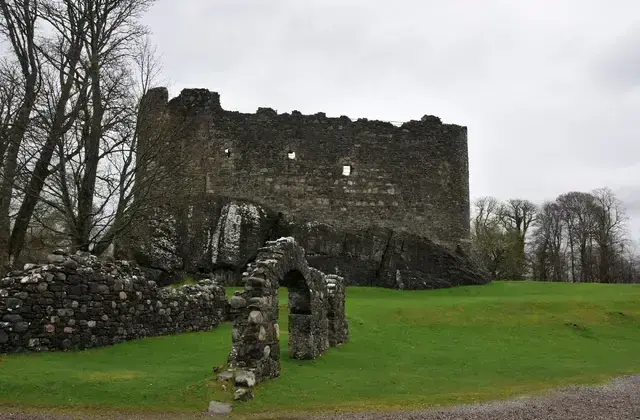 Argyll & The IslesDunstaffnage Castle
 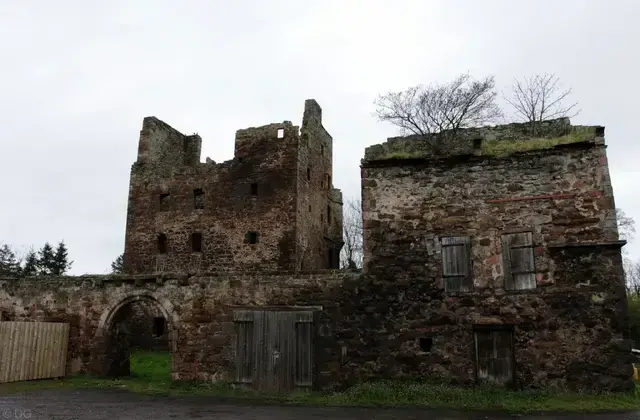 Edinburgh & The LothiansRedhouse Castle
  Edinburgh & The LothiansSaltcoats Castle