TICKETS£7.50
Prices checked against the official visitor page; confirm current opening hours before travel.
 Beta
Beta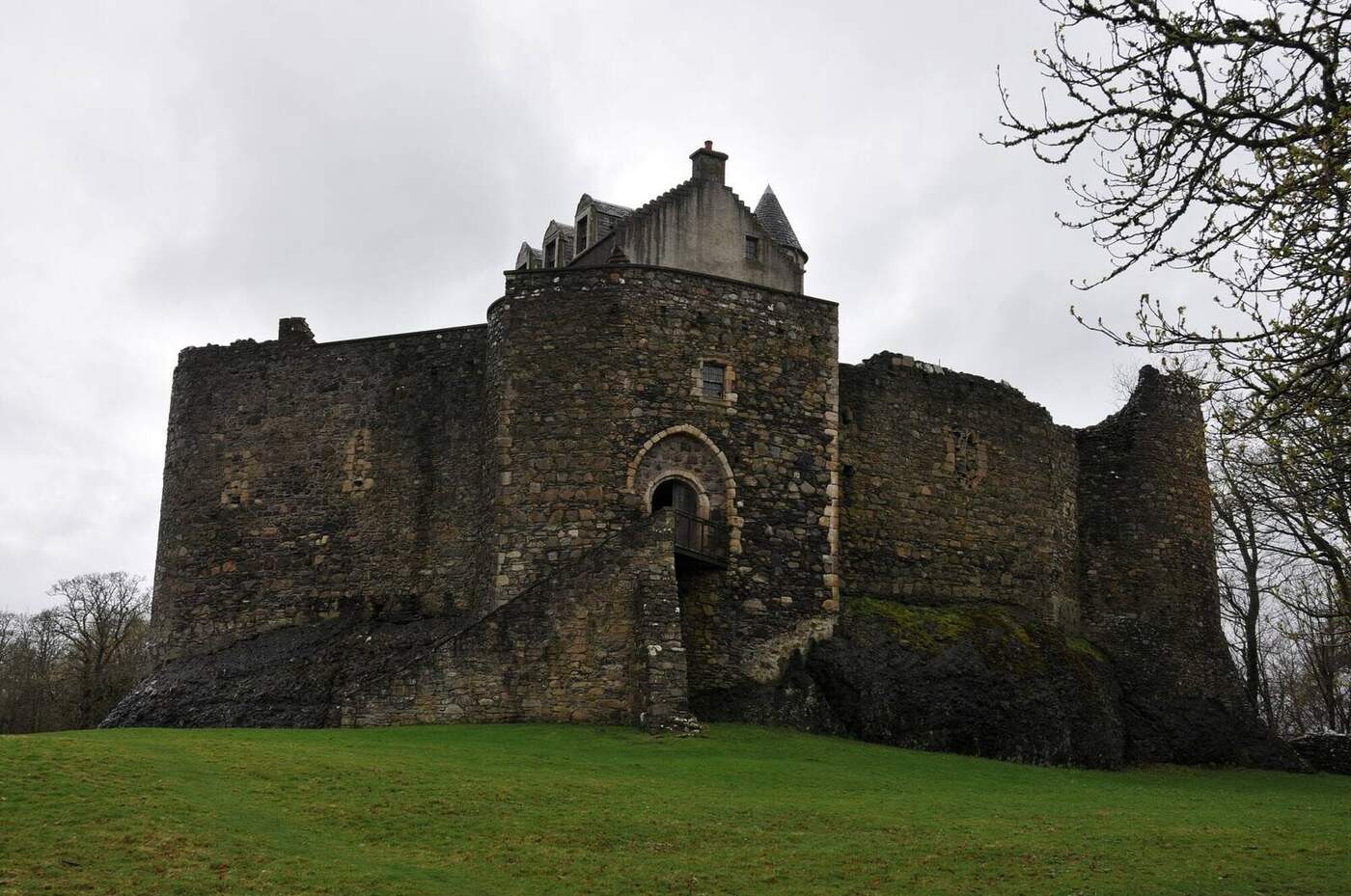
Scotland/Argyll & The Isles/Dunstaffnage Castle
SEA FORTRESS · OBAN
A curtain wall by the sea. Argyll history at full scale.
PLAN YOUR VISIT
Dunbeg, Oban, PA37 1PZ
VISIT TIME: 1–1.5 hoursPrices checked against the official visitor page; confirm current opening hours before travel.
Historic Environment Scotland lists year-round paid admission. The castle is just outside Dunbeg, with visitor parking at the end of the access road.
Use the address and map link above for Dunstaffnage Castle. Allow time for the final rural approach and check parking guidance before setting out.
The site has historic stairs and uneven surfaces. The ground-floor route is more manageable than upper levels; check the official access guide for current detail.
WHAT TO EXPECT
01 / THE STORY
Dunstaffnage stands above the water north of Oban, its high wall fitted around a great mass of rock. The approach feels solid and severe; the separate chapel nearby offers a quieter counterpoint.
This was a seat of sea-lords, a prize in Robert the Bruce’s western campaign and, centuries later, a brief prison for Flora MacDonald.
Come for a substantial coastal fortress rather than a romantic tower-house ruin. The curtain wall, rock and water make the defensive idea easy to grasp.
Give the chapel equal time. The short walk changes the scale and mood of the visit, and its finer stonework tells a different part of the same household story.
The MacDougalls of Lorn built the castle in the thirteenth century. In western Scotland, the sea connected territories and people more efficiently than many routes over land.
Dunstaffnage’s position expressed control over that maritime world. The shoreline was part of its network, not empty scenery beyond the walls.
Bruce defeated the MacDougalls in Argyll and captured Dunstaffnage in 1308. That victory changed the regional balance of power.
Ownership afterwards was not one simple transfer from MacDougall to Campbell. Lands moved through royal decisions, marriage and competing families before the Campbells secured Lorn in the later fifteenth century.
02 / VISUAL JOURNAL
Every photograph on this page was made by CastleScotland during personal field visits.
10 of 11 photographs
01 / THE STORY CONTINUES
In 1746, Flora MacDonald was briefly detained at Dunstaffnage after helping Prince Charles Edward Stuart escape. She was then sent south for questioning.
Her stay was short, and the castle was in government hands. It connects Dunstaffnage with the aftermath of the rising without making it a Jacobite stronghold.
The thirteenth-century chapel served the castle community, but it should not automatically be labelled the burial place of every MacDougall lord.
Look at the contrast: massive walls on the rock, carefully carved religious architecture a short walk away. Together they show more of lordly life than either site alone.
03 / MOMENTS IN STONE
The MacDougalls build the stone stronghold; its earliest phases remain debated. The water-facing site records the politics of medieval western Scotland.
Robert the Bruce takes Dunstaffnage. Her brief imprisonment connects the castle to the final Jacobite drama.
A royal grant places the castle with Colin Campbell, Earl of Argyll. The separate chapel changes the scale and mood of the visit.
Flora MacDonald is briefly held here before being taken south.
04 / FIND THE CASTLE
56.454724,-5.437498
Dunstaffnage Castle is at Dunbeg, Oban, PA37 1PZ. Check current access arrangements before travelling.
Open mapHistoric Environment Scotland lists year-round paid admission. The castle is just outside Dunbeg, with visitor parking at the end of the access road.
Use the address and map link above for Dunstaffnage Castle. Allow time for the final rural approach and check parking guidance before setting out.
Photograph the wall from the shore-side path, then return to the chapel for a quieter composition with trees and sea light.
History and visitor advice: CastleScotland fieldwork and official operator sources.
The location makes sense in a world connected by sea. The MacDougalls belonged to the descendants of Somerled, and their power extended through western Scotland’s maritime territories. Dunstaffnage’s architecture expressed that authority as well as providing protection. Its first securely documented appearance is in 1308, when Robert the Bruce defeated the MacDougalls in Argyll and captured the castle. This brought a major change in the balance of regional power.
The subsequent succession was more complicated than a direct, permanent transfer from MacDougall to Campbell. Bruce established a constabulary for Arthur Campbell, but lands later returned to John Gallda MacDougall under David II, and the lordship passed through marriage to a branch of the Stewarts. Colin Campbell, Earl of Argyll, secured Lorn in the later fifteenth century; the detailed assessment identifies a royal grant of 1470. Hereditary captains then looked after Dunstaffnage on behalf of the earls.
Inside the enclosure, later accommodation and the gatehouse show that the castle continued to develop. Its walls were not simply left untouched after the medieval conquest. The rock is fundamental to the defensive impression, but the sea does not form a continuous moat around every remaining side. A circuit from the permitted paths helps distinguish the natural outcrop from the masonry built above it, and gives the chapel its proper relationship to the stronghold.
The thirteenth-century chapel is smaller and more finely detailed than the fortress. Its carved stonework makes the contrast especially striking. It served worship connected with the castle, but should not automatically be described as a parish church or the original burial place of every MacDougall lord. The later burial enclosure belongs to another phase. The short walk between chapel and castle moves between different expressions of status: massive protection and carefully worked religious architecture.
Dunstaffnage retained military importance in the seventeenth and eighteenth centuries. It served government forces during the Jacobite period, and in 1746 Flora MacDonald was briefly detained here after helping Prince Charles Edward Stuart escape. She was being sent south for questioning. The episode was a short imprisonment, not a long residence, and it connects the castle with the aftermath of the rising without making it a Jacobite stronghold at that time.
A fire damaged the gatehouse in 1810, and later restoration forms part of the fabric seen today. The castle and chapel are protected monuments cared for by Historic Environment Scotland. Their value lies in the combination of early walls, later domestic changes and a coastal setting that remained important across different political regimes. Allow the exterior circuit and chapel walk to complement the rooms and wall views available on the day. Dunstaffnage is most compelling when its history is read as a sequence of changing authorities and uses, rather than one uninterrupted clan possession.
08 / EXPLORE NEXT
Find Scottish castles by region, landscape or the stories that bring them to life.
 Argyll & The IslesKilchurn Castle
  The Kingdom of FifeSt Andrews Castle
  Dundee & AngusEdzell Castle