TICKETSFree
No routine ticketed admission; respect local access and safety restrictions.
 Beta
Beta
Scotland/Edinburgh & The Lothians/Auldhame Castle
SEACLIFF RIDGE · EAST LOTHIAN
A small tower house. A quieter neighbour to Tantallon.
PLAN YOUR VISIT
Auldhame, near Seacliff Beach, East Lothian
VISIT TIME: 30–45 minutesNo routine ticketed admission; respect local access and safety restrictions.
There is no standard ticket or managed visitor route. View from responsible public access near Seacliff and check local conditions before travelling.
Use the address and map link above for Auldhame Castle. Allow time for the final rural approach and check parking guidance before setting out.
Ground can be rough or overgrown and the masonry is unstable. Do not enter unsafe parts of the ruin.
WHAT TO EXPECT
01 / THE STORY
Auldhame is the quiet neighbour of mighty Tantallon: a fragile sixteenth-century laird's house on the coastal ridge above Seacliff. Its broken walls ask for attention to domestic scale rather than battlefield drama.
The nearby chapel and burial ground add a much older religious landscape, but they are a separate archaeological site. Keeping the two stories distinct makes both clearer.
The combination of ridge, coast and small tower house gives a more intimate experience than the great fortress nearby. View it from permitted ground and keep away from unstable walls.
This is an unstaffed exterior encounter. Check access and land conditions before making a special journey.
The building is generally dated to the sixteenth century and probably associated with Adam Otterburn of Reidhall, a lawyer and Lord Provost of Edinburgh.
The attribution is reasonable rather than proved by a surviving building contract. ‘Probably’ is doing useful historical work here.
02 / VISUAL JOURNAL
Original field photography. CastleScotland will add further views to this gallery over time.
01 / THE STORY CONTINUES
The scheduled name connects the ruin with St Baldred, but a traditional name does not demonstrate that the medieval saint lived inside a sixteenth-century house.
The label carries local memory. The architecture supplies a later date and a different domestic purpose.
Excavation in 2005 investigated the separate chapel and burial ground nearby. Those remains show that the ridge mattered long before the laird's house.
Do not merge the burials, chapel and tower into one imaginary castle complex. They share a landscape, not a single construction date.
03 / MOMENTS IN STONE
The surviving laird’s house is built; attribution to Adam Otterburn remains probable. The ridge connects a small domestic tower house with beach, cliffs and an early religious landscape.
The house is scheduled as Auldhame, St Baldred’s House (SM5605). The castle became a ruin, but the older chapel and cemetery landscape kept the site historically significant.
Excavation investigates the separate neighbouring chapel and burial ground. Current access is part of the guide: check the official or local notice before making the final approach.
04 / FIND THE CASTLE
56.052856,-2.640023
Auldhame Castle is at Auldhame, near Seacliff Beach, East Lothian. Check current access arrangements before travelling.
Open mapThere is no standard ticket or managed visitor route. View from responsible public access near Seacliff and check local conditions before travelling.
Use the address and map link above for Auldhame Castle. Allow time for the final rural approach and check parking guidance before setting out.
Pair the low ruin with the Seacliff landscape; avoid climbing on masonry for a higher angle.
History and visitor advice: CastleScotland fieldwork and official operator sources.
Auldhame is usually described as an L-plan tower house. The surviving arrangement is more complicated than that shorthand suggests, with a main block, projecting elements and traces of an enclosure. Historic Environment Scotland describes a house of at least three storeys, with part of the basement barrel vaulted. A stair survives in a corner turret. These details explain a substantial residence rather than a low building that always looked as it does now.
The fireplace and bread oven described in the architectural literature bring the household into focus. Such fittings are more useful evidence for everyday occupation than a general claim about martial grandeur. They suggest preparing food, maintaining fires and organising work within a compact building. The upper rooms have largely disappeared, so assigning a precise purpose to each lost chamber would go beyond what can be confidently reconstructed.
A fragmentary courtyard wall and its entrance also deserve attention. A house was not experienced only from inside its main block: the approach and surrounding enclosure helped shape how people entered and moved around it. Looking at these relationships is more revealing than trying to make the ruin resemble a complete royal fortress. Do not climb the masonry to obtain that view.
The neighbouring chapel and burial ground belong to a much earlier story. Excavations revealed early medieval religious activity, with subsequent changes and continued burial over a long period. They concern a separate archaeological site, not proof that this sixteenth-century residence began as a monastery. The distinction matters because the landscape contains several overlapping histories without every structure belonging to the same institution.
St Baldred is associated with this coast through tradition and historical interpretation. A story of competing burial places belongs to the saint’s legendary afterlife, not a securely identified grave beneath the castle. Archaeology can establish buildings and burials without identifying a particular saint. The traditional name “St Baldred’s House”, used in the monument record, should therefore not be read as evidence that Baldred lived in these surviving walls.
The castle and the monastic settlement have separate scheduled-monument records. That protection recognises their importance without resolving every historical question. The sources consulted do not securely establish a precise abandonment date or a single destructive event for the house. Its present ruinous condition should not be turned into an unsupported tale of burning, siege or deliberate demolition.
Auldhame works best as a careful stop within a wider landscape of coast, cliffs and settlement. Observe the surviving vaulting and wall junctions from a suitable position, then step back to see the ridge. The original photographs can help you compare details without entering unstable spaces. Check local access conditions and respect boundaries; there is no need to force a route through the ruin. Its interest lies in the combination of a domestic building, an older religious landscape and the honest limits of what the evidence can tell us.
08 / EXPLORE NEXT
Find Scottish castles by region, landscape or the stories that bring them to life.
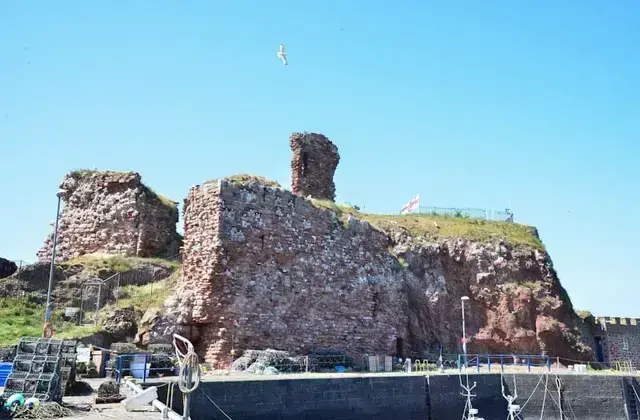 Edinburgh & The LothiansDunbar Castle
 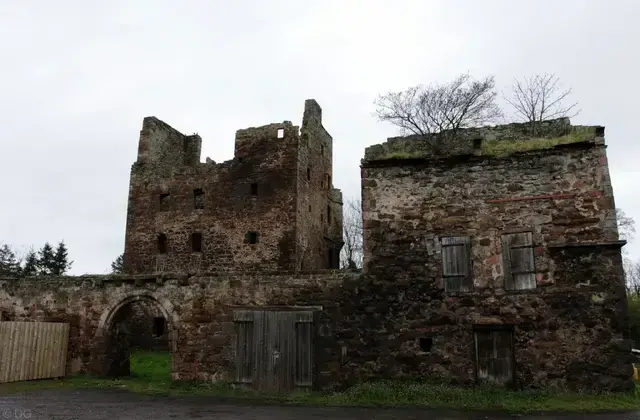 Edinburgh & The LothiansRedhouse Castle
  Edinburgh & The LothiansSaltcoats Castle