TICKETS£10.00
Historic Environment Scotland online and walk-up prices shown separately. Members enter free; check the official page for closures or access changes.
 Beta
Beta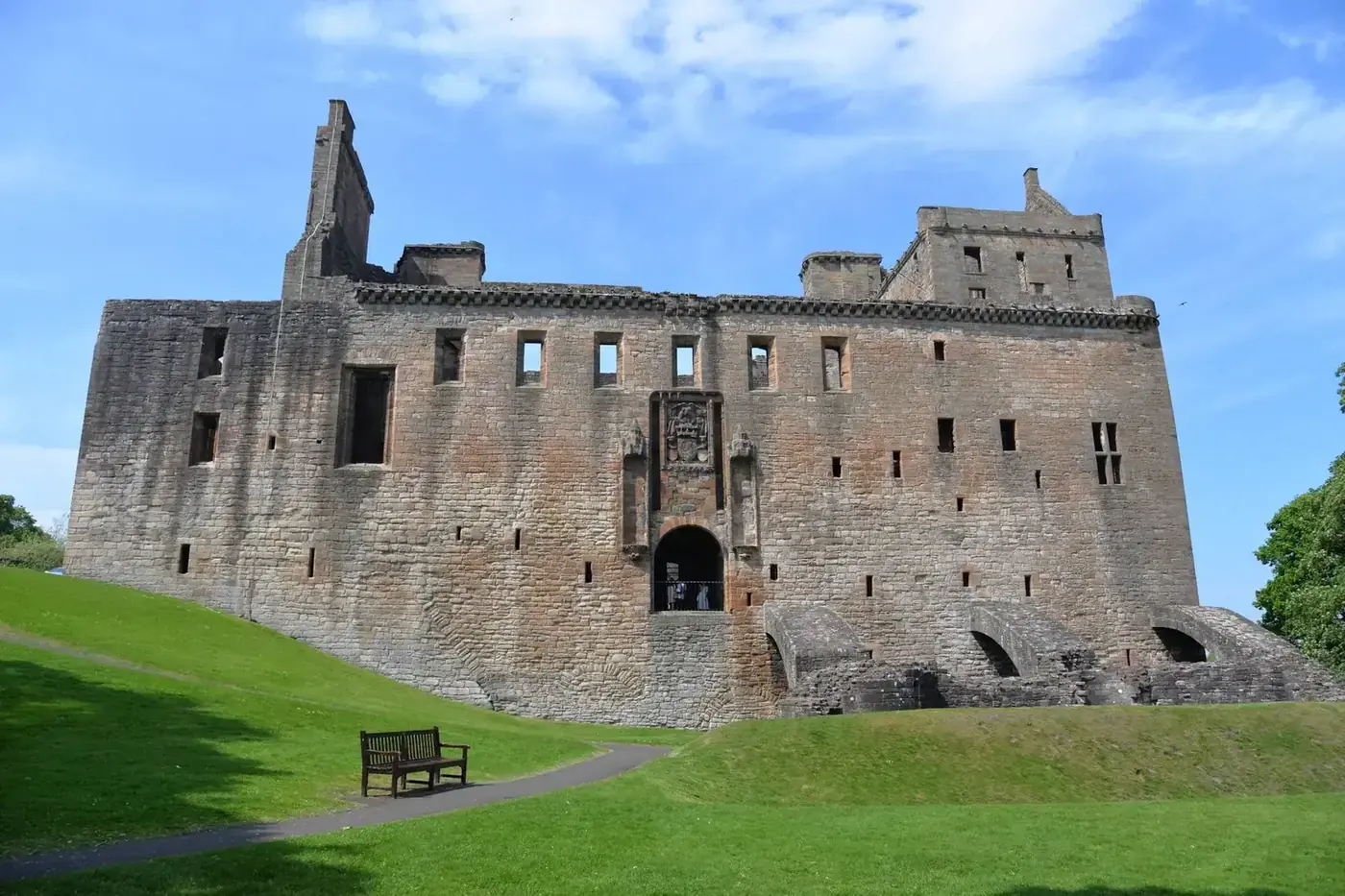
Scotland/West Lothian/Linlithgow Palace
ROYAL BIRTHPLACE · LINLITHGOW
A ruined palace by the loch. A royal story in full scale.
PLAN YOUR VISIT
Kirkgate, Linlithgow, EH49 7AL
VISIT TIME: 1.5–2.5 hoursHistoric Environment Scotland online and walk-up prices shown separately. Members enter free; check the official page for closures or access changes.
Opening arrangements, admission and access can change. Check the official visitor source before you travel.
Linlithgow Palace rewards a little time outdoors. Plan for the final approach as part of the visit.
Historic ground can include uneven paths, steps and exposed conditions. Wear suitable footwear.
WHAT TO EXPECT
01 / THE STORY
Linlithgow Palace sits beside its loch with the confidence of a building that once expected royal guests. The roofs are gone, but the scale remains: tall windows, great rooms and a courtyard fountain that still knows how to draw attention.
This was the birthplace of Mary, Queen of Scots. Yet the most enjoyable visit is not a march through her biography. It is a chance to wander through a royal home and imagine the noise, colour and daily effort that once filled it.
Linlithgow pairs a substantial ruin with an inviting waterside setting. You can explore the palace and then see it from outside, where the loch helps put the size of the building in perspective.
It is a good choice if you enjoy discovering rooms for yourself. Follow the permitted routes, pause at windows and let the changing views connect the palace to the landscape.
Mary, Queen of Scots was born at Linlithgow in December 1542. Within days, the death of her father, James V, made the infant queen of Scotland.
That is an extraordinary beginning for any life. Here, however, it brings you back to a simple domestic idea: a royal palace was also somewhere a mother cared for a newborn, while politics pressed in from outside.
The elaborate courtyard fountain belongs to James V’s transformation of the palace. Its carved figures reward a closer look; this was royal display placed where arrivals could hardly miss it.
A later tradition says the fountain flowed with wine in honour of Bonnie Prince Charlie in 1745. Treat that as a celebrated story rather than an everyday palace service. Even without the wine, it is an extravagant way to welcome a guest.
02 / VISUAL JOURNAL
Every photograph on this page was made by CastleScotland during personal field visits.
10 of 20 photographs
01 / THE STORY CONTINUES
Roofless buildings can be deceptive. A fireplace high on a wall or a doorway above your head points to a floor that has disappeared, not to a room designed to be impossible to reach.
Try reconstructing one space in your imagination: floor, ceiling, window, fire. Suddenly the ruin becomes a house again, with warmth and movement where you first saw only stone.
A fire in 1746, during the period when government troops were using the palace, left it a ruin. It never returned to life as a royal residence.
The open sky now gives the rooms much of their atmosphere. But the grandeur was originally enclosed—built to shelter and impress, with a household working behind the scenes.
After exploring, take time to look back from the surrounding parkland. The exterior helps you understand how the separate rooms fit into one imposing building.
Check current opening and access information before travelling. There are historic stairs and uneven surfaces, and access to particular levels can change.
Parts of Linlithgow Palace portrayed Wentworth Prison in Outlander. It is a striking change of identity for a royal birthplace, and a reminder of how the camera can give a familiar building a completely different mood.
If you recognise the setting, take a moment to notice what lies outside the shot: the open courtyard, the scale of the palace and the loch beyond.
03 / MOMENTS IN STONE
James I begins rebuilding Linlithgow as a royal palace. Mary, Queen of Scots gives the palace an immediate connection to a pivotal Scottish life.
Mary, Queen of Scots, is born at Linlithgow. The courtyard fountain remains one of the palace’s most striking details.
A fire leaves the palace roofless. The open sky makes the scale of the royal rooms unusually easy to understand.
04 / FIND THE CASTLE
55.976700,-3.603500
Linlithgow Palace is at Kirkgate, Linlithgow, EH49 7AL. Check current access arrangements before travelling.
Open mapOpening arrangements, admission and access can change. Check the official visitor source before you travel.
Linlithgow Palace rewards a little time outdoors. Plan for the final approach as part of the visit.
Walk the perimeter before choosing a viewpoint; the setting often tells as much of the story as the masonry.
History and visitor advice: CastleScotland fieldwork and official operator sources.
James I began the palace in 1424 after a fire damaged the earlier residence, the church and much of the town. His building campaign established the great eastern range and an impressive approach. The work was continued by later kings rather than completed as a single design. James III and James IV added and remodelled ranges around the courtyard, gradually creating the enclosed royal residence whose scale remains so striking today.
James V was born here in 1512, and his reign brought further changes. The courtyard fountain, completed around 1538, offered an elaborate focus for the royal setting. Its heraldic and decorative sculpture expressed magnificence as well as providing water. The carvings belong within a programme of royal display, not merely garden ornament. Look at the surrounding façades and entrances together with the fountain to see how architecture directed attention toward the court and its occupants.
Mary’s birth in December 1542 gives Linlithgow an especially personal connection with the royal family, but the exact room should not be identified with false certainty. Historic Environment Scotland suggests that it may have been in the lost original north range. The palace’s role as a royal nursery is clear even where individual room identifications remain uncertain. A famous life can be connected securely to a building without every detail of its setting surviving.
The north range demonstrates how much changed after Mary’s childhood. The earlier structure collapsed in 1607, and the replacement was built between 1618 and 1624. Its courtyard frontage belongs to that later campaign, so the visible square does not reproduce the palace exactly as Mary’s parents knew it. The consistency of the overall enclosure can conceal differences in date. Look for changes in windows, stairs and façade treatment as you move around the court.
The palace also experienced military occupation. Cromwell’s forces fortified the site in the seventeenth century, and government soldiers were stationed here during the final Jacobite rising. Fire in February 1746 gutted the building after that occupation. It was not damage caused by the Battle of Culloden, which occurred later. The roofless condition that now defines the visit therefore belongs to the palace’s eighteenth-century history rather than its medieval construction.
Today the palace, Peel and Royal Park form a scheduled monument cared for by Historic Environment Scotland. The open rooms reveal fireplaces, doorways and the relationships between floors, while the loch keeps the royal setting visible beyond the masonry. Allow time to view the exterior from the park as well as exploring the permitted interior route. The contrast between an organised courtyard and the open water helps explain the appeal of this residence to a travelling court. Linlithgow is most rewarding as a layered palace, a place of royal births, successive building campaigns and later ruin, whose surviving architecture remains powerful without needing every lost room to be reconstructed.
Compare this stop with the best castles in and near Edinburgh, including city landmarks and coastal day trips. Use our Scotland castles map to check locations before choosing your route.
08 / EXPLORE NEXT
Find Scottish castles by region, landscape or the stories that bring them to life.
 West LothianBlackness Castle
  West LothianMidhope Castle
  Scottish BordersNewark Tower