TICKETS£7.50
Historic Environment Scotland online and walk-up prices shown separately. Members enter free; always confirm current opening arrangements.
 Beta
Beta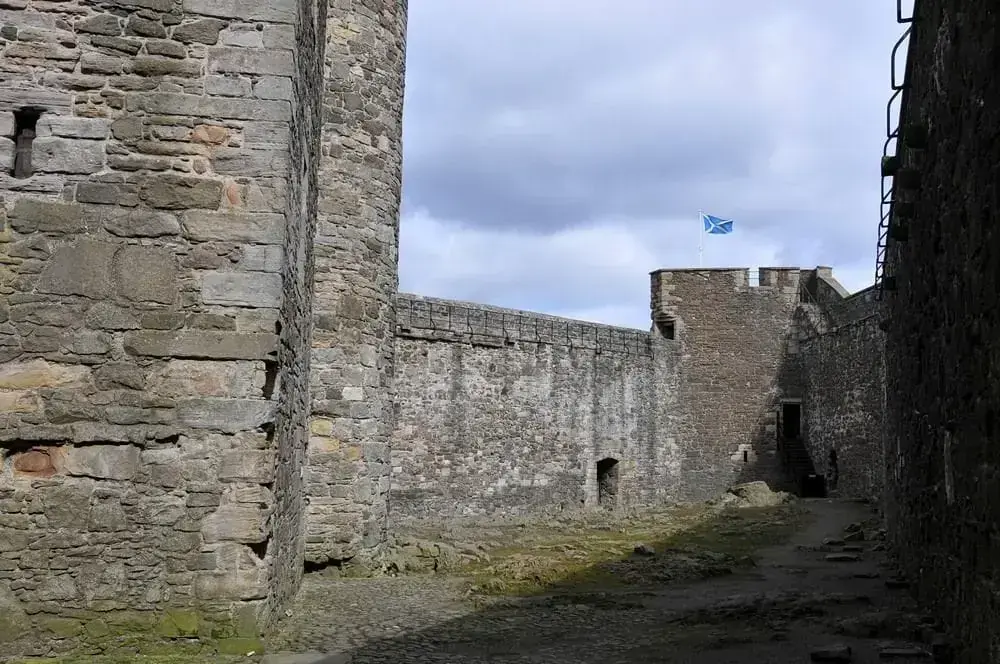
Scotland/West Lothian/Blackness Castle
THE SHIP THAT NEVER SAILED
A fortress on the Forth. A silhouette like a ship in stone.
PLAN YOUR VISIT
Blackness, Linlithgow, EH49 7NH
VISIT TIME: 1–1.5 hoursHistoric Environment Scotland online and walk-up prices shown separately. Members enter free; always confirm current opening arrangements.
Opening arrangements, admission and access can change. Check the official visitor source before you travel.
Blackness Castle rewards a little time outdoors. Plan for the final approach as part of the visit.
Historic ground can include uneven paths, steps and exposed conditions. Wear suitable footwear.
WHAT TO EXPECT
01 / THE STORY
From the shore, Blackness looks like a ship that has run aground and turned to stone. A long hull of walls points into the Forth, with a tower rising where you might expect a mast.
The nickname is playful. The building’s working life was often much less so: fortress, prison and ammunition store. That mixture gives a visit its character—fresh sea air outside, hard edges and enclosed spaces within.
Come for a castle whose setting is impossible to separate from the experience. The water, shoreline and views across the Forth give even a relatively short visit a strong sense of place.
Begin outside. Seeing the long shape from the shore makes the arrangement of the walls easier to follow once you go in.
Blackness owes its familiar nickname to its outline, not to a story about a real ship. Think of the central tower as a mast and the two ends as bow and stern, and the comparison becomes difficult to unsee.
It is a useful invitation to look at the whole building. A close-up of one tower misses the odd, elongated shape that makes this fortress so distinctive.
Blackness served as a state prison as well as a garrison. The same water that looks inviting to a visitor helped separate prisoners from the world beyond the walls.
The bare spaces make this a very different experience from a furnished country house. You do not need an invented ghost to feel the contrast between a wide horizon and a controlled doorway.
02 / VISUAL JOURNAL
Every photograph on this page was made by CastleScotland during personal field visits.
10 of 25 photographs
01 / THE STORY CONTINUES
In the sixteenth century, Blackness was strengthened for artillery warfare. Its defences reflect a world in which a fortress had to withstand guns and provide positions for guns of its own.
Look for openings in the masonry and the thickness of the walls. These are practical details with a very direct purpose: making it harder for an attacker to get close enough to take the place.
Blackness later served as an ammunition depot. The courtyard was roofed over during that phase, a surprising thought when you stand in the open space today.
Later conservation removed much of the depot-era work. The castle you see is therefore the result of several working lives, followed by decisions about which parts to reveal.
Leave room for the exterior after your visit. The water and weather can soften a building that feels severe from inside, and the long profile is best appreciated with some distance.
Check opening arrangements before travelling and expect uneven ground. A windproof layer is useful here even when the day began pleasantly inland.
Outlander turns Blackness into Fort William. The imposing walls and stark spaces do much of the work, giving the fictional setting a weight that would be difficult to build from scratch.
Blackness also appears in Hamlet (1990) and Outlaw King (2018). In the latter it stands in for the Yorkshire castle where Elizabeth de Burgh is imprisoned. These are screen roles, rather than events that all happened at Blackness itself.
03 / MOMENTS IN STONE
First documentary reference; Sir George Crichton is the probable founder. The waterfront profile gives Blackness its unforgettable nickname.
Major artillery improvements begin under James V and continue beyond his reign. The Forth can look peaceful even when the castle’s history is not.
The castle surrenders to Cromwellian forces; some visitor material instead gives 1650, as discussed in the article. Its walls record the shift from medieval defence to gunpowder warfare.
04 / FIND THE CASTLE
56.005400,-3.515400
Blackness Castle is at Blackness, Linlithgow, EH49 7NH. Check current access arrangements before travelling.
Open mapOpening arrangements, admission and access can change. Check the official visitor source before you travel.
Blackness Castle rewards a little time outdoors. Plan for the final approach as part of the visit.
Walk the perimeter before choosing a viewpoint; the setting often tells as much of the story as the masonry.
History and visitor advice: CastleScotland fieldwork and official operator sources.
The Crown acquired the castle in the mid-fifteenth century. Its later defensive appearance owes much to a programme begun under James V in the 1530s and continued into the early 1540s. James Hamilton of Finnart directed important work, but neither his involvement nor the king's reign lasted for the whole programme. The building should not be described as the product of one uninterrupted medieval campaign.
Thickened curtain walls and large gun openings show how Blackness adapted to artillery. A low gun-gallery, known as a caponier, protected the approach before later alteration of the entrance defences. Such details make the castle more than a picturesque silhouette: they reveal deliberate attempts to control an attacker’s movement. The central tower and landward range also accommodated people, so defensive strength remained tied to the practical organisation of the place.
The prison brought Blackness into national religious and political disputes. Cardinal David Beaton was held here in 1543. Later prisoners included opponents of the religious settlement after the Restoration, and the central tower was altered in the 1660s for confinement. Prison conditions varied with status and circumstances; it would be misleading to imagine that every prisoner occupied the same dungeon or experienced identical treatment.
During the civil war of Mary's reign, the garrison supported Mary, Queen of Scots. That allegiance is not evidence that she herself was imprisoned here. A later siege ended with the castle's surrender to Cromwellian forces in 1651. Some HES visitor material gives 1650, but its detailed Statement of Significance and the Cromwell Association's historical gazetteer support 1651. The discrepancy should be acknowledged rather than silently repeated as a certainty.
Blackness remained a military site after the Union of 1707. In 1870 it became Scotland's central ammunition depot, a transformation that brought new buildings and a pier as well as changes within the old enclosure. The War Office transferred it to the Office of Works in 1912, returned during the First World War, and finally left in 1919. Military use therefore continued long after its medieval defensive role had changed.
Restoration in the 1920s removed many recent army alterations, including a roof over part of the courtyard, and reconstructed upper portions of the towers. The present appearance is consequently not an untouched survival of the sixteenth century. Much archaeological evidence was also disturbed by clearance, but pockets of deposits may remain. The castle is protected as scheduled monument SM90036; its former separate Category A listing has been removed.
Walk around the exterior before examining the interior, using the water, the towers and the entrance to orient yourself. Then compare the heavy artillery work with the spaces adapted for residence, confinement and storage. Check the official visitor information for current access. Blackness rewards a measured visit because its compact footprint holds several different histories: royal authority, imprisonment, military supply and the later decision to present a restored fortress to the public.
Compare this stop with the best castles in and near Edinburgh, including city landmarks and coastal day trips. Use our Scotland castles map to check locations before choosing your route.
08 / EXPLORE NEXT
Find Scottish castles by region, landscape or the stories that bring them to life.
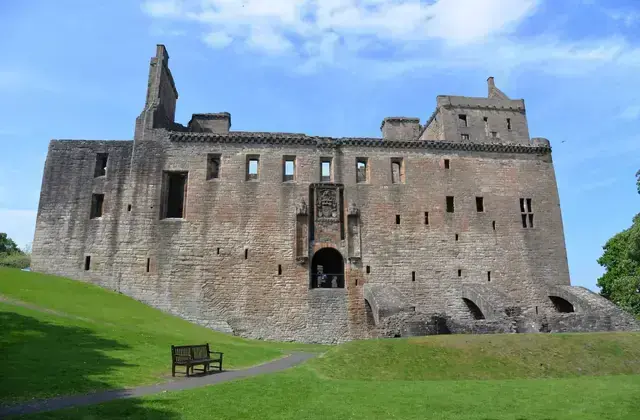 West LothianLinlithgow Palace
 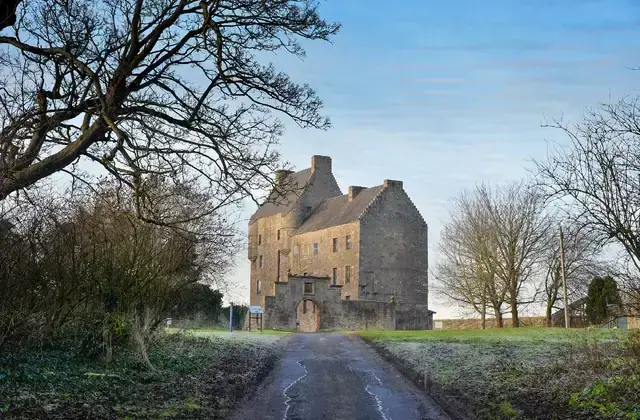 West LothianMidhope Castle
 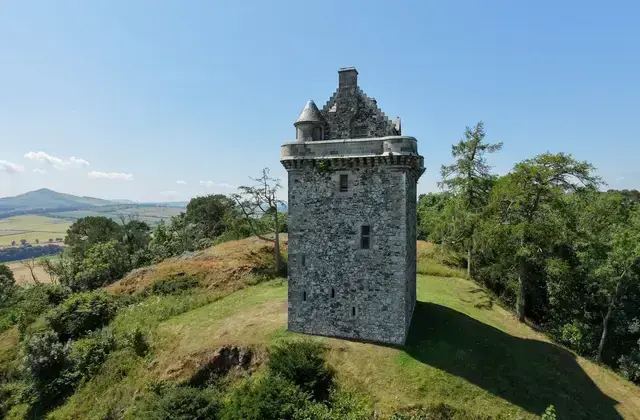 Scottish BordersFatlips Castle