Castle Tioram – a mysterious ruin on a Scottish island
Castle Tioram (Castle Tioram) – a medieval ruin on the tidal island of Eilean Tioram in Scotland. Learn about the history of the MacDonalds of Clanranald, the castle's architecture, and how to get there.
Castle Tioram (Castle Tioram) – what you should know?
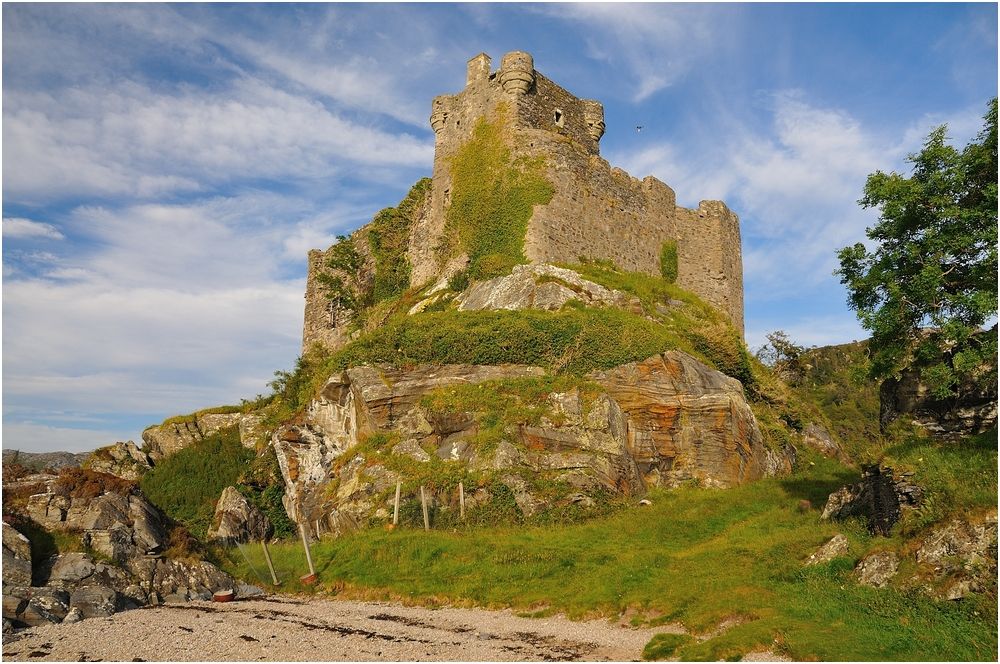
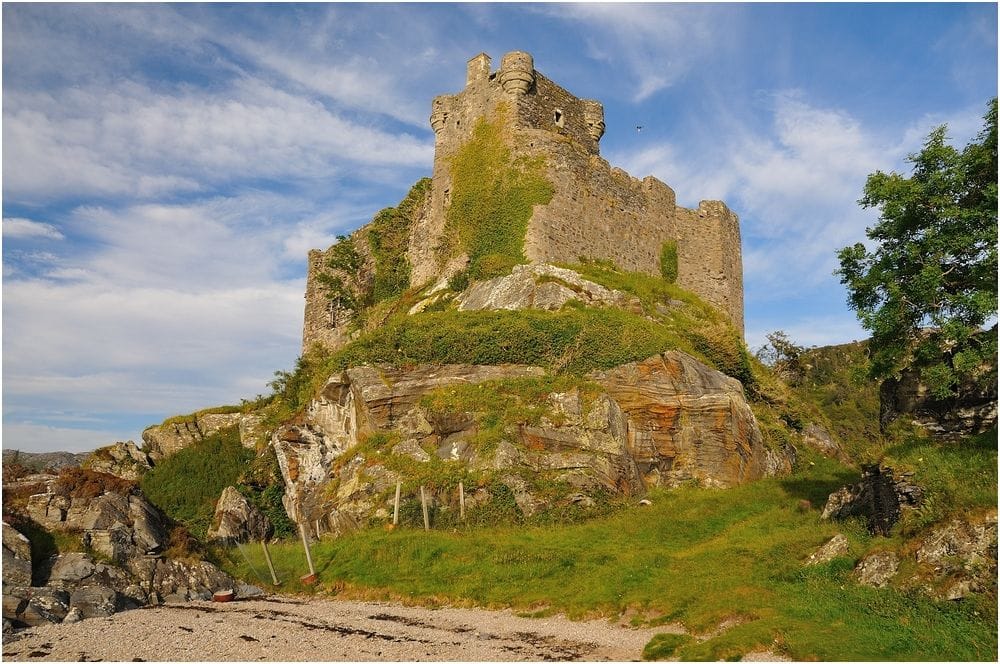
Castle Tioram, known in English as Castle Tioram, is one of the most picturesque and mysterious ruins in western Scotland. Located on the rocky islet of Eilean Tioram at the mouth of Loch Moidart, it has attracted travellers, historians and photography enthusiasts for centuries. Although today it can only be admired from the outside, its stark silhouette against the Scottish sky leaves an unforgettable impression.
Location and access – the island that disappears at high tide
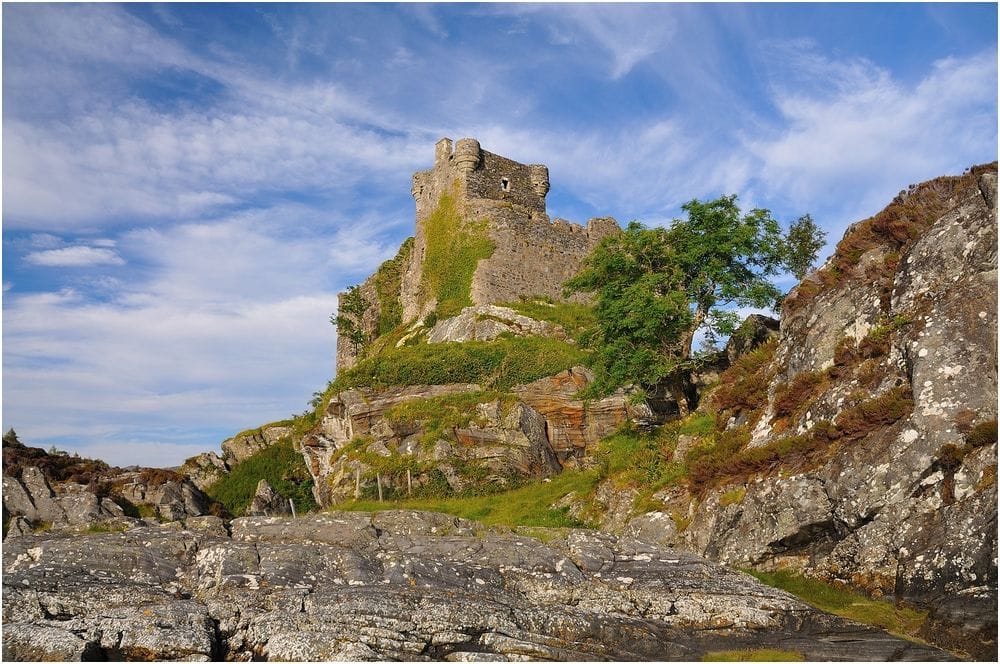
Castle Tioram lies in the Lochaber region of western Scotland, about 35 kilometres from the town of Fort William. The islet of Eilean Tioram is unique – at low tide it is connected to the mainland by a narrow sandy causeway, which allows you to reach the foot of the walls on foot. When the tide comes in, the island is cut off from the mainland and the castle literally rises from the water – this view is one of the most characteristic in the Scottish Highlands.
The nearest car park is at the village of Dorlin. The approach to the castle runs through picturesque country – the walk along the shore of Loch Moidart is worth the effort, even if you cannot go inside.
History of Castle Tioram – origins in the 13th/14th century
The origins of Castle Tioram date to the 13th or 14th century – historical sources do not entirely agree on this. The construction of the stone fortress on the site of an earlier, probably wooden, structure is attributed to Amy MacRuari, the mother of Ranaild – an ancestor of the MacDonalds of Clanranald. The choice of location was deliberate: the rocky islet, surrounded by the waters of Loch Moidart, provided a natural defence, making an attack from the sea almost impossible.
The castle quickly became the principal seat of the MacDonalds of Clanranald – one of the most powerful families in medieval Scotland. Over the following centuries it witnessed clan warfare, alliances and betrayals typical of the period. In the 16th century an extra storey was added to the main tower, changing the character of the castle – from a purely defensive stronghold it began to evolve into a grand residence, while remaining well fortified.
The Jacobite Rising of 1715 and a Journey into Fire
A turning point in the castle's history came in 1715, when the Jacobite uprising broke out in Scotland with the aim of restoring the Stuart dynasty to the throne. Allan MacDonald of Clanranald joined forces with the Jacobites and set out on a military campaign. Before he left the castle, however, he decided to set it on fire — not out of fear of the enemy, but out of spite, not wanting the fortress to fall into the hands of the government forces of the Kingdom of Great Britain.
The fire destroyed most of the castle's interiors, leaving only the stone walls. Allan MacDonald was killed at the Battle of Sheriffmuir that same year, and Tioram Castle was never rebuilt. Since then — for more than three centuries — the ruin has been slowly reclaimed by time and nature.
Castle architecture – a pentagonal curtain wall and a tower
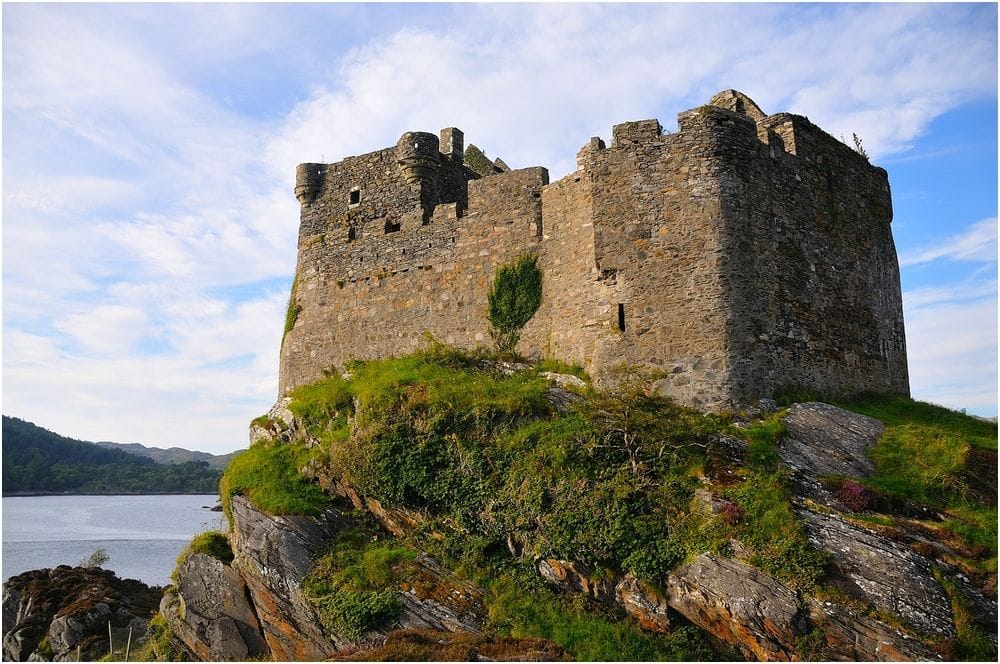
Tioram Castle was built on an irregular, rocky foundation, which gave its stone curtain a distinctive pentagonal shape adapted to the contours of the terrain. Defensive walls enclose an inner courtyard, where residential buildings were erected in later centuries. The main tower, known as the keep, served as the last line of defense and as the residence of the clan chief.
In the 16th century an additional floor was added to the tower with round bartizans in the corners, a characteristic feature of Scottish defensive architecture of that period. The bartizans not only fulfilled a defensive role but also visually emphasized the owner's prestige. The whole complex functioned both as a well-fortified stronghold and as a noble residence — evidence of the rising power of the MacDonalds of Clanranald in the late medieval and early modern eras.
Legends and ghosts of Tioram Castle
As is the case with any Scottish stronghold with a long history, Tioram Castle is wrapped in numerous legends. According to one of them, when the MacDonalds were forced to abandon the castle, they hid their treasures — gold, jewels and valuables — in the waters nearby so they would not fall into enemy hands. Supposedly no one has ever found them, and the island of Eilean Tioram is still imagined as a place of hidden treasures, waiting for brave treasure-seekers to this day.
Another tale speaks of the spirit of Amy MacRuari, who is said to still guard the stone building she herself had erected. On moonless nights, when mist rises over Loch Moidart, locals reportedly hear the echo of footsteps on the stone steps inside the ruins. Whether one believes in ghosts or not, the atmosphere of the place is so particular that even sceptics can feel a shiver of history.
Current condition and revitalization plans
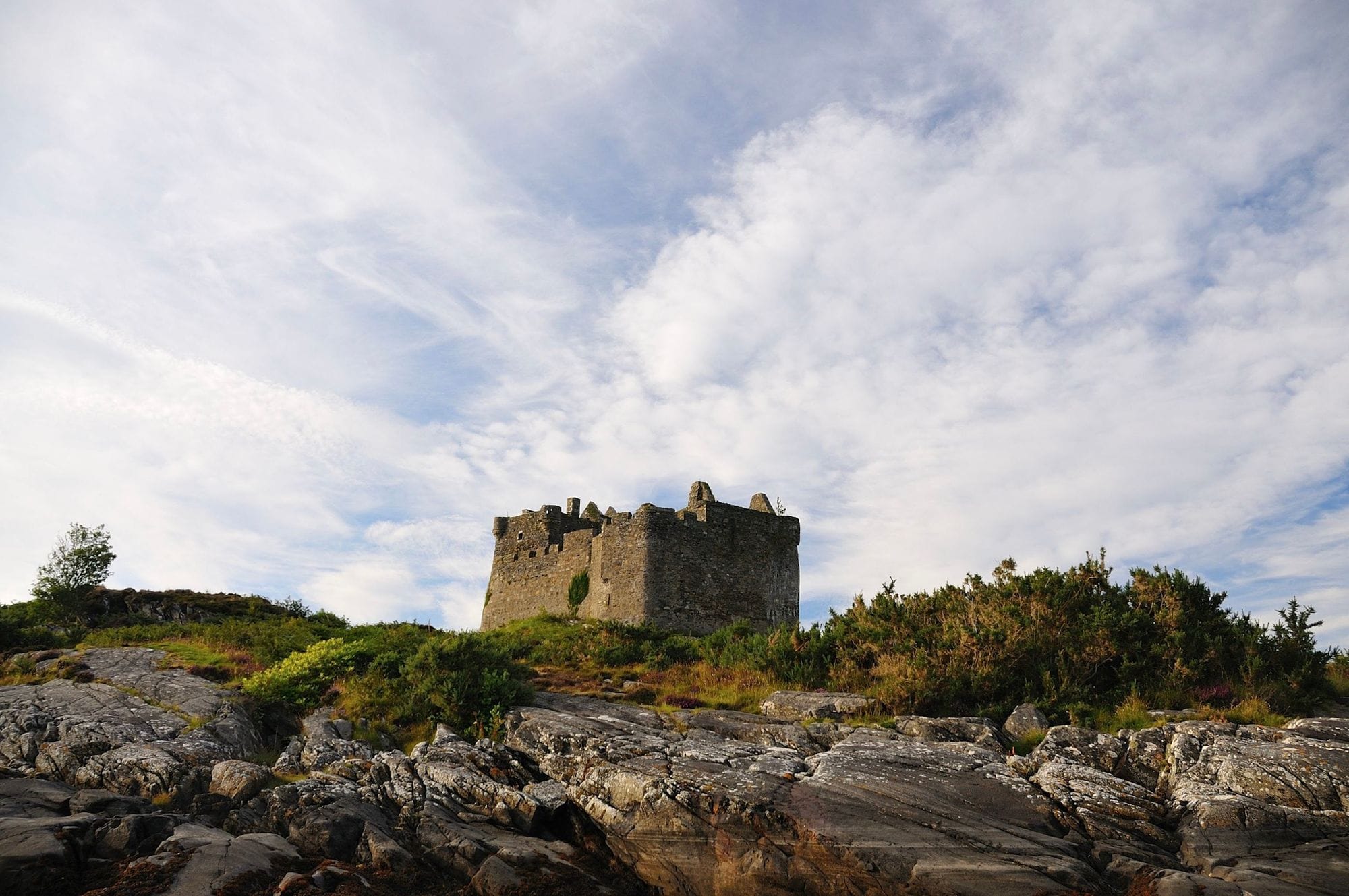
Tioram Castle is currently closed to visitors due to its poor structural condition. The walls have been substantially weakened by centuries of neglect, and their stability raises serious concerns among conservation authorities. The official ban on entry has been imposed to protect visitors from the risk of collapse of sections of the stone wall.
Debates about the castle's future have been ongoing for years. Proposals have been made for partial reconstruction or at least reinforcement of the structure to allow safe access for tourists. However, any revitalization plans face obstacles: high costs, a difficult location (accessible only at low tide), and disputes over ownership and cultural heritage. For now the ruin remains under the protection of heritage authorities as a medieval structure of exceptional historical value.
Why visit Tioram Castle?
Although you can't go inside, visiting the area around Tioram Castle is a unique experience. The journey itself — along a picturesque road beside the shore of Loch Moidart, with views of the rugged Highlands and waters sparkling in the sun — is a reward in itself. Tioram Castle is also a photographer's paradise: whatever the season or weather, it always offers compelling subjects, and a misty morning or a crimson sunset over the ruin looks almost fairytale-like.
For history lovers, the castle is a living story of medieval Scotland, clan warfare, and the Jacobite era. Every stone of these walls is a fragment of the tale of the people who lived, fought, and died here. If you're heading to western Scotland or planning a castle tour of the Highlands, Tioram should definitely be on your list. It's a place that lingers in the memory — and on photographs.
Location
Open in Google Maps →Continue reading in this gallery
Scottish Castles
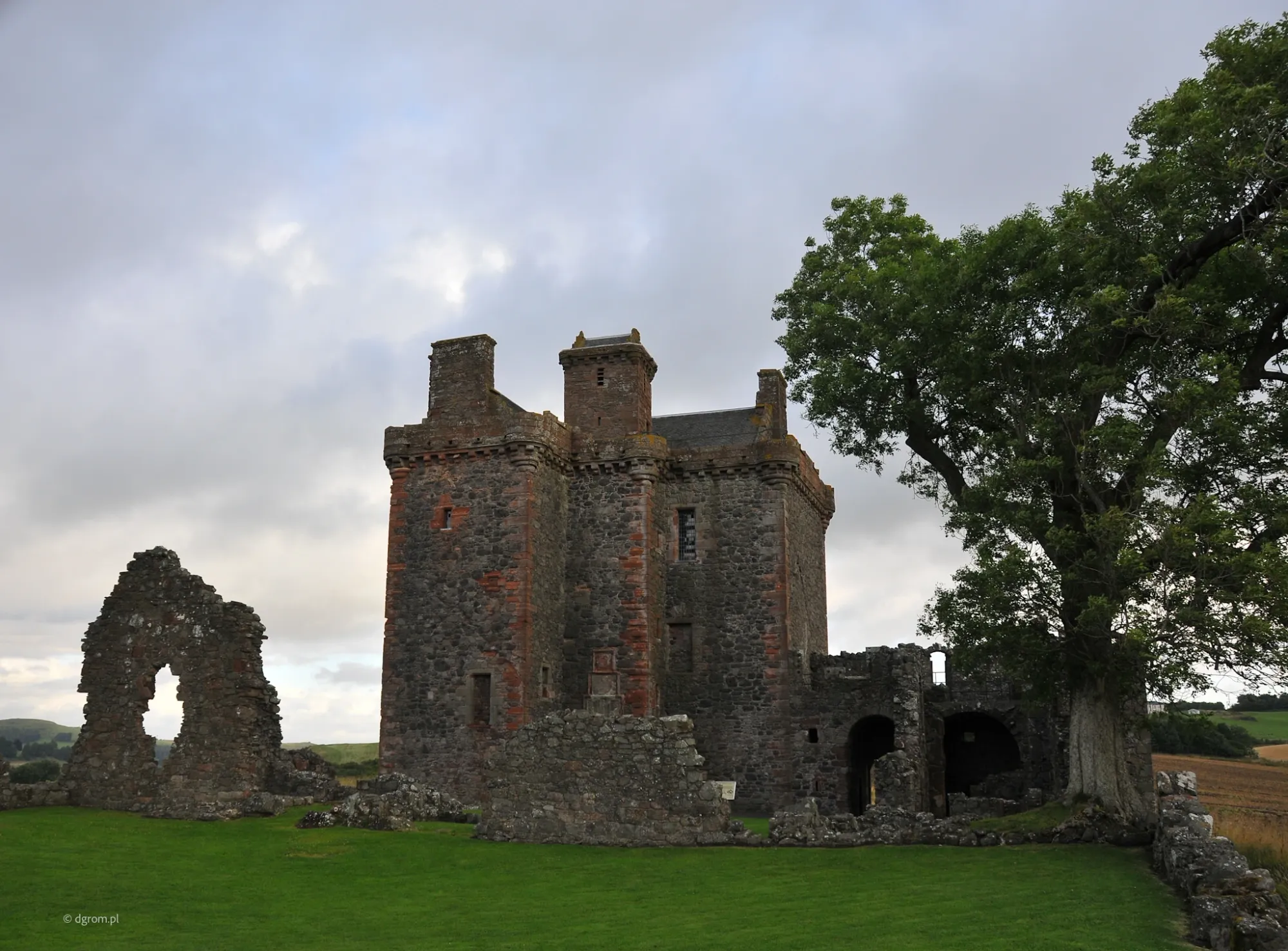
Castles of Scotland- Balvaird
Balvaird Castle is located in central Scotland, near the town of Abernethy. It was built in the 16th century as a residence for Sir Andrew Murray, who was a close friend of Mary, Queen of Scots.
Scottish Castles
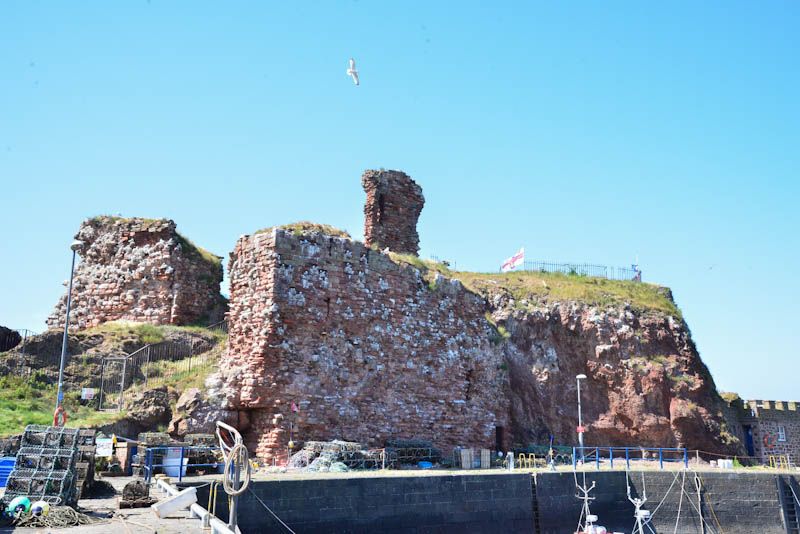
Scottish Castles - Dunbar
Dunbar Castle (English: Dunbar Castle) is a castle located in the town of Dunbar, in southeast Scotland, on the shore of the North Sea.
Scottish Castles
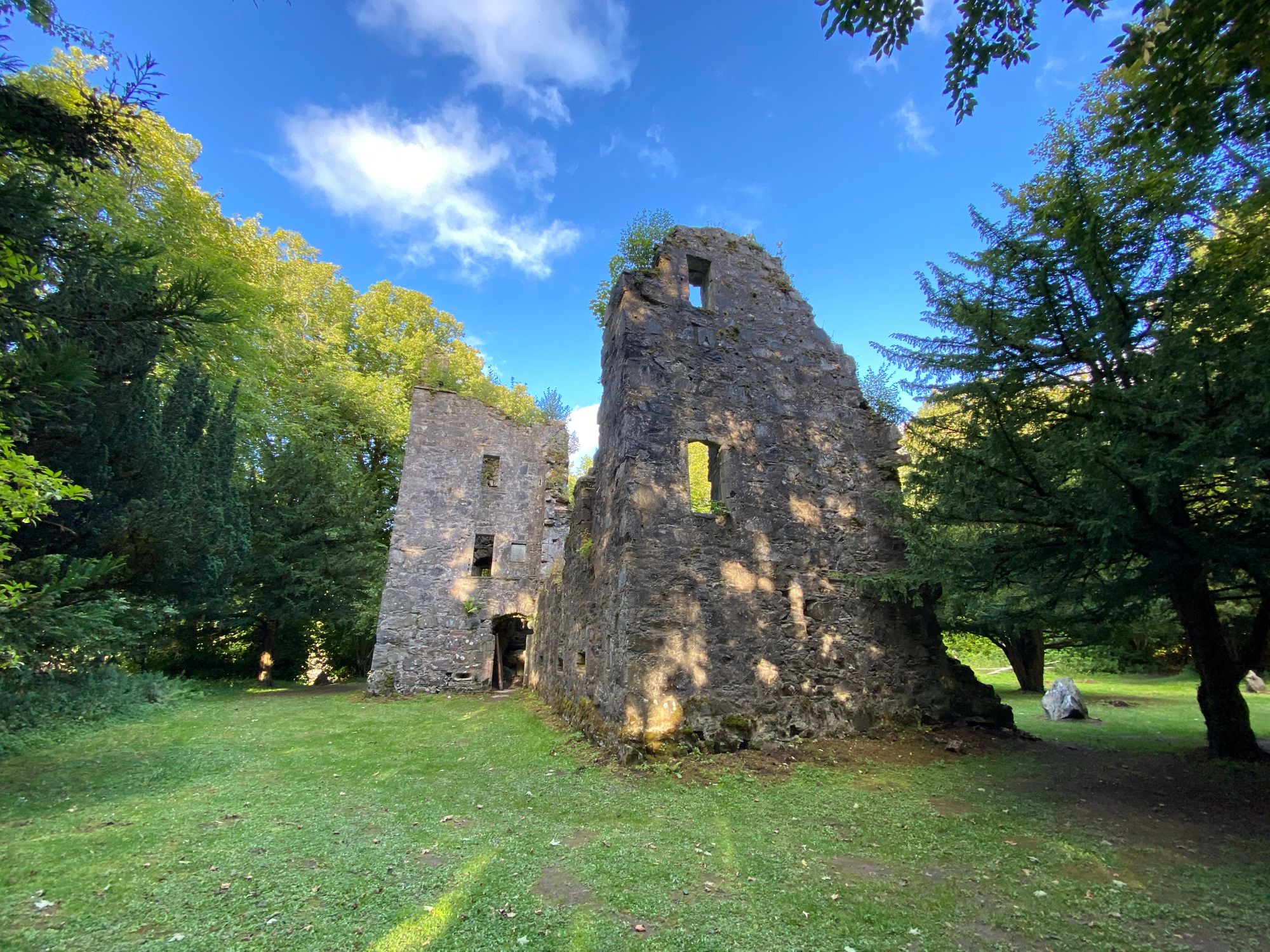
Castles of Scotland - Finlarig
Finlarig Castle is a historic castle located in central Scotland, in the county of Perthshire. The castle belonged to Clan Campbell and was an important administrative and commercial center in the region.
Scottish Castles
Scottish Castles - Craigmillar
Craigmillar Castle is a ruined medieval castle in Edinburgh, Scotland. It is located about 5 km from the city centre.