Moats, sea cliffs and loch shores: six Scottish castle ruins where the landscape is part of the story.
Caerlaverock Castle · Original CastleScotland photography
A ruined castle can reveal things that furnished rooms conceal: the shape of a courtyard, the thickness of a defensive wall or the relationship between a tower and its surroundings. Scotland’s ruins range from extensive residences with recognisable rooms to fragments whose setting does much of the storytelling.
This selection brings together six contrasting sites already covered in the CastleScotland atlas. Use it to choose the kind of visit you want, then open the individual guides for photographs, history and visitor information. The order is a starting point for discovery, not a single driving route or a ranking.
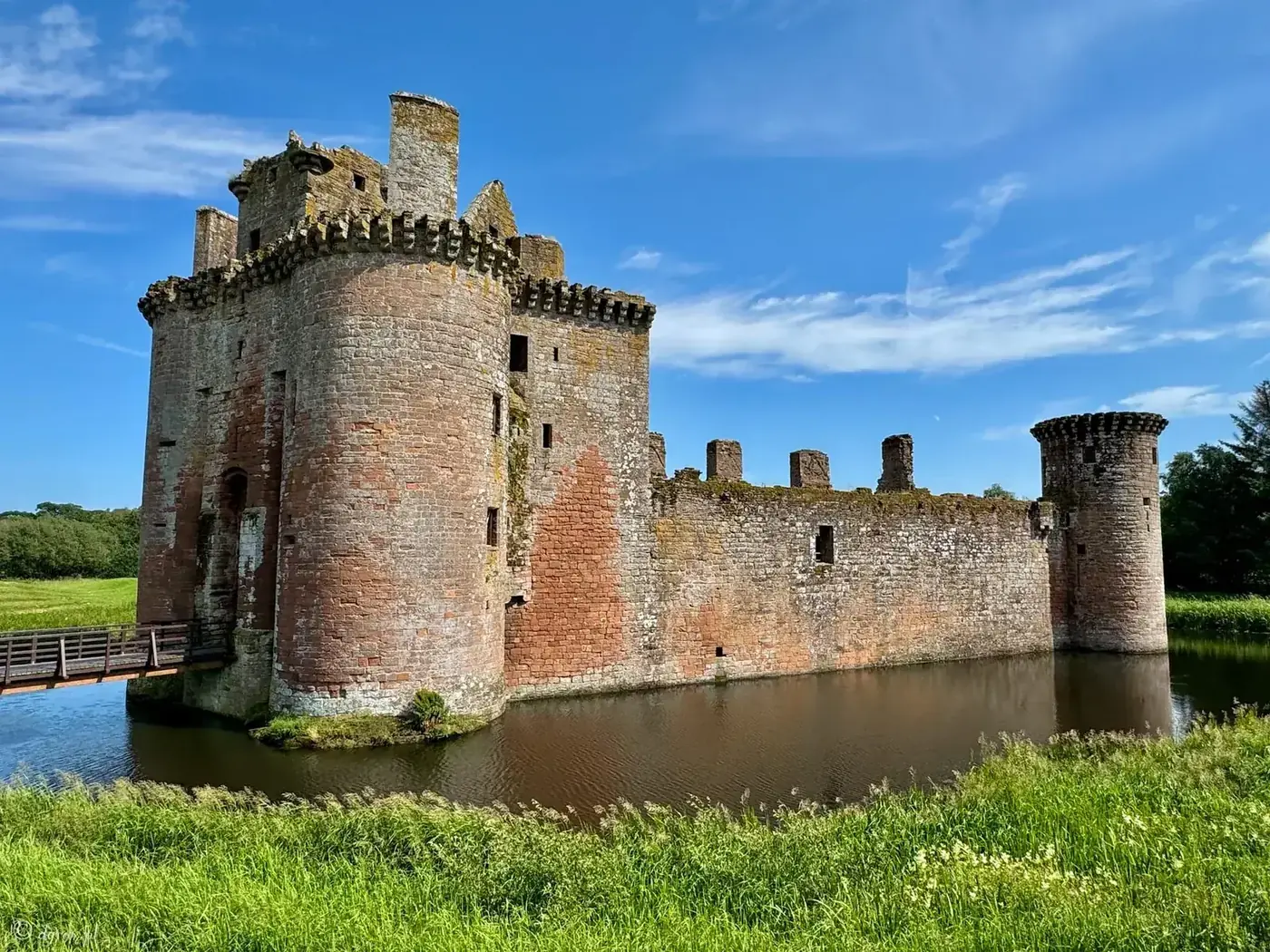
Near Dumfries, Caerlaverock combines a triangular plan, a moat and red sandstone walls. It is a strong starting point for comparing medieval defences with the remains of a more decorative residence inside the courtyard. Look at the overall shape before concentrating on details.
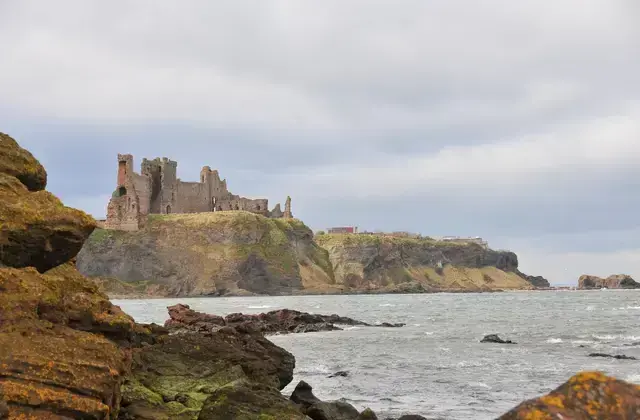
Tantallon’s great curtain wall crosses a promontory in East Lothian, with the North Sea and Bass Rock beyond. Choose it for the relationship between fortification and sea cliffs. The exposed setting matters as much to the visit as the surviving masonry.
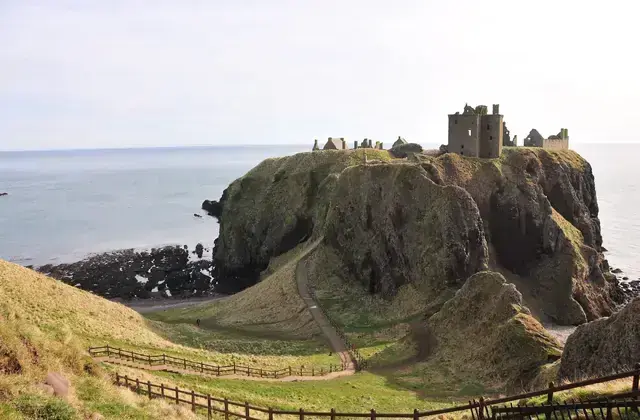
South of Stonehaven, Dunnottar occupies a rocky headland approached from the land. The surviving buildings tell the story of a substantial residence as well as a defensive position. Its approach makes it a different experience from a ruin beside a town street.
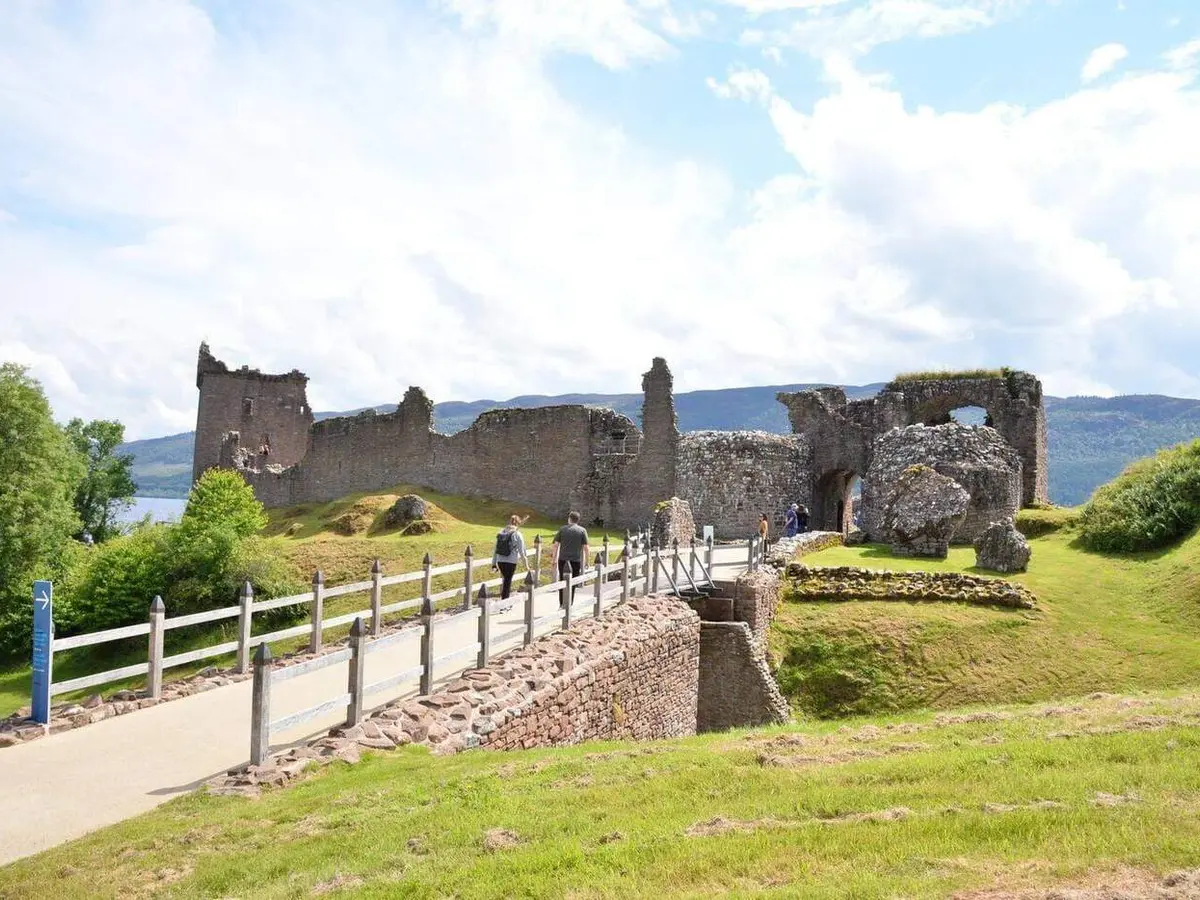
Urquhart spreads across a promontory on the western shore of Loch Ness. The broken walls, tower and surrounding water offer several ways to read the site. It suits an itinerary through the Great Glen rather than a rushed excursion across the whole Highlands.
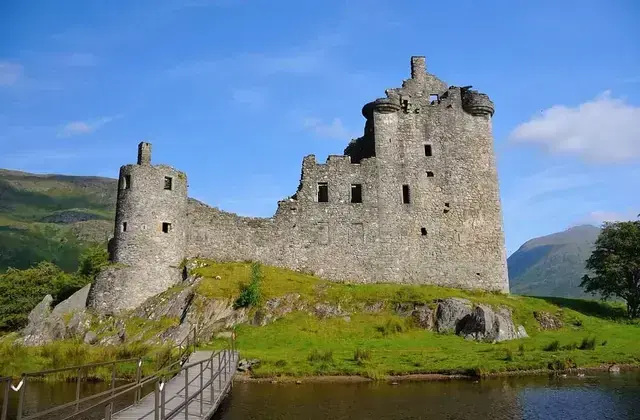
At the head of Loch Awe, Kilchurn combines a tower house with courtyard buildings and a later barracks range. The changing relationship between ruin, water and mountains is a reason to pause. Check which areas can be approached before planning an interior visit.
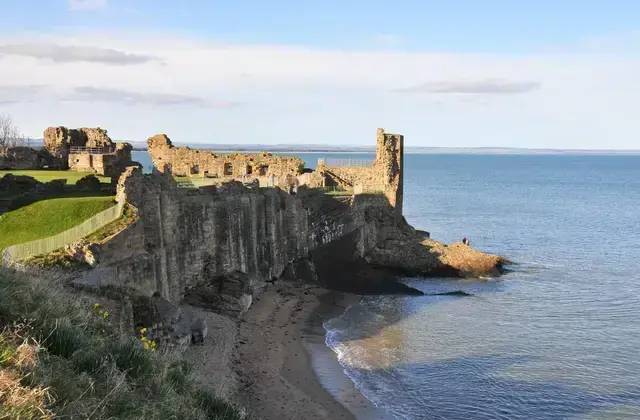
St Andrews Castle stands above the sea in a historic town in Fife. Its ruined residence adds a different perspective to a visit to St Andrews: the story of bishops and archbishops, power and conflict. Pair the castle with time to explore the town on foot.
Choose one area first. From Edinburgh, look at Tantallon and the other Lothian guides; for a Fife visit, begin with St Andrews. Urquhart and Kilchurn belong to different parts of the west and north, while Caerlaverock is in south-west Scotland. Use the map to understand distances before combining stops.
Ruined does not mean freely accessible or always open. Follow the current operator information linked in each castle guide. Coastal approaches, steps and uneven ground can affect your plans; a photograph of an accessible viewpoint does not establish access to every part of the building.
Which castle ruins should I choose near Edinburgh?
Tantallon is the coastal choice in this selection. Craigmillar, Dirleton and Crichton offer other approaches to ruined castles in and around the capital. The Edinburgh guide brings those choices together.
Are ruined castles free to visit?
Some exterior viewpoints and grounds are free, while other sites charge admission or restrict entry. Check the individual guide and the operator’s current information; do not assume the whole site is open because its walls are ruined.
Can I see all six in one day?
They are spread across Scotland and are not intended as a one-day route. Pick one region and give yourself time for the approach, the castle and nearby places rather than trying to collect every stop.
 Beta
Beta