Look beyond the familiar names: six castles for travellers who enjoy the details as much as the famous views.
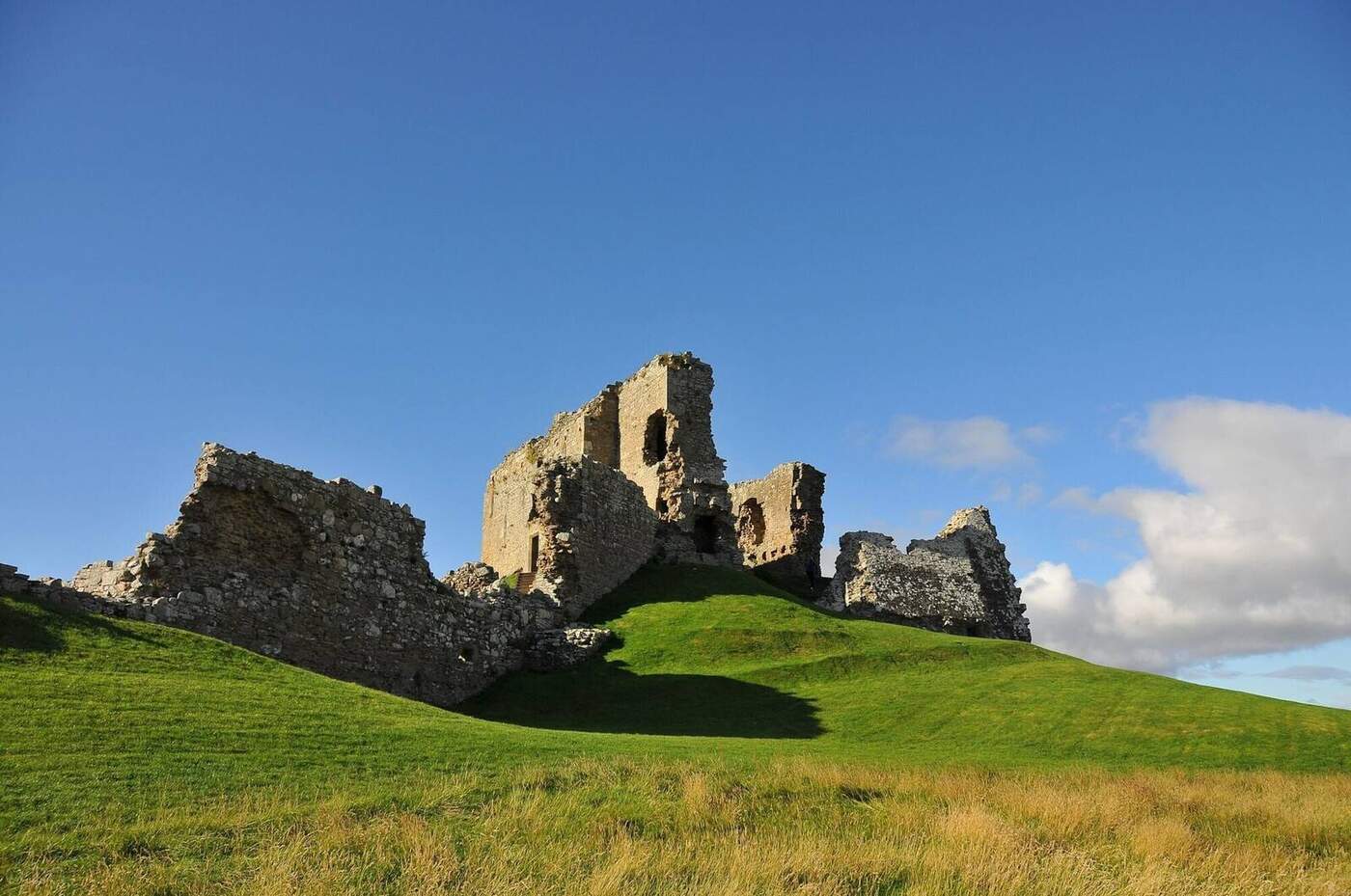
Duffus Castle · Original CastleScotland photography
Not every rewarding castle visit needs a royal palace or a famous skyline. An earthwork in Moray, a small ruin beside Loch Assynt or a courtyard in the Midlothian countryside can change how you see Scotland’s castles. These are places to add thoughtfully to a journey, rather than another list to rush through.
Here, ‘hidden’ means an editorial selection beyond the most familiar castle names. It does not mean undiscovered, guaranteed quiet or freely accessible. All six have their own CastleScotland guide, and each offers a different reason to stop: landscape, domestic architecture, a courtyard or a garden.
Near Elgin, Duffus rises above the flat Moray landscape on a substantial artificial mound. Look beyond the striking broken keep: the earthwork helps explain the form of the earlier stronghold. It is a useful choice if you want to understand a castle’s ground plan as well as its walls.
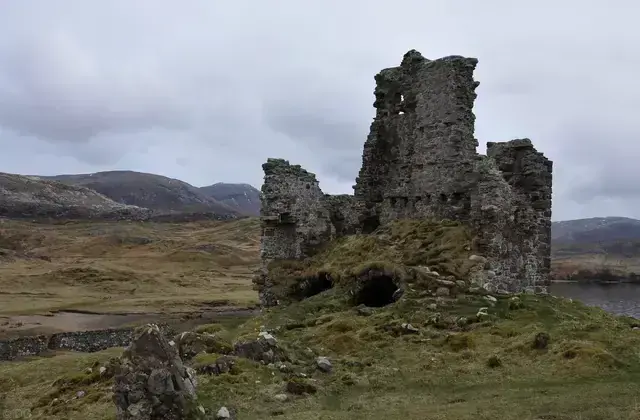
At Loch Assynt, Ardvreck is a small ruined tower on a rocky promontory. The surviving masonry is only part of its appeal; water, mountains and changing light frame the view. Choose it for a landscape-led stop during a journey through the north-west.
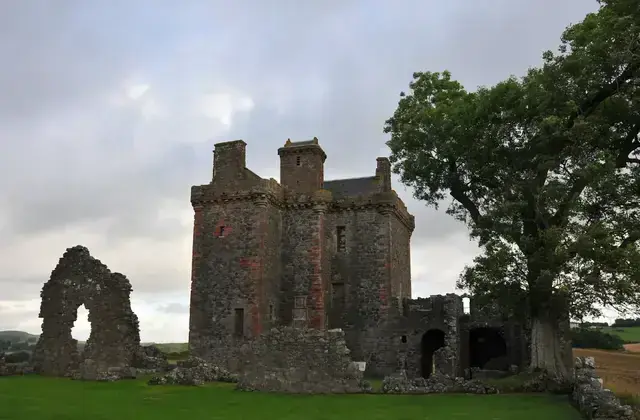
Balvaird stands above open Perthshire fields. Its main tower remains roofed, while much of the surrounding courtyard ranges is ruined. That contrast makes it a particularly good place to consider how a household occupied the whole site, rather than just its tallest building.
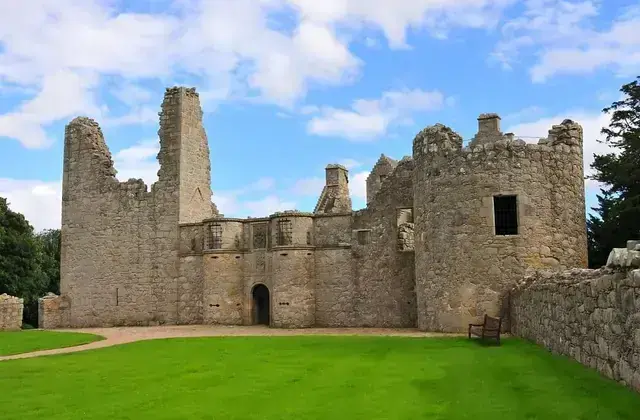
Near Tarves in Aberdeenshire, Tolquhon’s decorated gateway introduces a courtyard with older masonry and later domestic ranges. It rewards looking closely at the design of the entrance and the relationship between buildings. Choose it for architecture and the impression a residence makes on arrival.
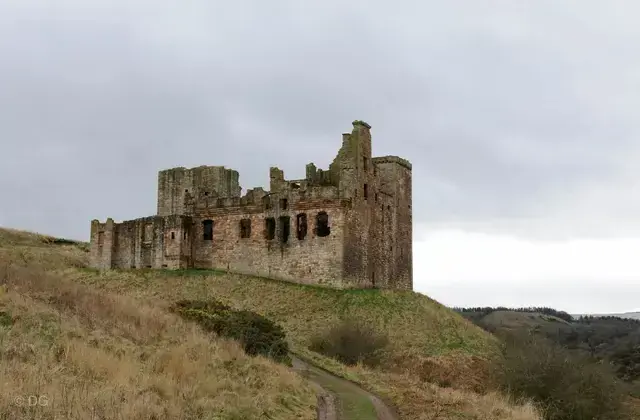
Crichton overlooks the upper Tyne valley south-east of Edinburgh. Its medieval tower and Renaissance courtyard belong to different stages of the same residence. It is a countryside alternative to the capital’s familiar fortress; check current access before expecting to see courtyard details up close.
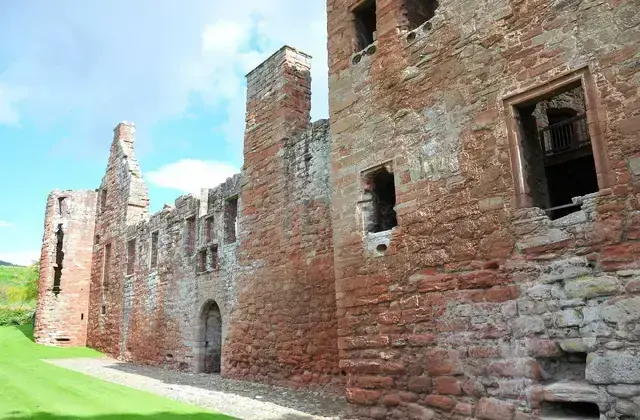
Near the Angus glens, Edzell brings a ruined residence together with an enclosed Renaissance garden. Carved panels are part of what makes the garden distinctive. It offers a different focus from a coastal fortress: the relationship between domestic life, display and a carefully designed outdoor space.
Start with your destination rather than trying to connect all six. Crichton can be considered alongside an Edinburgh-area itinerary, Balvaird with Perthshire, and Edzell with Angus. Duffus, Tolquhon and Ardvreck belong to separate parts of the north and north-east; the castle map helps you see those differences.
Read the individual guide before travelling, and follow its links to current visitor information. Allow for the approach, weather and any restrictions. These recommendations describe why a place is interesting; they do not promise open interiors, available parking or solitude.
No. They are documented historic places. ‘Hidden’ describes our choice to look beyond the most familiar names, not a claim that nobody visits or knows about them.
Which one should I consider near Edinburgh?
Crichton is the Edinburgh-area choice in this selection. Use the castles near Edinburgh guide to compare it with Craigmillar, the coastal castles and other places around the capital.
Does a quieter-looking castle have unrestricted access?
No. Ownership, conservation work and local conditions can restrict access even when a place looks empty. Consult current visitor information and respect gates, signs and private areas.
 Beta
Beta