TICKETS£18.00
Prices checked on the official National Trust for Scotland planning page; castle and garden access can differ.
 Beta
Beta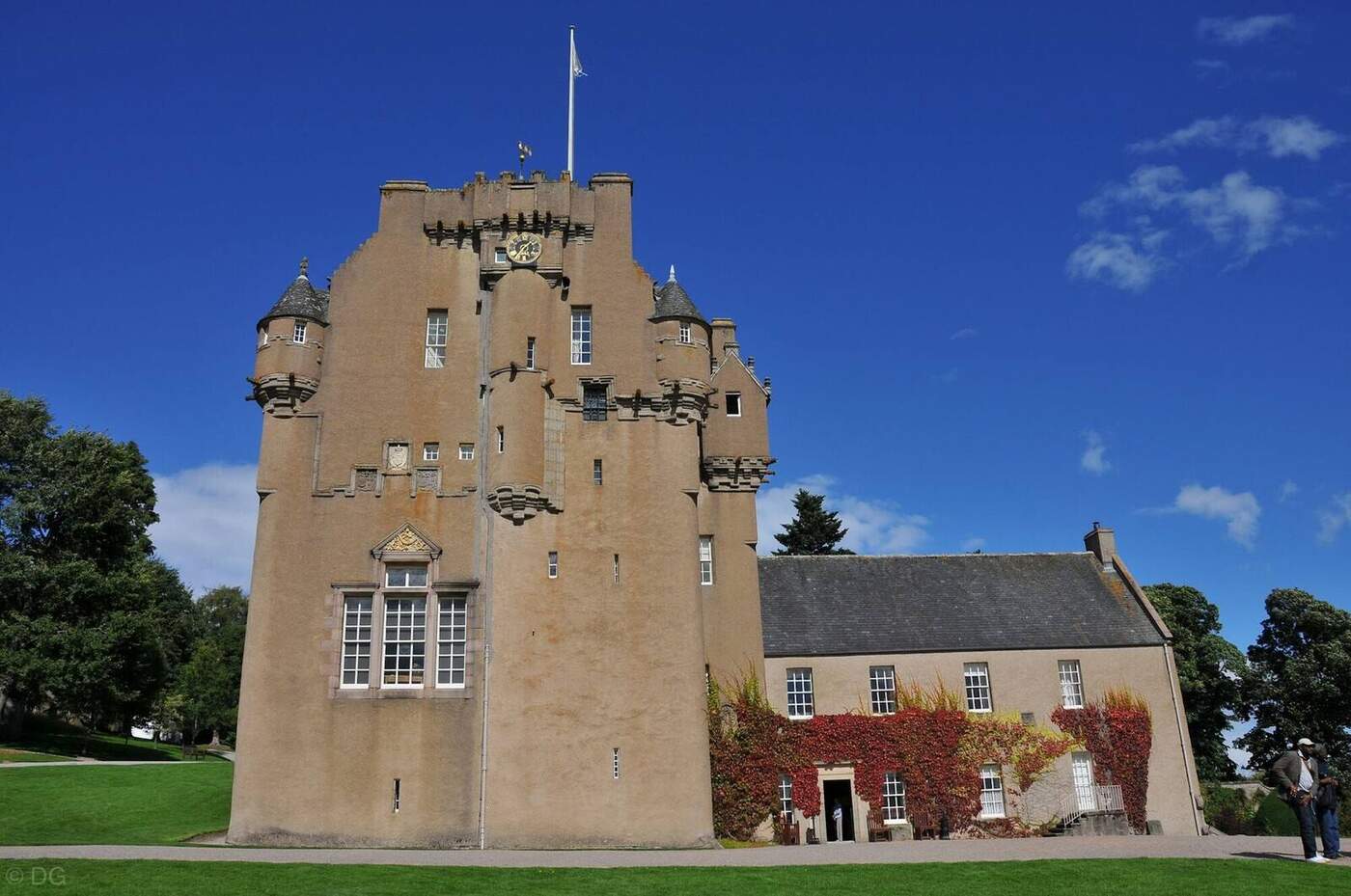
Scotland/Aberdeenshire/Crathes Castle
PAINTED CEILINGS · DEESIDE
A family tower. A gardened world beyond the walls.
PLAN YOUR VISIT
Crathes, Banchory, AB31 5QJ
VISIT TIME: 2–3 hoursPrices checked on the official National Trust for Scotland planning page; castle and garden access can differ.
The gardens and castle can have different access patterns, so use the official planning page.
Use the address and map link above for Crathes Castle. Allow time for the final rural approach and check parking guidance before setting out.
Historic stairs are part of the castle route. Gardens and estate paths offer a different experience, but conditions vary with weather and season.
WHAT TO EXPECT
01 / THE STORY
Crathes has the ingredients many visitors hope for in one place: a turreted tower, painted ceilings, family objects, formal gardens and a famous ghost story.
The Burnetts shaped the estate for centuries. Their castle is richly decorated rather than ruinous, so the best discoveries are often above your head or hidden in heraldry.
The house and garden work as one visit. Inside, rare painted ceilings and accumulated family collections reward close looking; outside, yew hedges and a sequence of garden rooms change the mood completely.
Check current admission and access arrangements with the National Trust for Scotland, especially if you want to see the interiors as well as the grounds.
Robert the Bruce granted the Burnetts land here in 1323. The remarkable Horn of Leys is traditionally said to have been presented by the king when the family became royal foresters.
The land grant is historical; the personal handover of the horn belongs to family tradition. Keeping that distinction visible lets the object remain fascinating without turning a cherished story into an eyewitness fact.
Alexander Burnett, ninth laird, and Janet Hamilton raised the tower to great-hall level after work began in 1553. A later Alexander Burnett and Katharine Gordon completed the residence and moved in during 1596.
The heraldic panels preserve both couples in stone. Conservation work has even found evidence that this carving was once coloured, replacing today's grey-stone image with something brighter and more deliberate.
02 / VISUAL JOURNAL
Every photograph on this page was made by CastleScotland during personal field visits.
01 / THE STORY CONTINUES
Around the turn of the seventeenth century, painters covered boards and beams with figures including the Muses and celebrated heroes. These rooms were designed to display learning and status, not medieval gloom.
The castle suffered a serious fire in 1966, but much of the historic interior survives. Its vulnerability makes the painted decoration feel all the more exceptional.
Crathes folklore tells of a Green Lady seen in one of the rooms, often linked in later retellings with a servant, a child and remains supposedly found near a fireplace.
The apparition and its identity are not established history. Treat it as the castle's best-known ghost story—an eerie extra after the documented lives preserved in portraits, rooms and objects.
Some of the great yew hedges date from the early eighteenth century. The ornamental gardens were reshaped much later, especially through the work of Sir James and Lady Sybil Burnett in the twentieth century.
That mixture explains why the garden feels established without belonging to a single moment. Like the house, it is the result of one family's changing taste over a very long time.
03 / MOMENTS IN STONE
Work has reached great-hall level under Alexander Burnett and Janet Hamilton. Painted rooms preserve a rare interior world above the stone tower.
Later dated fabric records completion and further work. Generations of one family made the castle a layered residence.
Crathes is given to the National Trust for Scotland. The grounds are essential, not an afterthought to the house.
04 / FIND THE CASTLE
57.061513,-2.439783
Crathes Castle is at Crathes, Banchory, AB31 5QJ. Check current access arrangements before travelling.
Open mapThe gardens and castle can have different access patterns, so use the official planning page.
Use the address and map link above for Crathes Castle. Allow time for the final rural approach and check parking guidance before setting out.
Make time for both the castle and gardens: the strongest images often use the contrast between dark stone, tower roofline and carefully tended planting.
History and visitor advice: CastleScotland fieldwork and official operator sources.
Construction developed through more than one generation. Alexander Burnett, the ninth laird, and Janet Hamilton brought the tower to great-hall level by 1553. A later Alexander, the twelfth laird, and Katharine Gordon completed the principal building and moved into it in 1596. The National Trust for Scotland identifies both couples through their heraldic panels. A further date stone records 1603, so completion is better understood as a sequence than as one moment when every detail was finished.
The heraldry makes this family history visible from outside. Above the great-hall window, the arms of the two couples accompany the royal arms. Looking up turns an attractive façade into a statement about marriage, inheritance and authority. Weathering has softened some carvings, and conservation in 2021 recovered evidence of former colour. The stonework originally made a more colourful announcement of ownership than its present appearance might suggest.
The lower walls retain the solid character expected of a tower house, but the roofline opens into turrets, gables and carved ornament. Defensive forms had become opportunities for display. The L-shaped arrangement also created additional accommodation, and the interior balances a great hall with smaller rooms and circulation between levels. Security and comfort were not mutually exclusive: the iron entrance gate and vaulted stores belonged to a home whose owners also wanted warmth, privacy and distinction.
Inside, the painted ceilings are among the most rewarding survivals. Their figures and patterns draw on Renaissance culture, including the Muses and celebrated historical or legendary worthies. They are decoration with an intellectual purpose, offering visitors images to recognise and discuss. The surviving schemes belong around the turn of the seventeenth century, rather than to one uniform later refurnishing. Allow time to look upward before moving on to portraits and household objects.
The gardens have their own chronology. The early eighteenth-century yews help define the formal spaces, but later generations substantially reshaped the planting. Sir James and Lady Sybil Burnett developed the garden in the twentieth century, gradually reducing productive kitchen-garden areas in favour of ornamental planting. The result is a changing composition of enclosed spaces, not a complete garden preserved untouched from the tower’s construction. The contrast between stone rooms and living plants gives a visit its rhythm.
Sir James Burnett gave the estate to the National Trust for Scotland in 1951. A serious fire in 1966 became another turning point, and subsequent conservation forms part of what survives today. Family traditions, including ghost stories associated with the Green Lady, can still enrich a visit when understood as folklore. The strongest impression, however, comes from tangible details: arms identifying successive builders, painted beams above intimate rooms, and gardens shaped by individual enthusiasm. Crathes rewards attention to these layers rather than a search for a single famous battle or royal encounter.
08 / EXPLORE NEXT
Find Scottish castles by region, landscape or the stories that bring them to life.
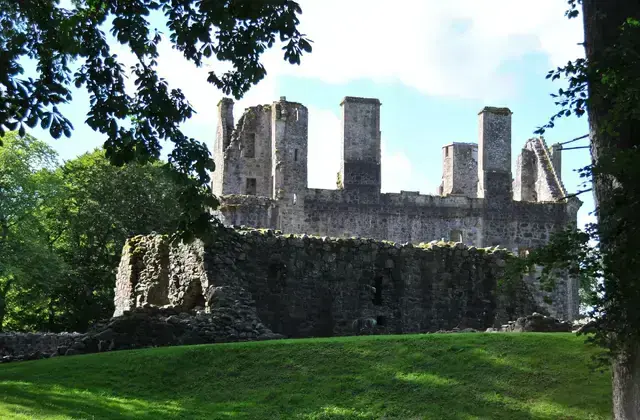 AberdeenshireHuntly Castle
 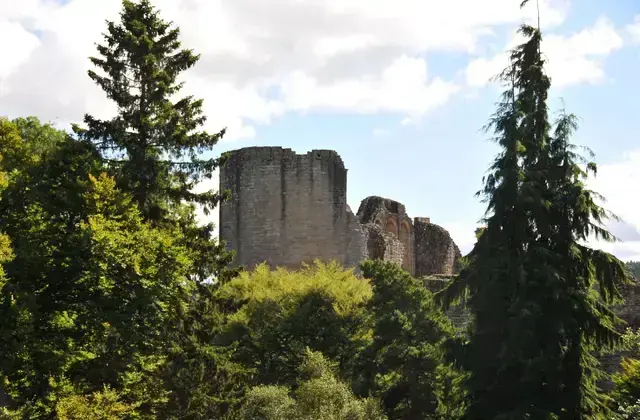 AberdeenshireKildrummy Castle
 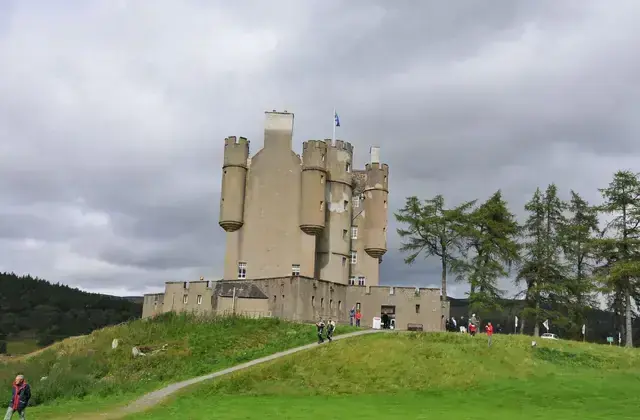 AberdeenshireBraemar Castle