TICKETS£18.00
Castle opening is seasonal; grounds access and parking arrangements can differ from house admission.
 Beta
Beta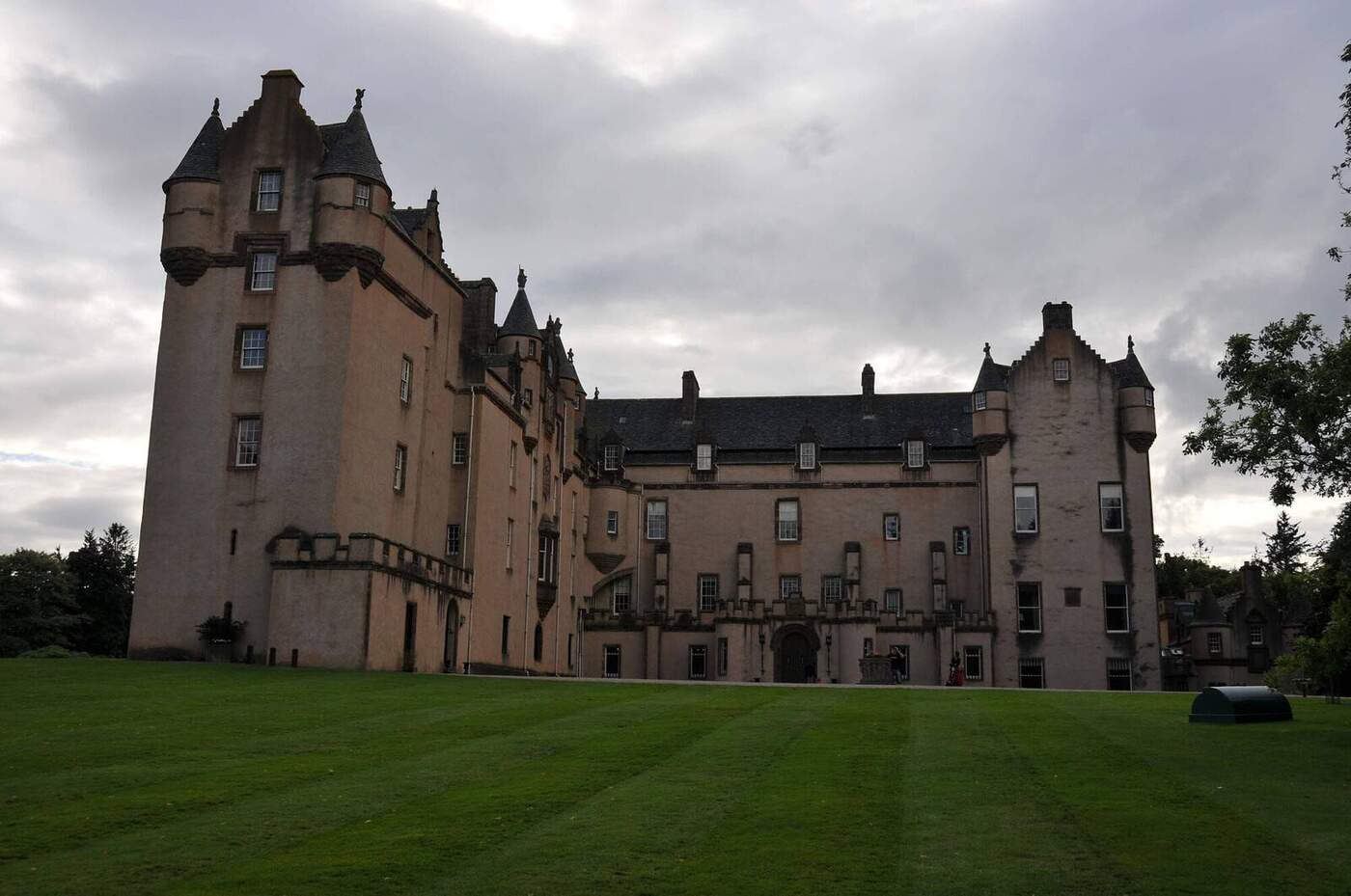
Scotland/Aberdeenshire/Fyvie Castle
FIVE TOWERS · FORMAL ESTATE
A medieval beginning. Five families, centuries of change.
PLAN YOUR VISIT
Fyvie, Turriff, Aberdeenshire, AB53 8JS
VISIT TIME: 2–3 hoursCastle opening is seasonal; grounds access and parking arrangements can differ from house admission.
The castle opens seasonally, while the grounds have longer daily access; verify the live timetable before a special journey.
Use the address and map link above for Fyvie Castle. Allow time for the final rural approach and check parking guidance before setting out.
Historic rooms include stairs and the grounds include changing outdoor surfaces. Accessible arrangements and the day’s castle opening should be checked directly with the Trust.
WHAT TO EXPECT
01 / THE STORY
Fyvie seems to collect towers the way its rooms collect portraits. Each angle changes the silhouette, and the lochside approach turns the castle into a carefully staged arrival.
Five families—Preston, Meldrum, Seton, Gordon and Forbes-Leith—frame its long story. But Fyvie is also a place of royal childhood, a nearby Civil War battle and legends that still cling to the stone.
The castle combines a theatrical exterior with furnished interiors, art and grounds. It works best as a slow house-and-estate visit.
Walk far enough around the outside to see the towers change position. The popular phrase about five families and five towers is memorable, but the real building history is more complicated than one tower per surname.
After James VI inherited the English throne and moved south, the young Prince Charles spent part of his early childhood in Alexander Seton’s care at Fyvie.
He was not yet Charles I. The detail brings a grand historical figure back to childhood: a boy living in a northern household long before crown and civil war defined his life.
In October 1644, Montrose’s Royalists fought Argyll’s Covenanters near Fyvie. The battle belongs to the surrounding landscape rather than a dramatic destruction of the entire castle.
That difference matters. Looking from the estate, imagine troops moving across the country outside while the house remained a political and domestic centre.
02 / VISUAL JOURNAL
Every photograph on this page was made by CastleScotland during personal field visits.
01 / THE STORY CONTINUES
Fyvie folklore tells of stones connected with a curse and a threat to the succession of eldest sons. Another tradition speaks of the Grey Lady haunting the castle.
These are legends, not verified explanations for deaths or inheritance. Enjoy them as the after-dark personality of a house whose daylight history is already rich.
Alexander Forbes-Leith and his wife filled Fyvie with important paintings and furnishings after acquiring it in the late nineteenth century. Some artworks were older, but the act of assembling the collection belonged to their own era.
The distinction helps the rooms make sense. You are seeing layers of collecting and presentation, not a medieval interior preserved untouched.
03 / MOMENTS IN STONE
Royal visits document the early centre at Fyvie. Preston, Meldrum, Seton, Gordon and Forbes-Leith ownership frames a more complex architectural story.
Alexander Seton acquires and extensively remodels the castle. Folklore adds a memorable shadow to the castle’s formal interiors.
The estate passes to the Gordons. Art, portraits and armour show how a castle became a cultivated country house.
The National Trust for Scotland acquires the estate.
04 / FIND THE CASTLE
57.443475,-2.395150
Fyvie Castle is at Fyvie, Turriff, Aberdeenshire, AB53 8JS. Check current access arrangements before travelling.
Open mapThe castle opens seasonally, while the grounds have longer daily access; verify the live timetable before a special journey.
Use the address and map link above for Fyvie Castle. Allow time for the final rural approach and check parking guidance before setting out.
Use the loch and lawn for the full five-tower profile, then work close to the facade where contrasting stonework makes the different building campaigns visible.
History and visitor advice: CastleScotland fieldwork and official operator sources.
The early stronghold was not the stone residence seen today. In a June 2026 account of the Fyvie Reimagined project, National Trust for Scotland author Alice Connelly describes timber defences on a natural platform protected by the River Ythan and surrounding bogland. The reconstruction programme depicts the 1211 phase as a palisaded, motte-and-bailey-type stronghold and the 1398 phase as a stone enclosure castle. These are interpretations of selected stages in Fyvie's development, not precise construction dates for surviving walls or proof that foundations from 1211 remain visible today.
Sir Henry Preston held Fyvie around the end of the fourteenth century; the estate then passed through marriage to the Meldrums in the fifteenth. Alexander Seton acquired it in 1596 and transformed its presentation around 1600. HES identifies dated work of 1599 on the southern frontage and a western range of 1603, possibly incorporating older fabric. The impressive stair and decorated interiors belong to a residence shaped for status and hospitality as well as protection.
Seton’s royal connections were more than architectural aspiration. The future Charles I spent part of his early childhood under his care at Fyvie after James VI moved south to inherit the English throne. The child was not yet king. During the Civil Wars, the estate became a military setting: Montrose’s Royalists fought Argyll’s Covenanters near the castle in October 1644. A battle in the surrounding landscape should not be confused with the destruction of the whole house.
The Gordon period began in 1733, not in the sixteenth or seventeenth century. Later eighteenth-century work changed the house and its setting, including the Gordon Tower and landscaped grounds. The long artificial loch and parkland helped turn the approach into a carefully composed estate landscape. These are later additions to the experience, not surviving medieval defences. The distinction makes the contrast between architecture and scenery more interesting, rather than less authentic.
Alexander Forbes-Leith’s late-Victorian purchase opened another chapter. His wealth came from an American industrial career, and he and his wife assembled important paintings and furnishings. Calling the pictures an eighteenth-century collection confuses the age of artworks with the period of collecting. Their purchases included older portraits as well as more recent work. NTS research also examines the family connections to wealth derived from slavery, placing this elegant household within a wider economic history.
The Weeping Stones and the Grey Lady belong to Fyvie’s folklore. A curse is said to threaten the succession of eldest sons; it is not an established explanation for the estate’s inheritance history. Stories of a ghost likewise record local belief, not proof of a haunting. Keeping that distinction allows the legends to retain their atmosphere without replacing documentary history or turning allegations about former residents into facts.
The National Trust for Scotland acquired Fyvie in 1984. The castle is listed at Category A, and its designed landscape has separate recognition. Today, portraits, armour and furniture reveal how a fortress became a collected country house. Outside, take time for the lochside setting before returning to the façade. Read the whole place as a continuing sequence of changes, and check current visitor arrangements before travelling.
08 / EXPLORE NEXT
Find Scottish castles by region, landscape or the stories that bring them to life.
 AberdeenshireKildrummy Castle
  AberdeenshireBraemar Castle
  AberdeenshireCrathes Castle