TICKETSFree exterior viewing
There is no visitor ticket or staffed entrance. View the monument only from safe, permitted ground.
 Beta
Beta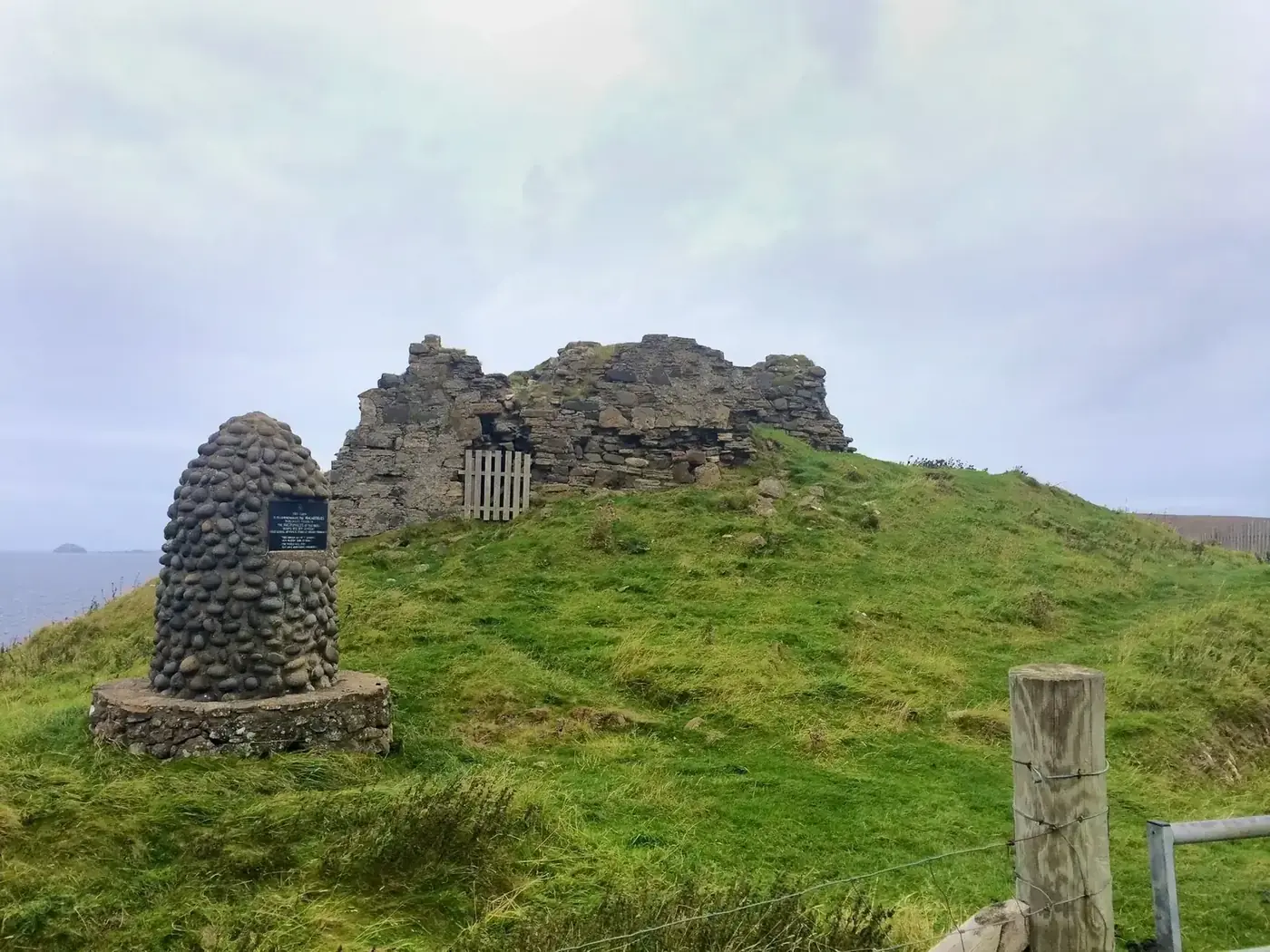
Scotland/The Highlands/Duntulm Castle
FIELD GUIDE · THE HIGHLANDS
A Scottish castle story. Read through its landscape.
PLAN YOUR VISIT
Duntulm, Isle of Skye, IV51 9UF
VISIT TIME: Allow 30–45 minutesThere is no visitor ticket or staffed entrance. View the monument only from safe, permitted ground.
Access can change with weather, ground conditions and conservation work. Respect every gate, fence and local notice.
Use only safe, legal roadside spaces and never obstruct the road or local access. Expect a rough final approach on foot.
The approach is rough and uneven. The ruin stands above steep sea cliffs and includes unstable masonry; do not enter fenced or unsafe areas.
WHAT TO EXPECT
01 / THE STORY
At the northern end of Skye, Duntulm feels as though the island simply runs out beneath its walls. Broken masonry clings to a cliffed headland, with sea, wind and the Outer Hebrides on the horizon.
The MacDonalds of Sleat made this their seat in the seventeenth century, but the site is older and more complicated than one clan story. Today its fragile condition means the safest and most honest experience is a landscape visit, not an attempt to conquer the ruin.
Come for the meeting of ruin and coastline. The landward ditch and sea cliffs explain the defensive position before any family name enters the story.
There is no formal interior route. View the remains from safe ground, stay back from unstable masonry and cliff edges, and let the wider headland carry the visit.
Historic Environment Scotland dates the courtyard castle broadly to the fourteenth and fifteenth centuries, with later alterations. In 1617, Sir Donald MacDonald was instructed to make Duntulm his seat and rebuild where necessary.
That order did not create the entire castle from nothing. It belongs to a later chapter in a site that had already developed over generations.
Tradition places an earlier fort called Dun David on the headland. Recorded archaeological survey, however, did not identify its remains.
The name is worth remembering as local tradition, but it cannot supply a plan, date or founder for a structure archaeology has not confirmed.
02 / VISUAL JOURNAL
Every photograph on this page was made by CastleScotland during personal field visits.
01 / THE STORY CONTINUES
Around 1732, the MacDonalds abandoned Duntulm in favour of Monkstadt. Stone from the old castle was reused there.
That practical recycling helped turn a residence into the fragmentary ruin seen today. Abandonment was not one dramatic collapse into the sea; useful material continued its life elsewhere.
Duntulm has accumulated grim tales, including stories of fatal accidents and hauntings. They are part of Skye folklore, not secure explanations for why the castle was abandoned.
The verified history of rebuilding, relocation and stone removal is compelling enough. Enjoy the darker tales as atmosphere, clearly separated from the fabric underfoot.
03 / MOMENTS IN STONE
HES dates the courtyard castle to this period, with later alterations. The courtyard and residential additions belong to several building phases.
Sir Donald MacDonald was instructed to make Duntulm his seat and rebuild if necessary. An earlier fort is traditional; the recorded survey did not find its remains.
Duntulm was abandoned in favour of Monkstadt, where stone from the castle was reused. The 2026 watching brief recorded ash deposits; no radiocarbon result is established in the consulted record.
History and visitor advice: CastleScotland fieldwork and official operator sources.
HES dates the courtyard castle to the fourteenth and fifteenth centuries, with later additions. The older RCAHMS description places the principal structure in the fifteenth century. Both accounts make a sixteenth-century starting date too late for the complex as a whole. They do not supply a secure year or a confidently identified individual builder. The possibility of an earlier fort called Dun David belongs to tradition; an Ordnance Survey visit found no trace of that supposed predecessor.
A description by Donald Monro in 1549 names the castle and associates it with Donald Gorm. This provides a documentary landmark distinct from the broader dating of the masonry. The later history unfolded within the contested lordship of Skye, including MacDonald and MacLeod rivalry, but a general clan conflict should not be turned into an invented siege at Duntulm. The evidence needs to identify the event as well as the families involved.
In 1617 the Privy Council required Sir Donald MacDonald of Sleat to make Duntulm his seat, and to build or rebuild if the existing accommodation was unsuitable. That instruction is more specific than a vague claim that the family merely occupied an old ruin. The castle’s later domestic additions belong to a continuing history of adaptation. Changes to accommodation should be distinguished from the earlier courtyard defences rather than compressed into one building campaign.
The surviving layout also records that complexity. HES describes alterations to the curtain walls connected with sixteenth-century defensive developments and later buildings within the enclosure. A main residential tower once dominated the site. A smaller adjoining tower and a seventeenth-century house added further accommodation. The sea gate and the landward ditch show different relationships with the surrounding terrain, while the vaulted lower structure preserves a trace of the household spaces beneath the lost upper rooms.
Around 1732 Duntulm was given up in favour of Monkstadt. The Highland historic environment record notes that its stone was reused there, while the record for Monkstadt distinguishes the start of work in 1732 from completion in 1741. This was a process of changing residence and reusing materials, not proof that every wall collapsed on one date. Later weathering and structural failure continued to alter the site; HES records a tower collapse in 1990.
Duntulm is a scheduled monument, and the surviving masonry has archaeological value even where a visitor sees only broken surfaces. A 2026 watching brief recorded ash deposits during work at a new access gate. The record recommends further examination; it does not yet provide a radiocarbon date or prove an early fort. For a visit, read the castle from safe ground and respect barriers rather than approaching unstable edges. A broad view brings sea, ditch and ruins into one composition. The most compelling story here is the changing residence that the evidence reveals, with its gaps left honestly visible.
Compare Dunvegan Castle and Gardens with Armadale Castle and the island setting of Caisteal Maol. Check locations on our Scotland castles map before planning your day.
08 / EXPLORE NEXT
Find Scottish castles by region, landscape or the stories that bring them to life.
 The HighlandsDuffus Castle
  The HighlandsSpynie Palace
  The HighlandsOld Inverlochy Castle