TICKETS£7.50
2026 prices: online in advance / walk-up, checked on the official Craigmillar visitor page.
 Beta
Beta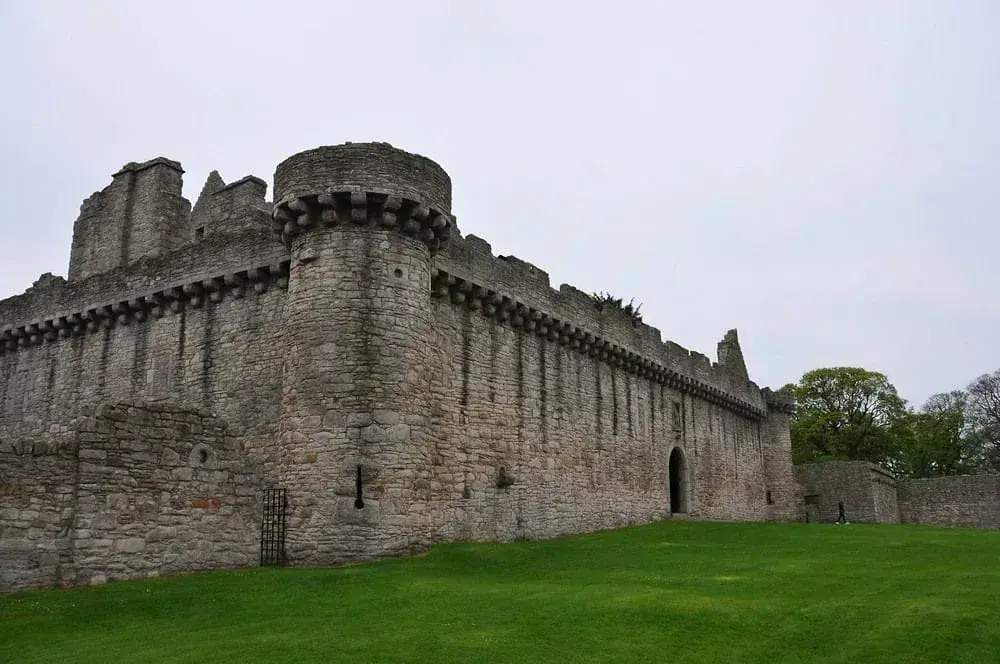
Scotland/Edinburgh & The Lothians/Craigmillar Castle
THE QUIET ONE · EDINBURGH
A royal refuge. Beyond the city centre.
PLAN YOUR VISIT
Craigmillar Castle Road, Edinburgh, EH16 4SY
VISIT TIME: 1–2 hours2026 prices: online in advance / walk-up, checked on the official Craigmillar visitor page.
The site is often quieter than central Edinburgh attractions; check seasonal hours.
Local buses from central Edinburgh stop within a manageable walk.
There are uneven surfaces, stairs and narrow historic routes.
WHAT TO EXPECT
01 / THE STORY
Edinburgh has another castle. Away from the Royal Mile, Craigmillar offers a different encounter: courtyards, a tall medieval tower and a city skyline that feels surprisingly distant.
It is a place to explore through doorways and changing viewpoints. Royal connections add intrigue, but the great pleasure is the building itself—a residence that grew around its older heart.
If you like the freedom of exploring a ruin, Craigmillar is an appealing companion to Edinburgh Castle. Its enclosed courts and surviving walls encourage you to follow your curiosity.
Come for the spaces rather than a checklist. A passage that looks unremarkable from one side may frame a completely different view when you turn around.
The Preston family’s late-fourteenth-century tower house forms the core of the castle. Later walls and residential ranges gathered around it as the household’s needs changed.
Look for that older centre before trying to understand every room. Craigmillar is not one building constructed in a single moment; its appeal lies partly in the way the additions fit around the tower.
Mary, Queen of Scots stayed at Craigmillar in 1566. Its position close to Edinburgh, yet outside the centre, made it a retreat without removing it from political life.
That connection gives the courtyards an added charge. But resist the temptation to label every small room as the scene of a royal drama: a documented stay does not identify every conversation or doorway.
02 / VISUAL JOURNAL
Every photograph on this page was made by CastleScotland during personal field visits.
10 of 37 photographs
01 / THE STORY CONTINUES
Later accounts associate Craigmillar with discussions about removing Mary’s husband, Lord Darnley. The supposed Craigmillar Bond remains disputed; no surviving document settles the familiar story.
It is an intriguing possibility, not a scene we can confidently reconstruct. The uncertainty is part of the story, and there is no need to invent conspirators whispering in a particular room to make the castle interesting.
Later owners, the Gilmours, adapted Craigmillar for a more comfortable way of living. The result combines defensive strength with the needs of a residence.
As you explore, notice where rooms open towards the courts and where movement narrows into a passage or stair. These were spaces for a household, not simply obstacles for an attacking army.
Look back towards the city from an accessible viewpoint, then return to the enclosed courtyards. The contrast between the wider landscape and the rooms is one of the most enjoyable parts of a visit.
Check current opening and access guidance before you go. Expect uneven surfaces and stairs, and give yourself time to explore without rushing between the tower and the entrance.
Craigmillar appears in Outlaw King (2018), the drama about Robert the Bruce, and the 1997 television adaptation of Ivanhoe. It should not be labelled Ardsmuir Prison from Outlander.
Bring those genuine screen connections along for the visit. The enclosed courtyards and winding passages make exploring feel a little like stepping behind the scenes—only the stonework is real, and the story reaches far beyond the camera.
03 / MOMENTS IN STONE
The Preston tower develops; the inner enclosure probably follows no earlier than the mid-fifteenth century. The castle’s association with Mary gives its quiet rooms a political charge far beyond their size.
Mary, Queen of Scots returns to Craigmillar in November. Craigmillar offers medieval scale, city views and usually more room to explore at your own pace.
Following his 1660 purchase, Sir John Gilmour remodels the west range. The inner curtain wall and its round corner towers deserve as much attention as the central tower house.
04 / FIND THE CASTLE
55.933400,-3.143300
Craigmillar Castle is at Craigmillar Castle Road, Edinburgh, EH16 4SY. Check current access arrangements before travelling.
Open mapThe site is often quieter than central Edinburgh attractions; check seasonal hours.
Local buses from central Edinburgh stop within a manageable walk.
The upper walls give strong views back to Edinburgh.
History and visitor advice: CastleScotland fieldwork and official operator sources.
The inner curtain wall is a particularly useful clue. A traditional reading of an armorial panel produced the date 1427, but HES regards this interpretation as questionable. Some original gun openings point towards a date no earlier than around the middle of the fifteenth century. The circular corner towers and projecting parapet belong to this defensive enclosure, while the wider outer courtyard represents a further stage in the castle's development.
Craigmillar was also a home for a family closely involved in Edinburgh's civic life. Halls, private rooms and service spaces supported residence and hospitality as well as protection. During the English campaign of 1544 the castle was surrendered; a later account describes its burning. Subsequent rebuilding may reflect that damage, but it would be too precise to assign every altered room to a single destructive episode on the strength of those accounts alone.
Mary, Queen of Scots visited in 1563 and returned in November 1566. Her later stay followed a difficult year that included the murder of her secretary David Rizzio, the birth of Prince James and serious illness. These events explain the atmosphere of political strain without turning Craigmillar into the immediate refuge from Rizzio's murder in March. The queen's presence is documented; the certainty often attached to other stories about the visit is not.
The supposed Craigmillar Bond is the most important example. Later accounts connect discussions here with a plan to remove Mary's husband, Lord Darnley. No copy of the alleged bond survives, and HES notes that many historians doubt whether such a document existed. Mary's knowledge or approval cannot simply be assumed. This is a historical controversy worth retaining, but it must not become a confident scene in which named conspirators sign an extant agreement before the queen.
In 1660 Sir John Gilmour bought Craigmillar and substantially remodelled the west range. Its more comfortable apartments express another phase of domestic ambition within the older enclosure. The family eventually moved away, and the castle lost its residential role in the later eighteenth century. It entered state guardianship in 1949. The preserved ruin therefore combines medieval building, later adaptation and modern conservation, rather than surviving wholly untouched from Mary's lifetime.
Give the courtyards and wall circuit as much attention as the tower itself, using only the areas currently open. Compare the different ranges before looking out towards Edinburgh. Doors, stairs and changes in masonry help distinguish the layers without needing to solve every architectural uncertainty. Craigmillar's atmosphere comes from the relationship between those layers: an important urban family's country residence, a documented royal visitor, disputed political memories and a later household seeking comfort within inherited walls.
Compare this stop with the best castles in and near Edinburgh, including city landmarks and coastal day trips. Use our Scotland castles map to check locations before choosing your route.
08 / EXPLORE NEXT
Find Scottish castles by region, landscape or the stories that bring them to life.
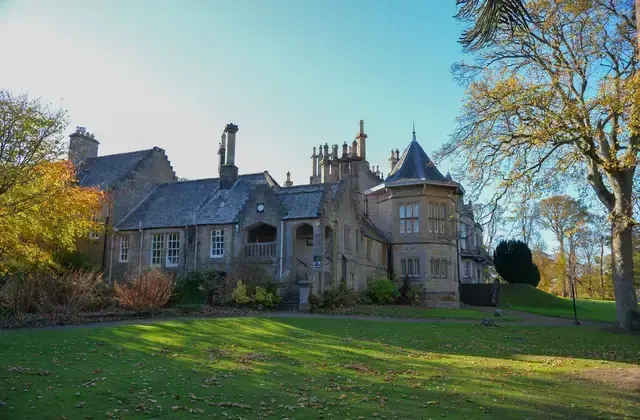 Edinburgh & The LothiansLauriston Castle
 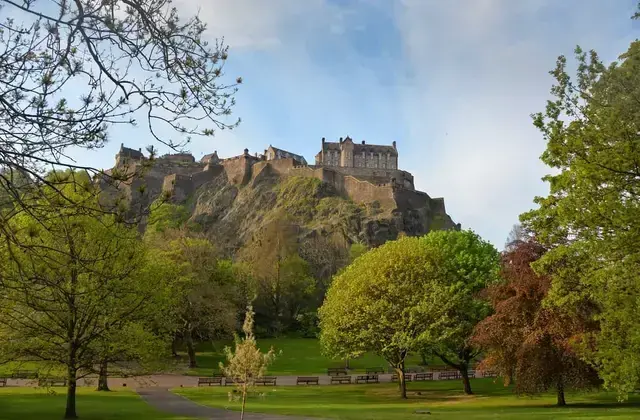 Edinburgh & The LothiansEdinburgh Castle
 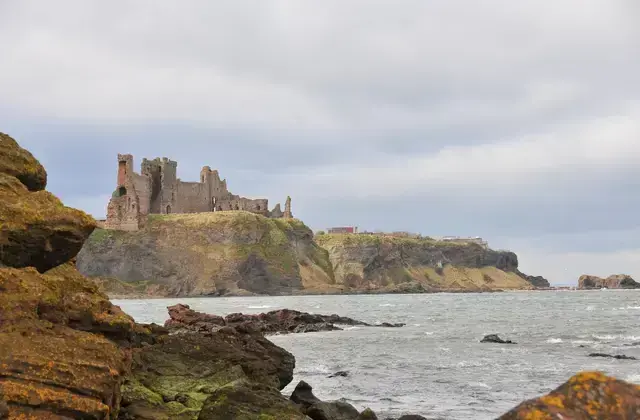 Edinburgh & The LothiansTantallon Castle