TICKETS£18.00
Prices checked against the National Trust for Scotland visitor page; seasonal opening applies.
 Beta
Beta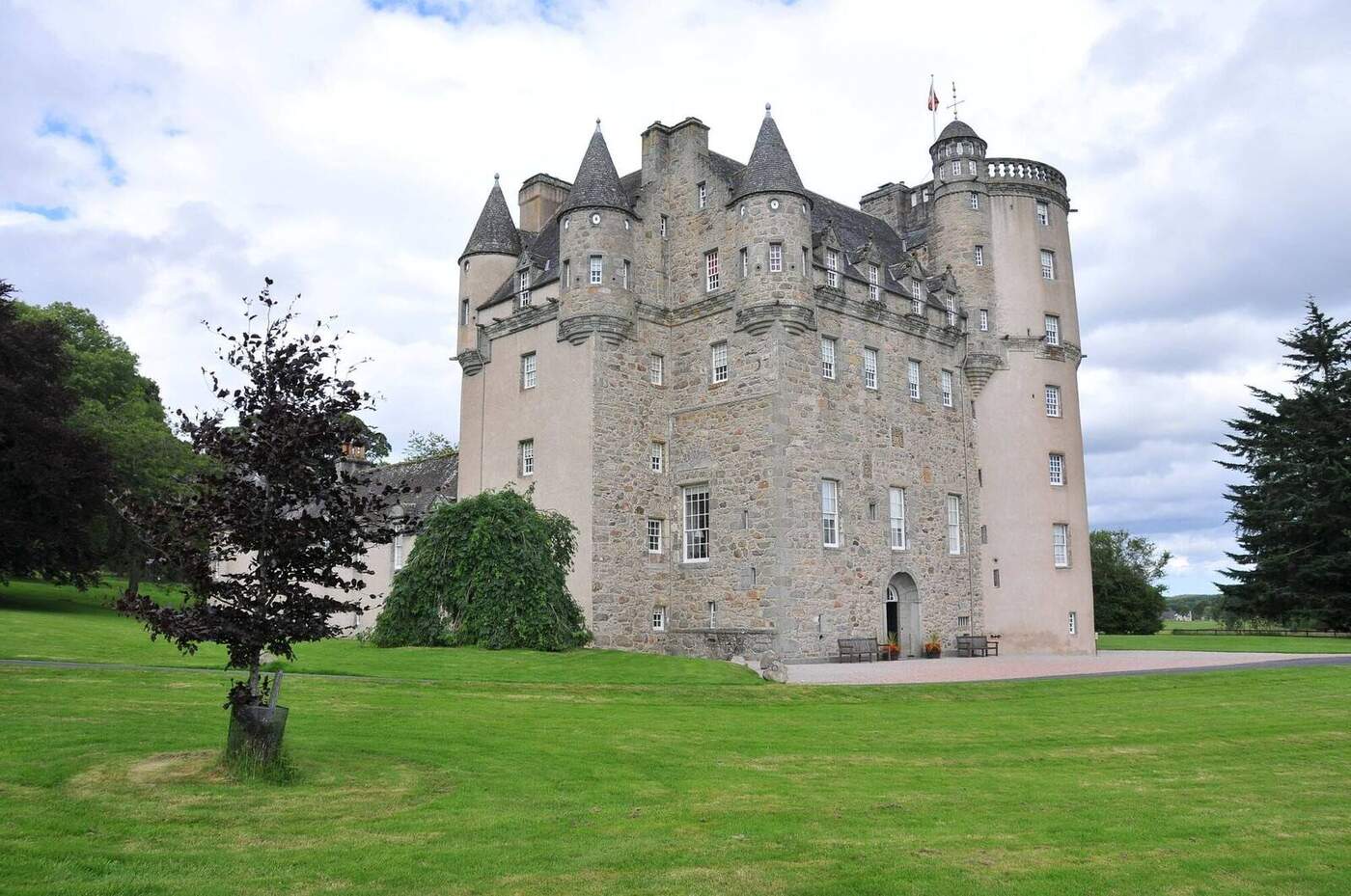
Scotland/Aberdeenshire/Castle Fraser
TOWER HOUSE · ABERDEENSHIRE
A grand survivor. Four centuries of Fraser ambition.
PLAN YOUR VISIT
Sauchen, Inverurie, AB51 7LD
VISIT TIME: 2–3 hoursPrices checked against the National Trust for Scotland visitor page; seasonal opening applies.
Castle opening is seasonal and rooms can have short-term restrictions, so confirm the day’s arrangements before travelling.
Use the address and map link above for Castle Fraser. Allow time for the final rural approach and check parking guidance before setting out.
There are historic stairs and changing floor levels in the castle. The estate has outdoor paths; check the Trust’s current access information if step-free routes are essential.
WHAT TO EXPECT
01 / THE STORY
Castle Fraser has the kind of skyline that makes you count towers, then count again. One corner is round, another square, and the whole house rises above the Aberdeenshire estate like an elaborate stone puzzle.
Inside, the attraction shifts from outline to detail: family rooms, collections and a concealed listening place known as the Laird’s Lug.
Come for a complete estate experience rather than a ruin. The house offers furnished interiors, an older architectural core and grounds that let you step back to appreciate its unusual shape.
The different towers are easiest to understand outside. The smaller stories reveal themselves once you enter.
An older fifteenth-century tower sits within a much larger building programme begun by Michael Fraser around 1575. Work continued in stages into the early seventeenth century.
That is why one completion date cannot explain the whole house. Castle Fraser is a confident composition assembled from inherited fabric and successive ambitions.
A concealed opening known as the Laird’s Lug allowed sound from the great hall to travel to a hidden listening point. It turns the architecture into a story about privacy and power.
The feature is real. Specific tales about exactly who was overheard are harder to prove, so let the ingenious design carry the story without inventing a secret conversation.
02 / VISUAL JOURNAL
Every photograph on this page was made by CastleScotland during personal field visits.
01 / THE STORY CONTINUES
The entrance displays the royal arms of James VI. They announced loyalty and status to everyone who arrived.
They are sometimes taken as proof that the king visited in 1618, but reliable evidence for that visit has not been found. A carved symbol could honour a monarch without recording his footsteps.
Before leaving, compare the round tower with the square one. The mismatch is deliberate and gives the castle its Z-plan character.
Leave time for the estate paths and check current National Trust opening arrangements. Interior access is the main reward here, so it is worth planning around the house schedule.
03 / MOMENTS IN STONE
Michael Fraser begins a major enlargement of an older tower. A hidden listening point turns domestic architecture into a story about power and privacy.
Successive building campaigns create the enlarged castle and wings. Michael Fraser begins a major enlargement of an older tower.
The property is given to the National Trust for Scotland. The estate lets the castle be read as part of a lived landscape, not an isolated monument.
04 / FIND THE CASTLE
57.203058,-2.460430
Castle Fraser is at Sauchen, Inverurie, AB51 7LD. Check current access arrangements before travelling.
Open mapCastle opening is seasonal and rooms can have short-term restrictions, so confirm the day’s arrangements before travelling.
Use the address and map link above for Castle Fraser. Allow time for the final rural approach and check parking guidance before setting out.
Walk beyond the first frontal view. The woodland approach gives the towers depth, and the formal garden edge can frame a more human-scale portrait of the castle.
History and visitor advice: CastleScotland fieldwork and official operator sources.
Michael Fraser, the sixth laird, began major work around 1575. The completion dates refer to different parts of the building rather than competing birthdays for the whole castle. The Trust’s archaeological account distinguishes work around 1576, additions before 1618, and courtyard wings in the following decades. Its teaching material gives 1636 as the completion of the broader programme. The safest picture is of successive campaigns extending from the later sixteenth into the early seventeenth century.
The royal arms above the entrance connect the building visually with James VI. They are not evidence that he visited in 1618. No reliable evidence confirming that alleged visit was found for this guide, and the date is omitted from the factual timeline. Heraldry could proclaim loyalty and status without commemorating a monarch’s presence. This makes the carving interesting in its own right, rather than turning it into an illustration of an unsupported royal anecdote.
Inside, the contrast between the great hall and later furnished rooms is essential to the visit. The Trust identifies Georgian and Victorian interiors alongside older spaces; their differences record changing domestic tastes. A room can occupy ancient walls while its decoration belongs to a much later household. Look at furniture, doorways and routes between floors together, and ask how privacy and hospitality were balanced as the house grew.
The famous Laird’s Lug and concealed circulation routes are genuine features identified by the Trust, but particular stories about conversations overheard there need separate evidence. The family portraits and surviving possessions bring another kind of intimacy. They encourage a visit based on objects and rooms rather than on spectacular claims about secret plots. Quiet details can say more about life in a country house than an unverified royal encounter.
Castle Fraser remained associated with the Frasers until 1921. The subsequent Pearson ownership should not disappear from the story: the property was given to the National Trust for Scotland in 1976. The transition to heritage care was therefore not a direct medieval-family-to-Trust handover. Conservation and interpretation now form a further chapter in the building’s life, rather than simply freezing it at the end of construction.
Compare the round tower with its square companion before choosing a viewpoint. Their different outlines are a useful visual reminder that a confident overall composition can contain deliberately contrasting forms.
Allow the outside and inside to explain one another. From the grounds, the compact height creates an impression of strength; within, the rooms reveal a layered home. A useful photograph includes the unequal corner towers and the lower wings, so that the building’s development remains visible. Check the official visiting arrangements before travelling, and leave time to consider the estate setting after the interiors. The strongest memory of Fraser is the coexistence of an inherited tower, ambitious enlargement and generations of domestic change.
08 / EXPLORE NEXT
Find Scottish castles by region, landscape or the stories that bring them to life.
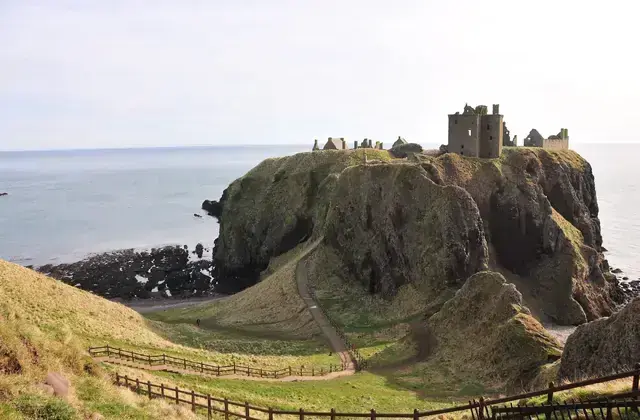 AberdeenshireDunnottar Castle
 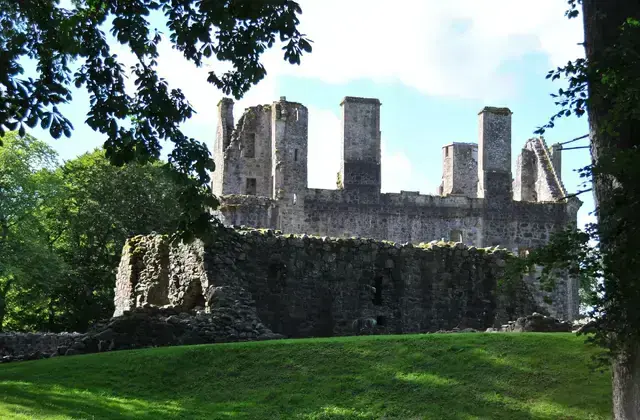 AberdeenshireHuntly Castle
 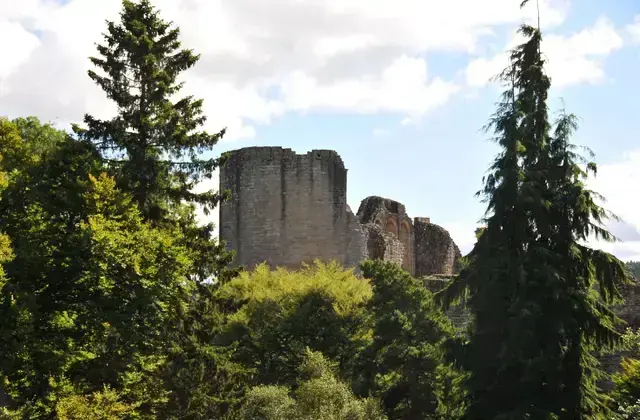 AberdeenshireKildrummy Castle