TICKETSNo standard visitor ticket; check local access before a rural walk.
Visitor conditions are stated conservatively from current official or local guidance; always confirm before travel.
 Beta
Beta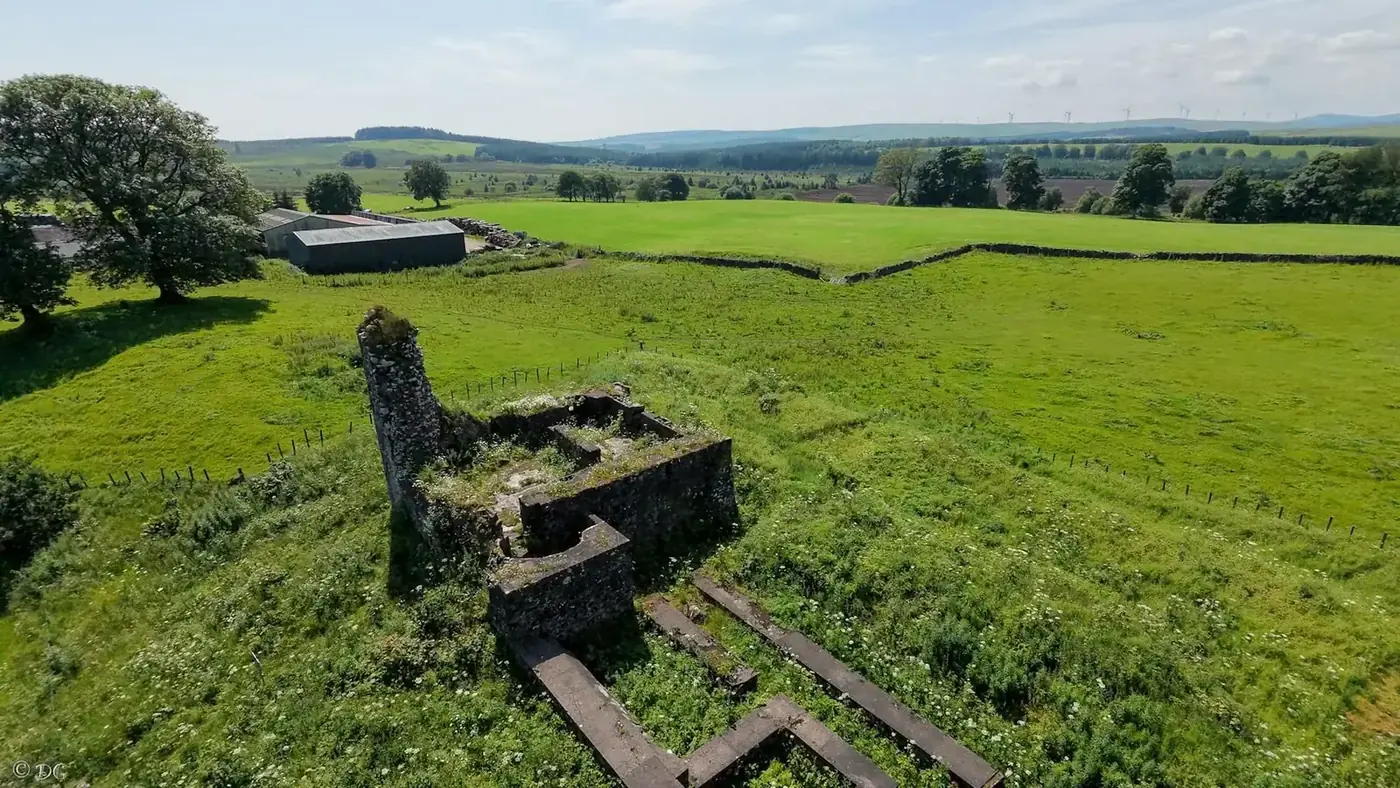
Scotland/Dumfries & Galloway/Lochwood Castle
FIELD GUIDE · DUMFRIES & GALLOWAY
The Johnstones’ stronghold. Earthworks, stone and a changing home.
PLAN YOUR VISIT
Near Moffat, Dumfries and Galloway
VISIT TIME: 30–60 minutesVisitor conditions are stated conservatively from current official or local guidance; always confirm before travel.
No standard visitor ticket; check local access before a rural walk.
Use the address and map link above for Lochwood Castle. Allow time for the final rural approach and check parking guidance before setting out.
Ground can be wet and routes may cross private land; do not enter unsafe remains.
WHAT TO EXPECT
01 / THE STORY
Lochwood lies quietly among the trees of Annandale, but its past was anything but quiet. Low walls, a ruined tower and an older earthwork mark the former chief seat of the Johnstones.
The best stories are written across the whole site: an early timber stronghold, a well-stocked household captured by an English force and a feud that ended in fire.
North of the stone buildings, the mound called the Mount preserves an earlier motte-and-bailey phase. The later courts and service buildings spread the residence well beyond one tall block.
Follow the shapes from permitted ground. Lochwood rewards the visitor who reads banks and empty spaces as carefully as standing masonry.
In 1547, during the Rough Wooing, English troops under Thomas Carleton took Lochwood. His account describes a well-provisioned residence with household buildings inside its defences.
It is a vivid glimpse of the castle as a functioning home and base. Because it comes from the victorious side, it remains a valuable but interested voice.
02 / VISUAL JOURNAL
Every photograph on this page was made by CastleScotland during personal field visits.
01 / THE STORY CONTINUES
In 1585, Lochwood was attacked and burned during the violent rivalry between the Johnstones and Maxwells.
That fire is documented, though later retellings vary in their details. It should not be confused with the Battle of Dryfe Sands, which happened elsewhere in 1593.
A later accidental fire and the family's move away in the early eighteenth century ended Lochwood's main residential life. Centuries of exposure then shaped the ruins further.
No single blaze explains every missing wall. The slow retreat of a household can be as decisive as a dramatic attack.
03 / MOMENTS IN STONE
An earlier motte precedes the later stone residence of the Johnstones. The older motte preserves a separate phase of the site’s history.
English forces under Thomas Carleton capture Lochwood. Courts and service buildings formed part of the residence alongside the tower.
The castle is attacked and burned during the Johnstone–Maxwell feud. Earthworks and buried archaeology also belong to the protected monument.
A fire and the shift of the family residence mark the end of Lochwood’s principal domestic role.
04 / FIND THE CASTLE
55.256872,-3.441807
Lochwood Castle is at Near Moffat, Dumfries and Galloway. Check current access arrangements before travelling.
Open mapNo standard visitor ticket; check local access before a rural walk.
Use the address and map link above for Lochwood Castle. Allow time for the final rural approach and check parking guidance before setting out.
Photograph Lochwood Castle as part of its setting. A wide view is often more truthful than a close crop, and all original masonry should be observed without climbing or crossing boundaries.
History and visitor advice: CastleScotland fieldwork and official operator sources.
The later tower follows an L-shaped plan and is conventionally dated to the fifteenth century. Its surrounding courts contained additional buildings, so the household was not confined to one vertical block. Look for the relationship between the tower, the enclosed spaces and the older mound. Each belongs to the same place, but their arrangement records rebuilding and expansion rather than one simple design drawn at a single moment.
Documentary evidence gives the site a sharper historical outline. Architectural historian A. M. T. Maxwell-Irving discusses a 1496 reference to Lochwood and a royal charter of 1509 mentioning a tower and fortified residence. Neither document should be treated as a building contract. They establish occupation and status while leaving room for uncertainty about how particular parts of the surviving complex relate to earlier structures.
In 1547 English forces under Thomas Carleton captured Lochwood during the conflict known as the Rough Wooing. His account describes a well-equipped residence with service buildings inside its enclosure. This is valuable testimony to a working household, although a victor's description is not a neutral archaeological survey. The castle subsequently served as an English base, placing this apparently secluded site directly within a wider military campaign.
Lochwood also suffered during the feud between the Johnstones and Maxwells. An attack and burning in 1585 is recorded in historical accounts. The details of who led each group are less consistently reported, so the broad event is safer than a dramatic reconstruction with confidently assigned speeches and individual actions. Nor should this burning be confused with the later battle of Dryfe Sands at a different location.
The end of the residence needs similar care. HES's scheduling record places an accidental fire and the loss of its principal role in the early eighteenth century. Its separate account of Raehills records a family move to Newbie around 1720. These references support a gradual shift away from Lochwood; they do not justify dating abandonment simply to the later construction of Raehills or assigning every surviving collapse to one fire.
Modern consolidation has also shaped what can be seen. Work in the 1980s helped stabilise the tower, and the protected monument includes more than the standing walls. Scheduled monument SM698 covers the earlier earthworks and areas with archaeological potential. A low bank or apparently empty court may therefore be as important to understanding the complex as the masonry that first catches the eye.
Begin by finding the older mound in relation to the later residence, then follow the outline of the courts from permitted routes. Avoid climbing walls or treating conserved remains as a reconstructed interior. Lochwood rewards the visitor who enjoys reading a site gradually: the household's working spaces, the changes in building form and the retreat of residential life emerge through comparison. Its quietness is part of today's experience, rather than a reliable guide to how uneventful its past might have been.
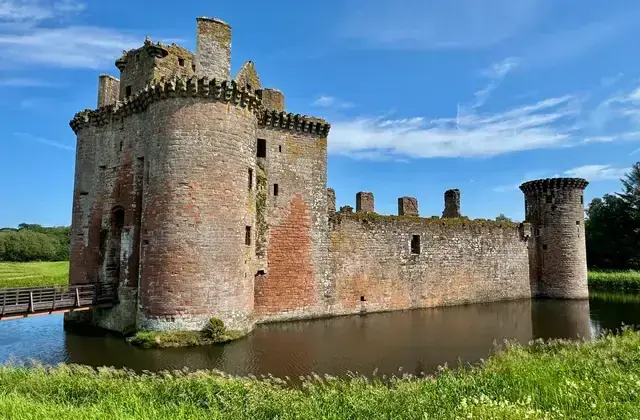
Explore the moat, triangular defences and courtyard residence in our Caerlaverock Castle visitor guide. Use the map of castles in Scotland to compare locations and allow time for each journey. Check current access with the official operators before travelling.
08 / EXPLORE NEXT
Find Scottish castles by region, landscape or the stories that bring them to life.
 Dumfries & GallowayCaerlaverock Castle
 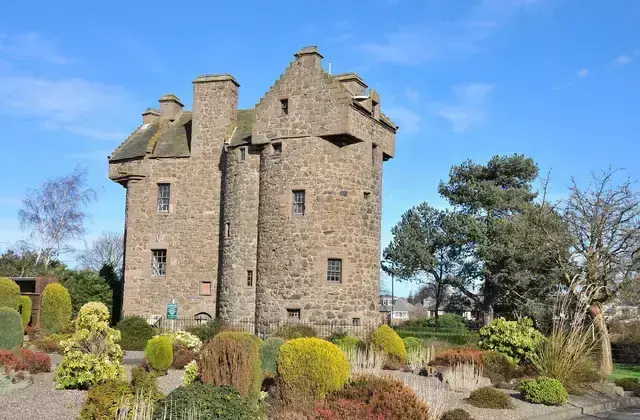 Dundee & AngusClaypotts Castle
 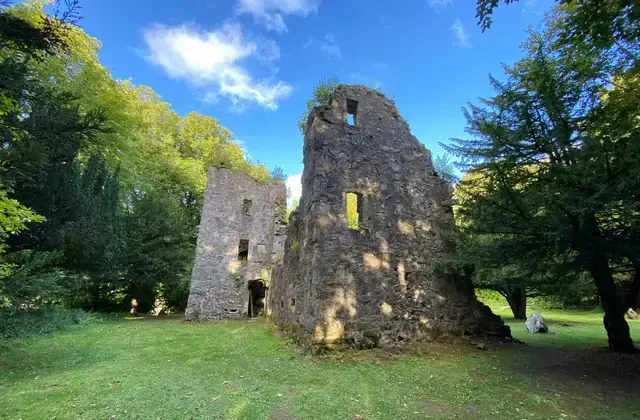 PerthshireFinlarig Castle