TICKETS£6.00
Seasonal opening and conservation restrictions apply; confirm the official visitor notice before travel.
 Beta
Beta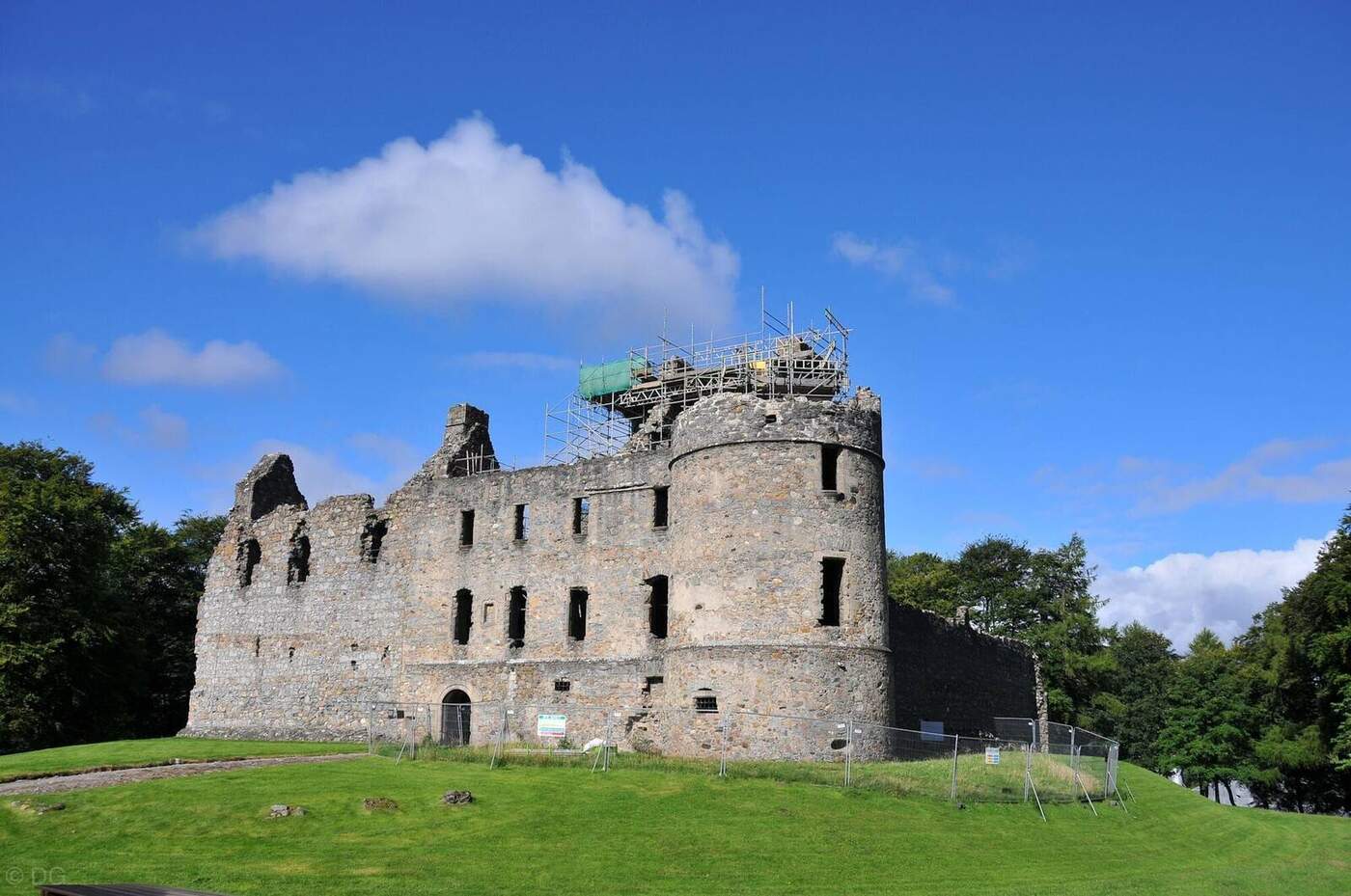
Scotland/Moray Speyside/Balvenie Castle
COMYN RUIN · DUFFTOWN
A medieval stronghold. A Renaissance lodging in ruin.
PLAN YOUR VISIT
Castle Road, Dufftown, Keith, AB55 4GH
VISIT TIME: 1–1.5 hoursSeasonal opening and conservation restrictions apply; confirm the official visitor notice before travel.
Opening is seasonal and the site is operating with conservation-related restrictions, so check exact days and access before travelling.
Use the address and map link above for Balvenie Castle. Allow time for the final rural approach and check parking guidance before setting out.
This is an outdoor ruin with uneven ground and historic steps. The approach and individual spaces may be affected by conservation restrictions.
WHAT TO EXPECT
01 / THE STORY
Balvenie is easy to overlook in a region famous for whisky, but the ruin above Dufftown has its own strong flavour. A medieval enclosure and a Renaissance residence occupy the same compact site.
The interest lies in the change: from a Comyn stronghold to a more comfortable Atholl home, and eventually to a roofless witness above Speyside.
This is a manageable ruin where the main phases are close enough to compare in one slow circuit. The older walls feel defensive; the Atholl Lodging announces status and domestic ambition.
It fits naturally into a Speyside day, but deserves more than a photograph between distilleries.
The thirteenth-century enclosure is associated with the powerful Comyn family, and Alexander Comyn is considered a probable builder.
Robert the Bruce destroyed Comyn power in the north in 1308, but the evidence does not securely prove that he personally captured or deliberately damaged Balvenie. The castle then disappears from the surviving record for about a century. That blank should stay blank.
In the mid-sixteenth century, the 4th Earl of Atholl and Elizabeth Gordon added the Atholl Lodging. Its heraldry, windows and corner tower made a statement very different from the earlier curtain wall.
Comfort did not remove the need for control. The surviving iron yett is a reminder that a fashionable residence could still close itself firmly against unwanted arrivals.
02 / VISUAL JOURNAL
Every photograph on this page was made by CastleScotland during personal field visits.
01 / THE STORY CONTINUES
Mary stayed at Balvenie for two nights in September 1562 during her northern journey. The visit is documented; the exact room where she slept is not.
That distinction still leaves a vivid scene: a provincial household preparing to receive the queen and her travelling court.
Archaeology found a kiln that may have been connected with brewing. It offers a glimpse of daily work, but it is not evidence for a medieval whisky distillery.
The cautious version is more interesting than the tourist myth. People living here needed food, drink, heat and storage, and those ordinary tasks leave archaeological traces too.
03 / MOMENTS IN STONE
The enclosure is attributed to the Comyn period; Alexander Comyn is a probable builder. A capture by Robert Bruce in 1308 is not securely established; HES also treats deliberate damage as uncertain.
Balvenie is documented in Douglas possession after a gap in its record. The mid-sixteenth-century range added accommodation within the older enclosure.
Mary, Queen of Scots stays in September at the residence of the fourth Earl of Atholl. HES records a two-night royal stay in September 1562.
04 / FIND THE CASTLE
57.453270,-3.124830
Balvenie Castle is at Castle Road, Dufftown, Keith, AB55 4GH. Check current access arrangements before travelling.
Open mapOpening is seasonal and the site is operating with conservation-related restrictions, so check exact days and access before travelling.
Use the address and map link above for Balvenie Castle. Allow time for the final rural approach and check parking guidance before setting out.
The outer slope gives the best sense of the castle’s compact mass. Inside, use the Atholl Lodging windows to contrast residential refinement with the older walls.
History and visitor advice: CastleScotland fieldwork and official operator sources.
Robert Bruce's defeat of the Comyn interest in 1308 provides the political background to a major gap in the castle's record. It does not securely establish a personal capture of Balvenie by Bruce. HES explicitly says that it is unclear whether he slighted the castle. The site disappears from the surviving historical narrative for about a century; silence cannot supply the missing siege or a documented change of owner.
By 1408 Balvenie is documented among the Black Douglases' possessions. Their forfeiture in 1455 brought another transfer of power, and the estate subsequently passed to John Stewart, later Earl of Atholl. These changes explain the sequence of families without requiring every damaged wall to be assigned to a battle. Political defeat, legal forfeiture and physical destruction are separate events and do not necessarily leave the same evidence.
Around the middle of the sixteenth century John Stewart, fourth Earl of Atholl, and his wife Elizabeth Gordon added the Atholl Lodging. The new range altered the older enclosure rather than replacing the whole castle. Its round corner tower, heraldic decoration and projecting window features announced status as well as providing accommodation. The surviving double-leaf iron yett reminds us that a more comfortable house could still control entry carefully.
Mary, Queen of Scots, stayed at Balvenie in September 1562 during her northern journey. HES records two nights at the castle, then the residence of the fourth Earl of Atholl. This is a documented royal association, not a reason to identify a particular surviving chamber as Mary's bedroom without further evidence. It places a provincial residence within the movements and political relationships of the royal court.
Balvenie's residential history continued beyond the seventeenth century. After changes of ownership, the Duffs were associated with its final period as a house. In the early eighteenth century a new Balvenie House replaced the old castle as the principal residence. Government troops briefly used the castle again in 1746. Abandonment as a family home therefore did not mean that all activity at the site ceased immediately.
The castle entered state guardianship in 1925 and is protected as scheduled monument SM90028. Early clearance disturbed archaeological deposits, but did not remove every trace of earlier occupation. Limited work in 1990 identified a kiln interpreted as possibly connected with brewing, along with pits earlier than the adjoining range. That possible function belongs to the evidence for daily work here; it is not proof of a medieval whisky distillery.
Begin outside, where the enclosure and surviving ditch make the defensive arrangement easier to understand. Inside, compare the older walling with the Atholl Lodging and the traces of domestic ranges. Some structures survive only as foundations, and their proposed functions remain interpretations. Check current access before travelling and follow conservation notices. Balvenie's strongest story is the adaptation of an inherited stronghold across centuries, with gaps in its written record honestly left visible rather than filled with an invented sequence of conquests.
08 / EXPLORE NEXT
Find Scottish castles by region, landscape or the stories that bring them to life.
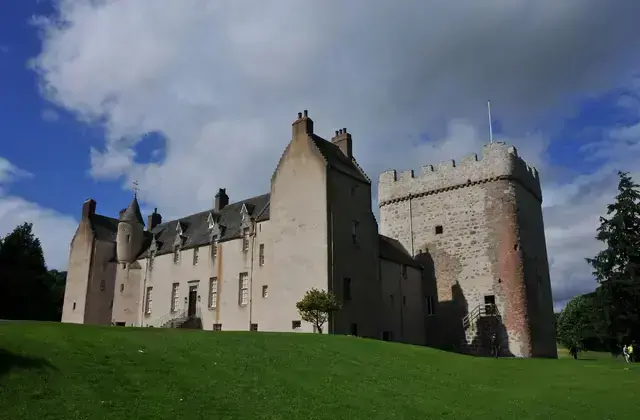 AberdeenshireDrum Castle
 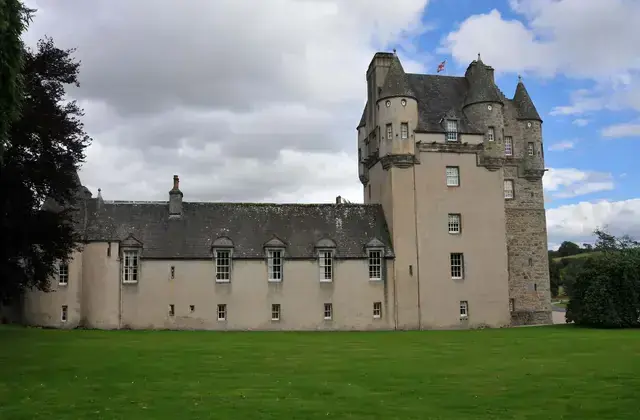 AberdeenshireCastle Fraser
 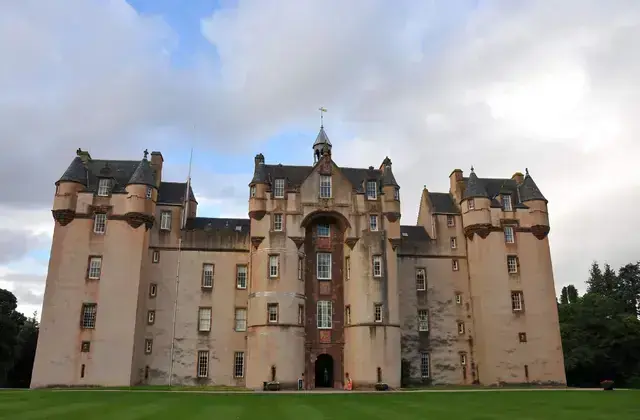 AberdeenshireFyvie Castle